
A front-loader comes back with a musty smell. Before you buy anything, work out whether you are looking at scale or biofilm, because that decides which tablet chemistry can work at all. Acid dissolves mineral deposits, while oxidizers and surfactants attack organic film; neither does the other's job well. So there is no single best washing machine cleaner. It depends on the machine type, the local water and the market where the tablet will be sold.
The practical answer: use an acid-based descaling tablet for hard water and visible scale, and an oxygen- or chlorine-based tablet for odor and detergent residue. Choose a combined formula only if its claims are worded carefully and the supplier can explain how the two chemistries coexist in one pressed tablet. If the machine maker restricts certain actives, the manual wins.
- Chemistry split: acids target mineral scale; oxidizers and surfactants target film and odor.
- Front-loader factor: gasket moisture and low water levels shape how a tablet must dissolve.
- Dosage and dissolution: tablet weight, binder and press settings drive both performance and cost.
- Claims and documents: "natural" and eco wording needs support, so ask for MSDS, COA and stability data.
- Cost drivers: the active system, the packaging barrier and the pack count matter more than fragrance.
Scale or biofilm: the diagnosis decides the chemistry
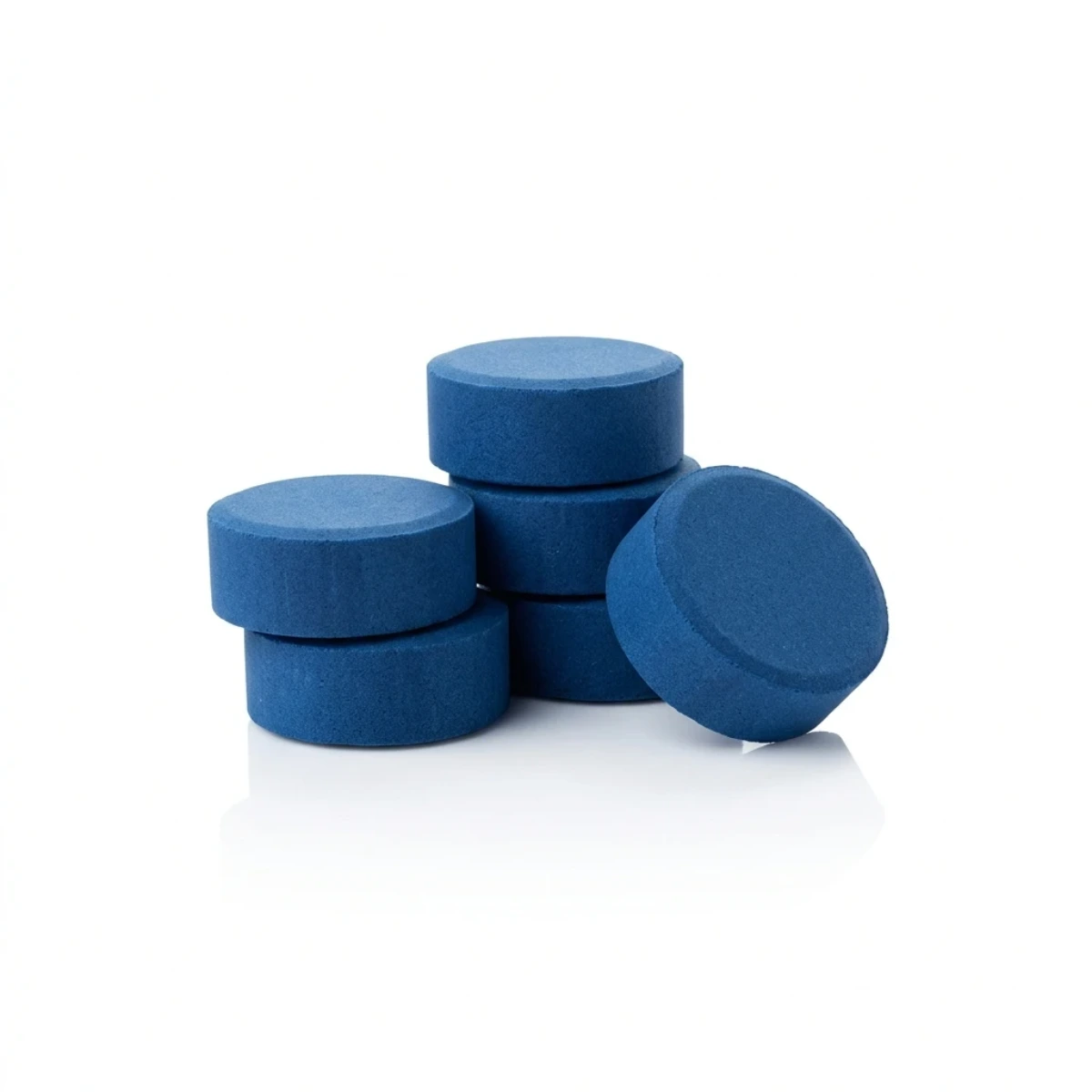
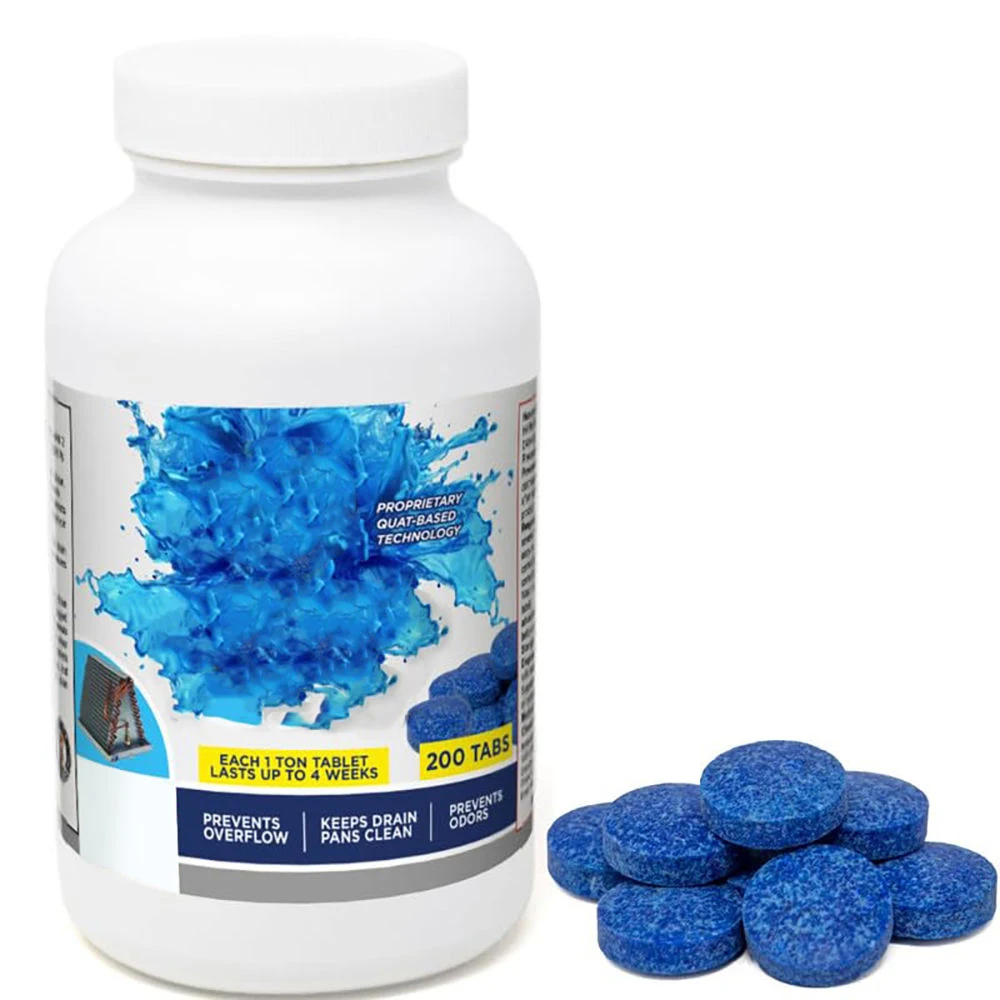
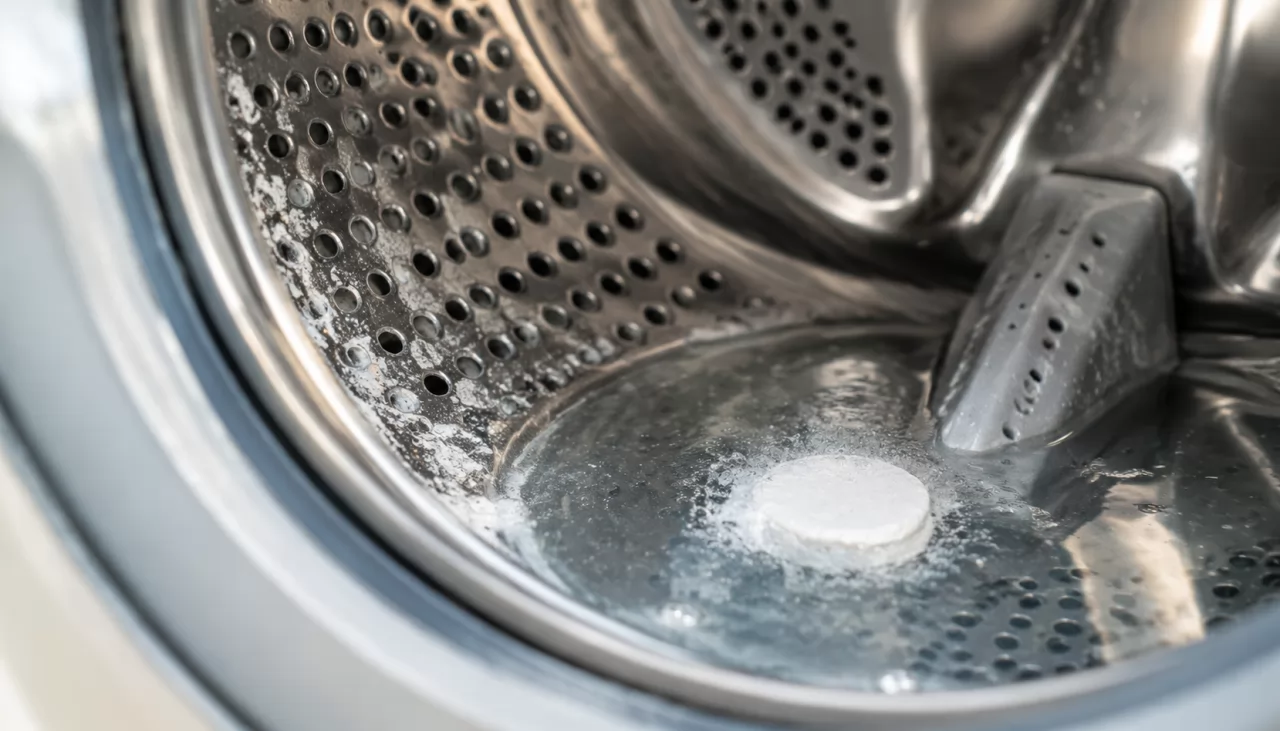
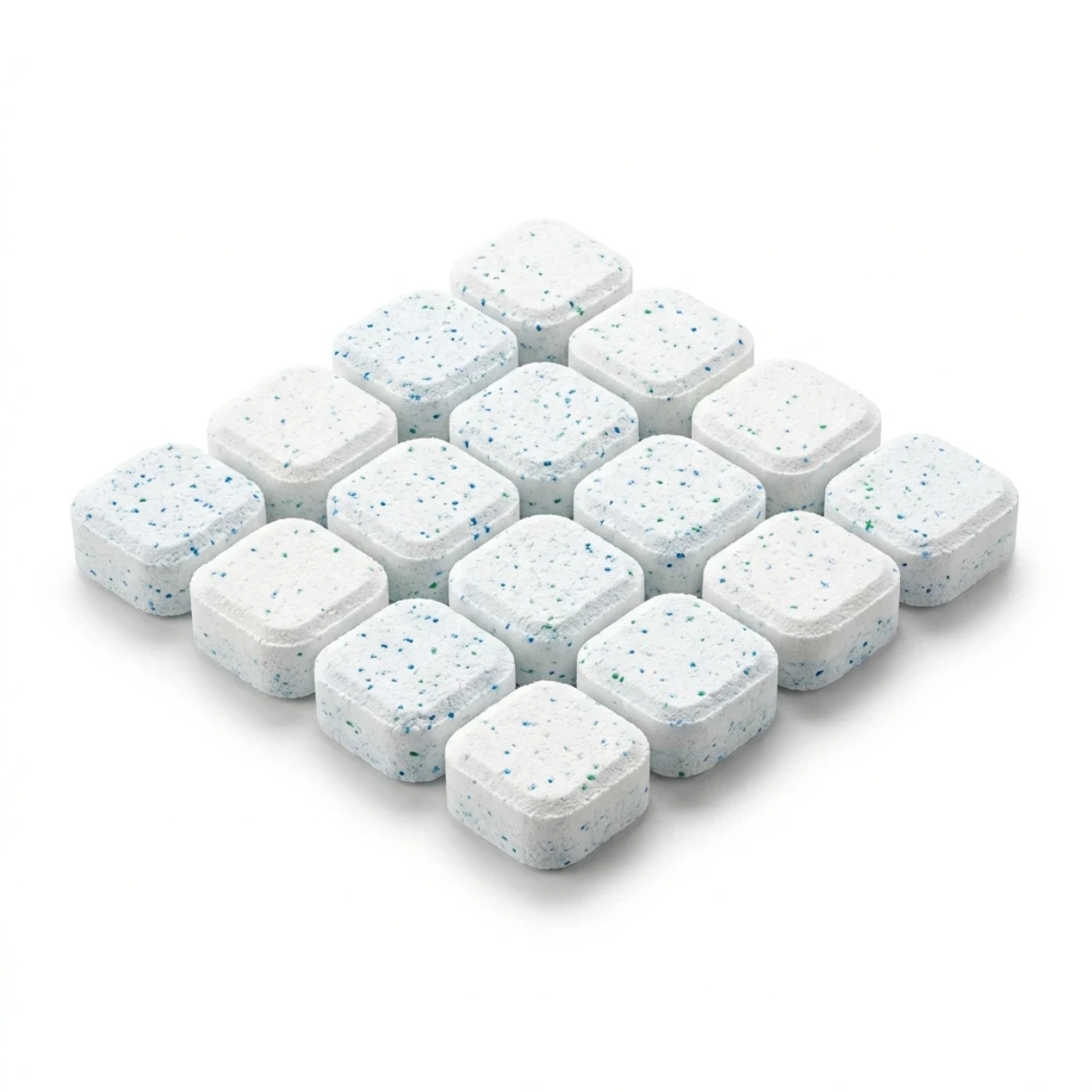
Washing machine cleaner tablets are pressed, effervescent products. They dissolve in the drum during an empty hot cycle and release actives that loosen deposits inside the tub, hoses and dispenser. Which deposits they can remove depends on the active system, so start with the cause and read the ingredient list second.
Scale and mineral buildup points to acid-based tablets
Descaling washer tablets usually rely on citric acid or sulfamic acid, which react with calcium and magnesium carbonate deposits. Sulfamic acid is generally regarded as the stronger one and needs more careful handling and labeling. Citric acid is milder and more common in consumer products. Keep strength claims qualitative unless the supplier can back them with a documented method.
Odor, mold and detergent residue point to oxidizers or surfactant systems
Sodium percarbonate releases hydrogen peroxide and oxygen in water, and it is commonly used against odor and organic residue. Chlorine-releasing actives such as sodium dichloroisocyanurate are also used for sanitizing. Both interact with rubber, and chlorine sources tend to be harder on gaskets over repeated use. That is why seal compatibility belongs in your specification, not only in the marketing copy.
Five criteria that separate a usable tablet from a risky one
Judge any washing machine cleaner tablet, your own or a catalogue item from a supplier, against these five points.
- Active system. Does it match the problem you are selling against, scale or odor? Is the active named plainly on the label?
- Dissolution behavior. The tablet should break down fully within a normal cycle without leaving a chalky slug in the drain or dispenser. Binder choice and compression force are the usual levers.
- Compatibility. Check gaskets, drum finish and plastics, and ask which materials the supplier assumes in its formulation checks.
- Residue and rinse-off. Fragrance load and surfactant level decide whether laundry smells of cleaner afterwards.
- Safe handling. Dust from pressing, skin and eye contact, and storage near moisture all matter. The hazard profile follows the actives.
A rule of thumb: if a supplier cannot tell you what the tablet does to a rubber gasket after repeated use, treat the formula as unfinished.
Front-loaders and top-loaders need different tablets
Front load washing machine cleaner: gasket, drain and low-water cycles
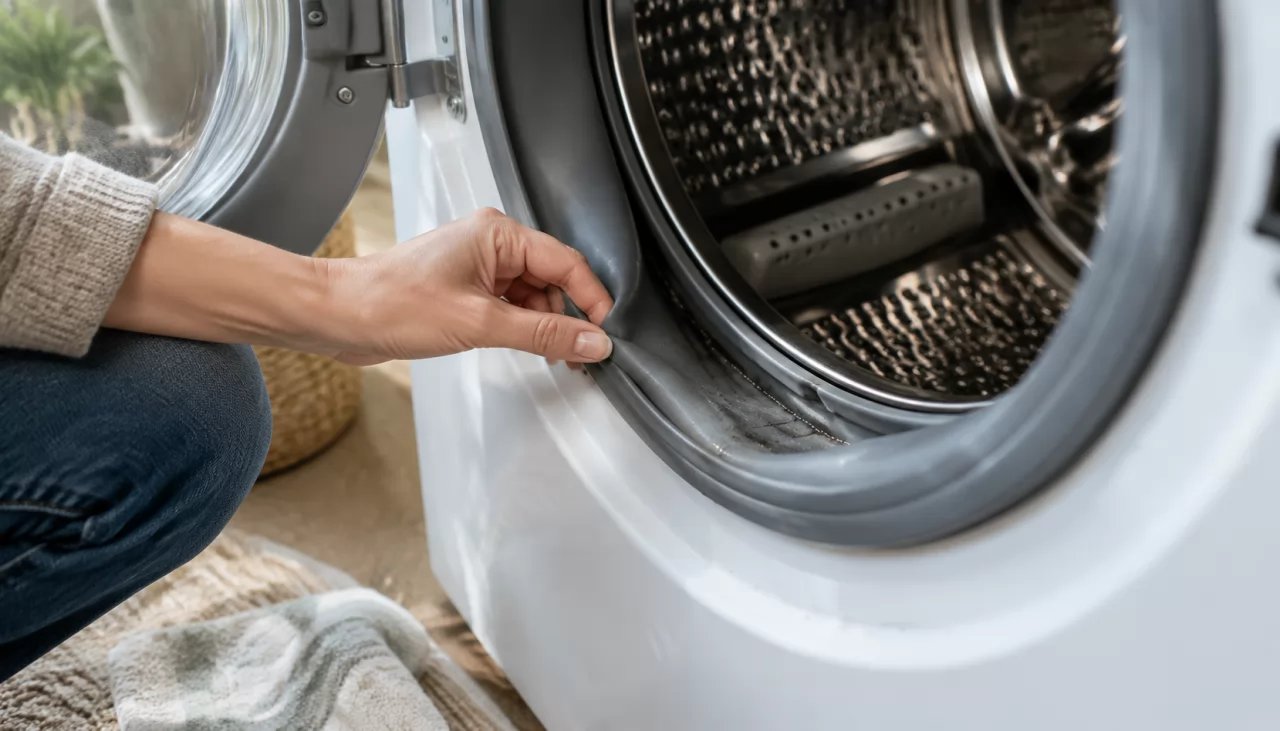
A front load washing machine cleaner works against the machine's design. The door seal holds a fold of water, the drum sits horizontally and water levels run low, so organic film builds in the gasket, the detergent drawer and the drain pump area. A tablet for these machines has to dissolve in limited water and still reach the seal, and the label should recommend a hot, long cycle. Verdict: choose an oxidizer-based or combined tablet with confirmed seal compatibility, and alternate with an acid descaler where water is hard.
Top-loaders and HE machines: drum size, water level and foam
Top-loaders fill with more water, which helps dissolution and dilution. High-efficiency (HE) machines of either type use little water and react badly to foam, so low-sudsing behavior matters most there; a tablet with a heavy surfactant load can trigger suds errors or extra rinses. Verdict: keep surfactant levels modest and say so on the pack.
Tablets versus liquids and powders
Tablets give fixed dosing, so users cannot overpour, and they store compactly. Liquids are easier to formulate with mixed actives but weigh more to ship and can separate over time. Powders dose flexibly, yet they clump in humid storage and spill. Of the three, tablets are the most moisture-sensitive, which puts the burden on the packaging.
Tablet types compared by chemistry, not by label
Four families cover most of the shelf. The comparison below is qualitative and reflects general chemistry, not test results.
| Type | Main target | Seal compatibility | Odor profile | Handling |
|---|---|---|---|---|
| Acid descaler | Limescale, mineral film | Generally gentler on rubber, depends on acid | Mild, often citrus-scented | Avoid mixing with chlorine products |
| Oxygen-based | Odor, organic residue | Generally moderate | Low, fragrance-dependent | Moisture-sensitive |
| Chlorine-based | Sanitizing, mold, odor | Higher risk with repeated use | Noticeable chlorine note | Stricter hazard labeling |
| Combined | Scale and odor in one pack | Depends on formula | Varies | Needs careful stability work |
The label name tells you little; the active system tells you nearly everything. Request the full ingredient declaration before comparing prices.
Combined tablets deserve extra scrutiny. Acids and oxidizers can react in the presence of moisture, so layered or separated designs are common, and the real question is stability over shelf life. A single-action tablet is simpler to defend.
Where tablets fall short: honest pros and cons
| Advantages | Limitations |
|---|---|
| Fixed dose per cycle, so less user error | Does not replace wiping the gasket and cleaning the drawer by hand |
| Compact storage and light shipping compared with liquids | Effervescent tablets absorb moisture and can degrade in poor packaging |
| Simple one-tablet, one-cycle instructions | Some actives need cautious handling and clear hazard labeling |
| Easy to bundle into multipacks and sets | One formula rarely handles both heavy scale and heavy biofilm |
State the gasket point on the pack. Users who expect a tablet to fix a visibly moldy seal without wiping it will leave reviews saying it did not work.
How often to run a cleaner and how the instructions should read
There is no single correct interval. It depends on how many loads the household runs, how hard the water is and what the machine maker recommends. A monthly run is a common starting point in consumer guidance, and heavy-use or hard-water homes may shorten it. Your label should point users to their manual and avoid promising a universal schedule.
Instructions for cleaning a washing machine with tablets should be short and ordered. The drum must be empty, with no laundry inside. The tablet goes into the drum, or into the dispenser if the maker specifies it. The user then selects the hottest suitable cycle, ideally a drum-clean or long cotton program, and lets it finish. Afterwards, wipe the gasket and leave the door ajar so the drum dries.
Two details prevent complaints. Say plainly not to combine the tablet with other cleaners, vinegar or bleach, and say whether the cycle should include a final rinse. A label that gets the step order wrong costs more in returns than any formula tweak saves.
Specifying your own tablet: formula, dosage, packaging and paperwork
Formula and dosage choices that drive cost and performance
The active system sets the baseline cost, and tablet weight scales it directly: a heavier tablet carries more active but also more material and shipping weight. Binder and compression settings control hardness and dissolution. A tablet pressed too tightly dissolves slowly, and one pressed too loosely crumbles in transit. Fragrance adds cost and can affect stability, so a modest load is usually safer. Before approving a sample, ask for a dissolution check in water at a realistic temperature.
Packaging that protects an effervescent product
Moisture is the enemy, so the barrier matters as much as the formula. Individual foil or film wrapping gives the best protection per tablet. A resealable pouch or tub is cheaper but exposes the remaining tablets each time it is opened. Pack count shapes marketplace listings: a six- or twelve-tablet pack suits a regular monthly routine, and a larger count suits a subscription-style offer.
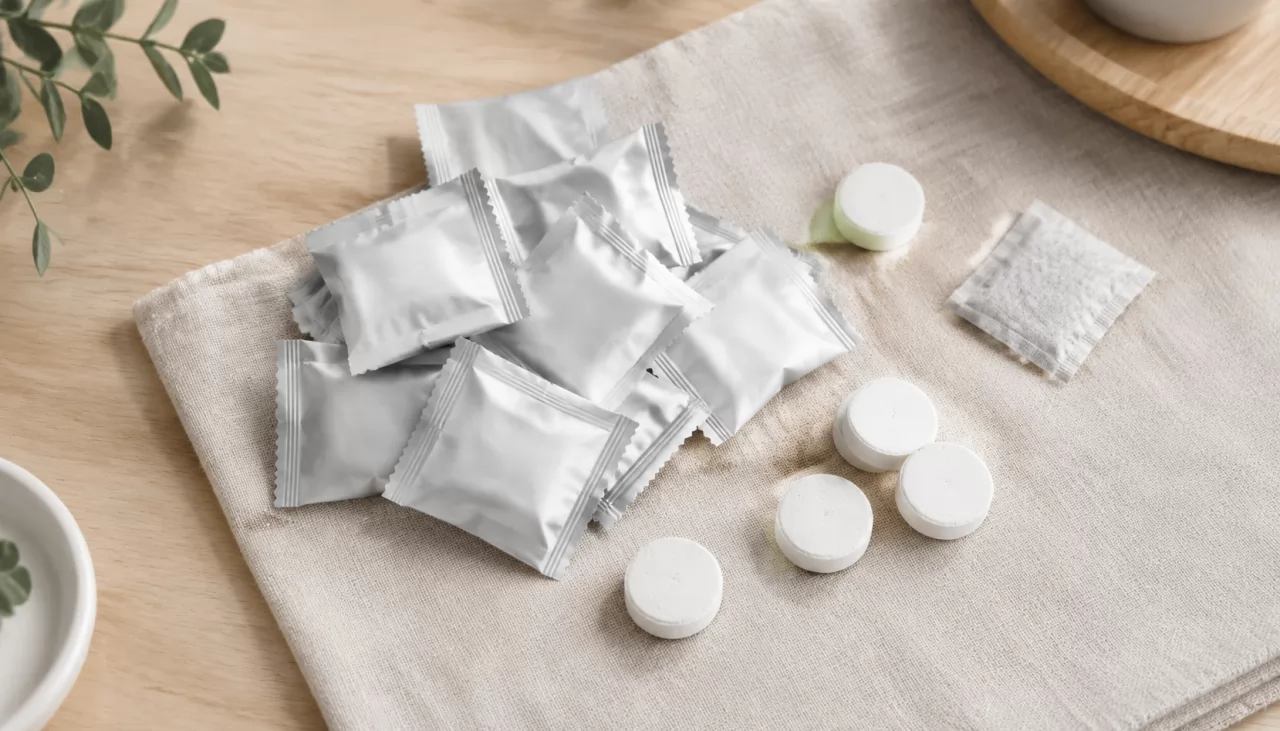
Poleview's cleaning tablet range includes washing machine tablets, with custom size, fragrance and packaging, handled through a six-step process: inquiry, design, sampling, production, inspection and delivery.
Claims, compliance and documents to ask for
Keep eco and "natural" wording cautious. A tablet built on citric acid or percarbonate can be described by what it contains, but terms like "eco-friendly" or "biodegradable" need support and vary by market. Hazard labeling follows the formula. In the EU and many other regions, CLP/GHS classification applies where the actives trigger it, and chlorine or sulfamic acid tablets are more likely to need warnings than a citric acid one.
Ask the supplier for an MSDS, a COA for the batch, and a stability report covering the packaging you chose. Verify any claim with them rather than copying it from a competitor's pack.
Recommendation by use case
For hard-water markets, lead with an acid descaler and say clearly that it targets scale. For odor-focused lines, an oxygen-based tablet is the safer base, particularly for front-loaders, because it is generally kinder to seals than chlorine. Budget multipacks work best with a single-action tablet in a simple pouch, since combined formulas and heavy barrier packaging raise unit cost quickly. For gift or subscription-style sets, pair an acid tablet and an oxygen tablet in alternating packs. That covers both problems without pushing a risky combined formula.
FAQ
Can I use cleaning tablets in both front-load and top-load machines?
Often yes, but check the label and the machine manual. Front-loaders and HE machines need low-sudsing formulas and sometimes specific cycles.
Do descaling washer tablets damage rubber seals?
Mild acids like citric are generally gentler, while stronger acids and chlorine sources can be harder on rubber with repeated use. Ask for seal compatibility information, and avoid overusing any acid-based product.
Is it safe to combine a tablet with vinegar or bleach?
No. Mixing acids with chlorine-based products can release hazardous chlorine gas, and stacking cleaners adds no benefit. One tablet, one cycle.
What is the usual minimum order and sample route for a private-label tablet?
The standard MOQ is 1,000 units, flexible depending on the level of customization. Free samples are available, and lead time is typically 15-30 days depending on quantity and customization. To start, send your tablet specification and target pack count to [email protected].