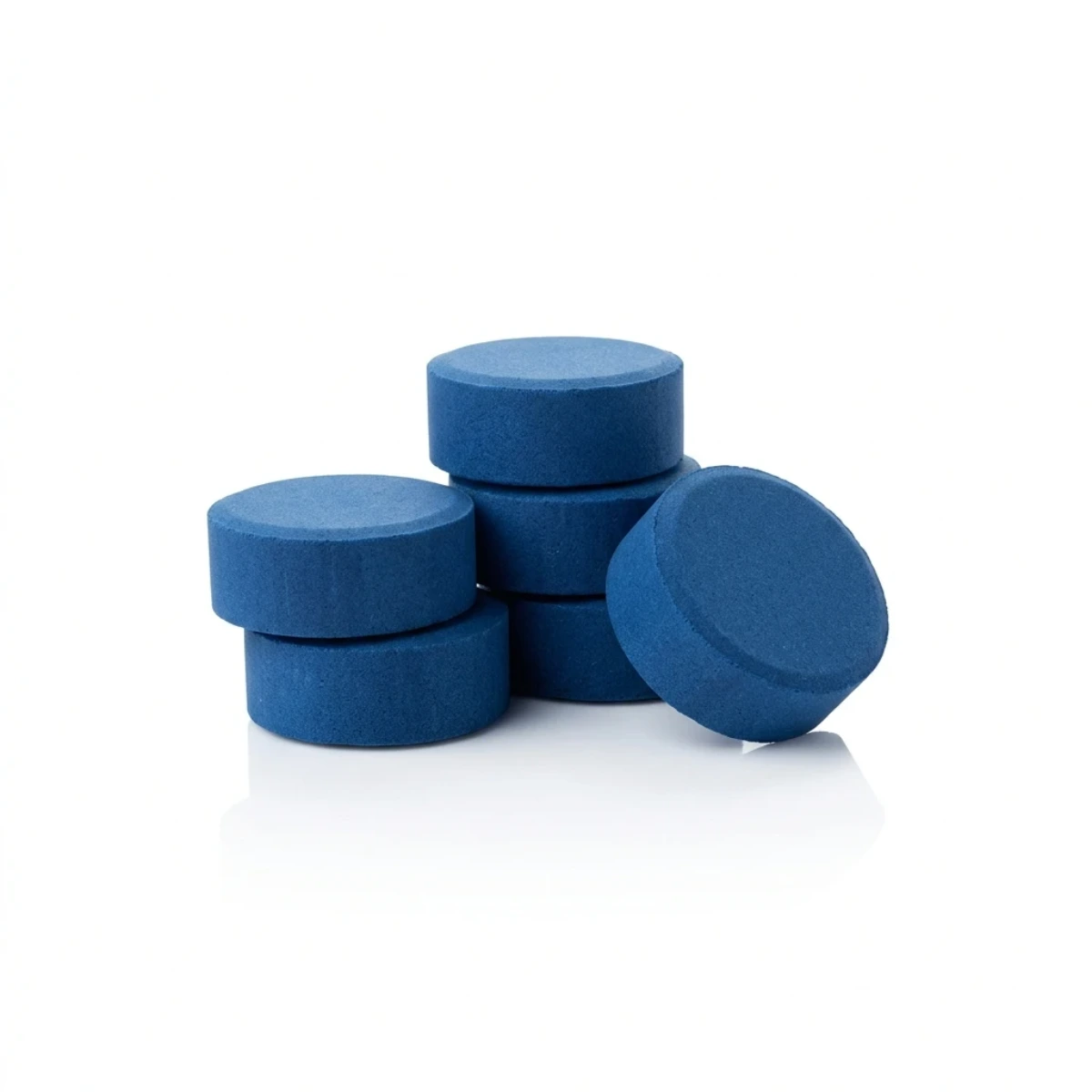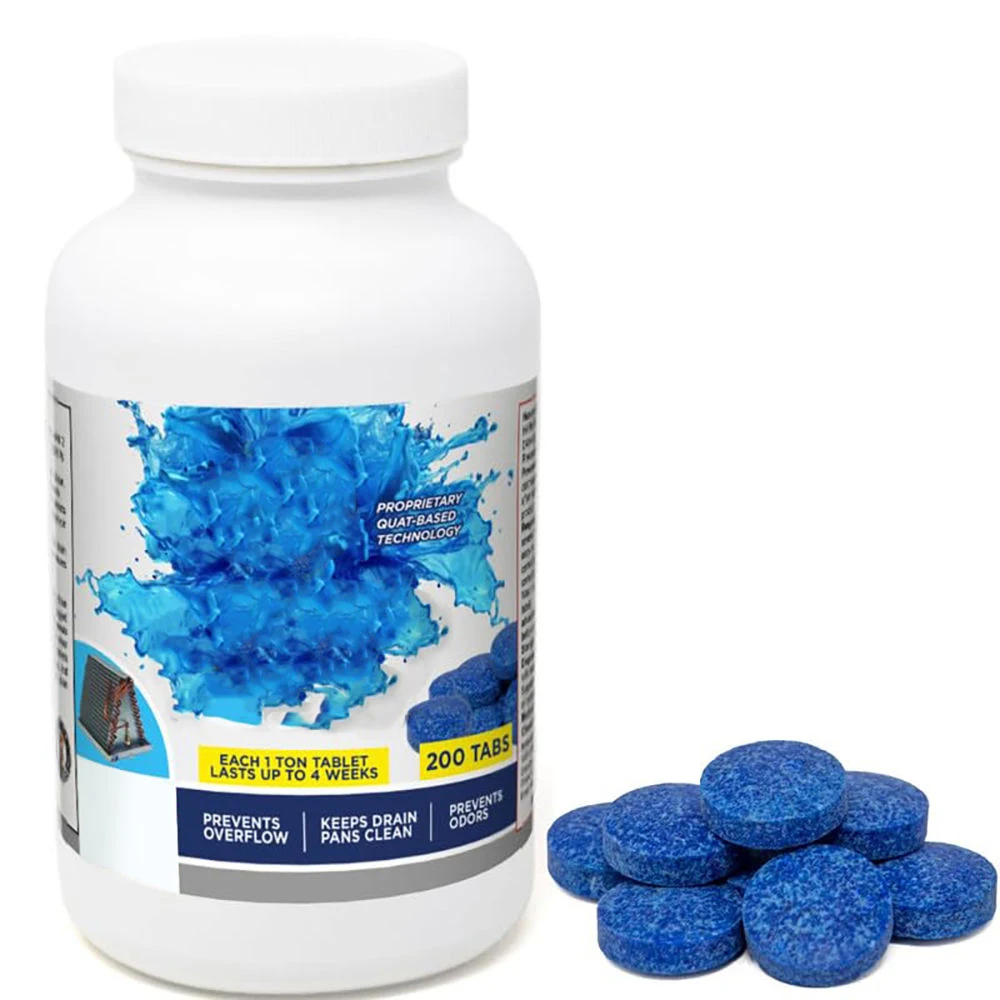

A sample passes, then fails. A typical private-label order starts well: the first washer cleaner tablet dissolves cleanly, the bench drum looks fresh, and the buyer signs off. Three weeks after launch, reviews mention a lingering musty smell. So, does washing machine cleaner work? Usually yes, but only on the residue it was formulated for, and that gap decides whether a SKU earns repeat purchases.
Results depend on what is actually in the drum: residue, scale or mould. The chemistry has to match that problem, and the label's claims and dosing have to match what the product can honestly do. Settle all three before you sample.
Does washing machine cleaner work? Yes, on the right residue
Washing machine cleaner generally works on detergent and softener build-up, on biofilm (the slimy microbial layer that forms in damp spots) and on limescale, provided the chemistry, contact time and wash cycle suit the problem. It works less well on blocked drains, damaged seals or standing water, where the cause is mechanical rather than chemical.
What a good result looks like to the end user
The user runs an empty hot cycle with one tablet. Afterwards the musty smell is reduced, the drum and door gasket look cleaner, and the next load comes out without grey flecks or a film. None of this needs a number on the label; it can be seen. That also makes it testable, since you can inspect the drum and gasket before and after under the same conditions.
What a cleaner cannot fix
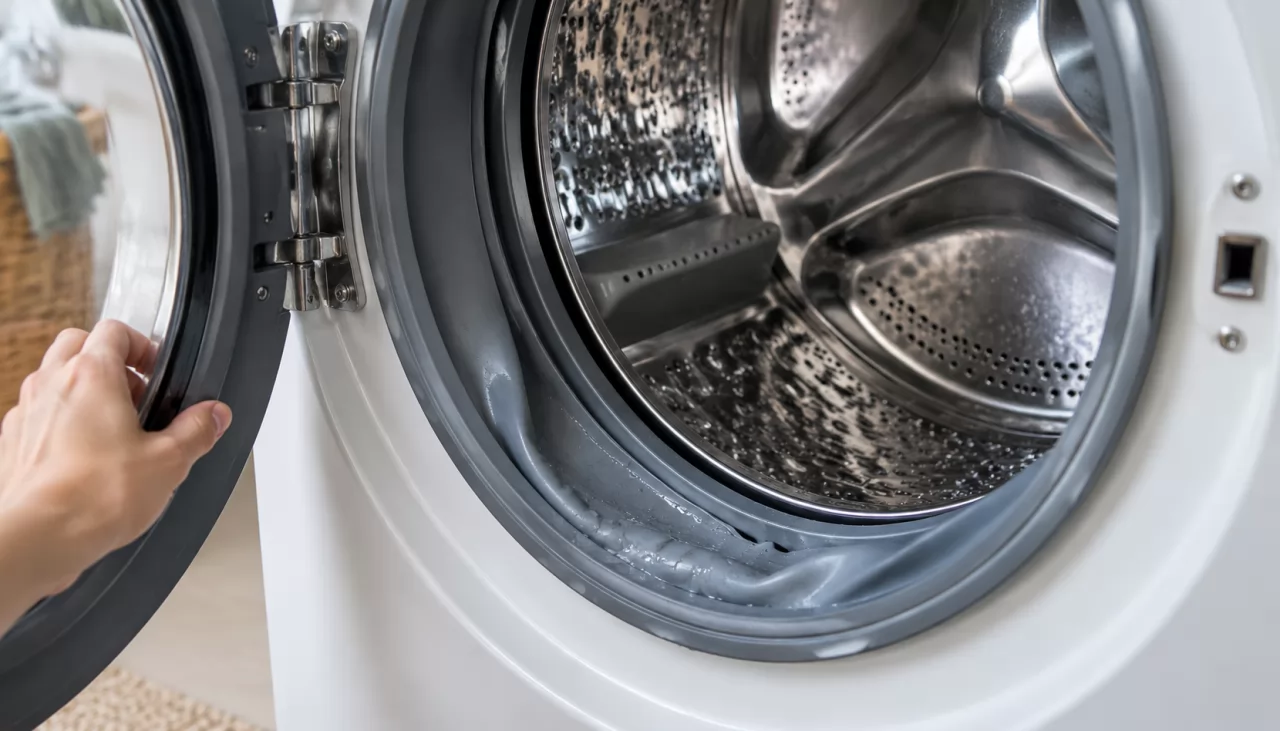
A perished gasket will keep harbouring mould. Water that never fully drains, often from a faulty drain pump or a clogged filter, will keep producing odour. Heavy mould in the gasket folds usually needs manual wiping first, and a tablet then helps keep it from returning. A label that implies otherwise invites complaints and returns.
Three kinds of build-up decide which chemistry you need
Work backwards from the problem. A drum can carry organic residue and biofilm, mineral scale, or a film of surfactant and fabric softener, and each responds to different ingredients. Most smell complaints trace to the first and third. Scale matters mainly where water is hard.
Oxygen-based and surfactant systems for odour and film
Sodium percarbonate is a common oxygen-releasing oxidiser. In water it breaks down organic soils and helps loosen biofilm. Surfactants lift greasy detergent and softener residue so it can rinse away, and formulators typically pair the two with an effervescent base so the tablet disperses through the whole cycle. Performance depends on water temperature, tablet dose and cycle length, so any claim is conditional on the stated programme.
Acid-based descaling for hard-water markets
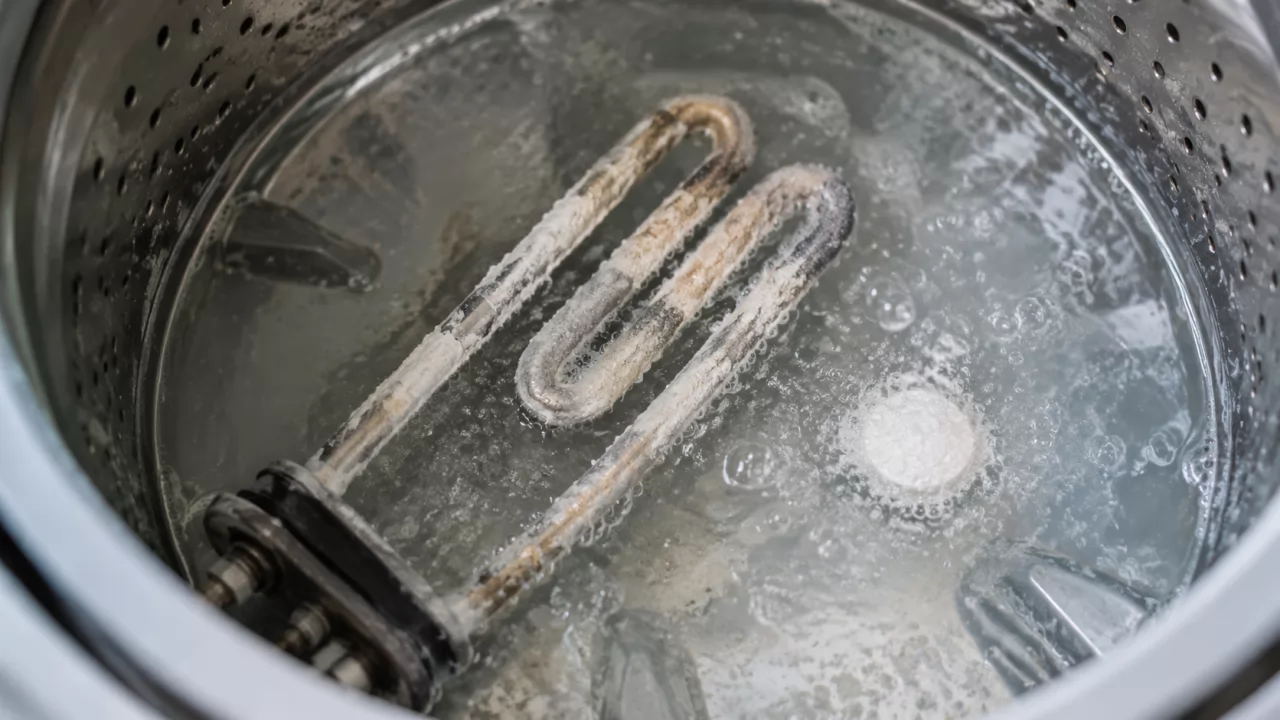
Citric acid is a widely used descaler that dissolves calcium carbonate deposits on heating elements and drum surfaces, which makes it a fit for regions with hard water. Two cautions apply. Prolonged acid contact can be unkind to some rubber and metal parts, so compatibility with machine makers' guidance matters. And acid must never meet other reactive chemicals in the same cycle.
Why one tablet rarely does everything
An oxidiser system and an acid descaler work best under different conditions, and putting them in one tablet usually means a compromise on both sides. A two-step system, with one product for odour and film and another for scale, performs more specifically but costs more to develop, pack and explain. A single combined tablet is simpler to sell, though its claims should stay narrower.
Cleaning tablets vs vinegar and baking soda: where the comparison is fair
Vinegar dissolves some scale, and baking soda is a mild abrasive and deodoriser, so the DIY route is not useless. The fair comparison is that each handles part of the problem, inconsistently, with no dosing control. Use that as a basis for your claims rather than a target to attack: a tablet's advantage is a defined dose, a formula built for the drum, and a repeatable result.
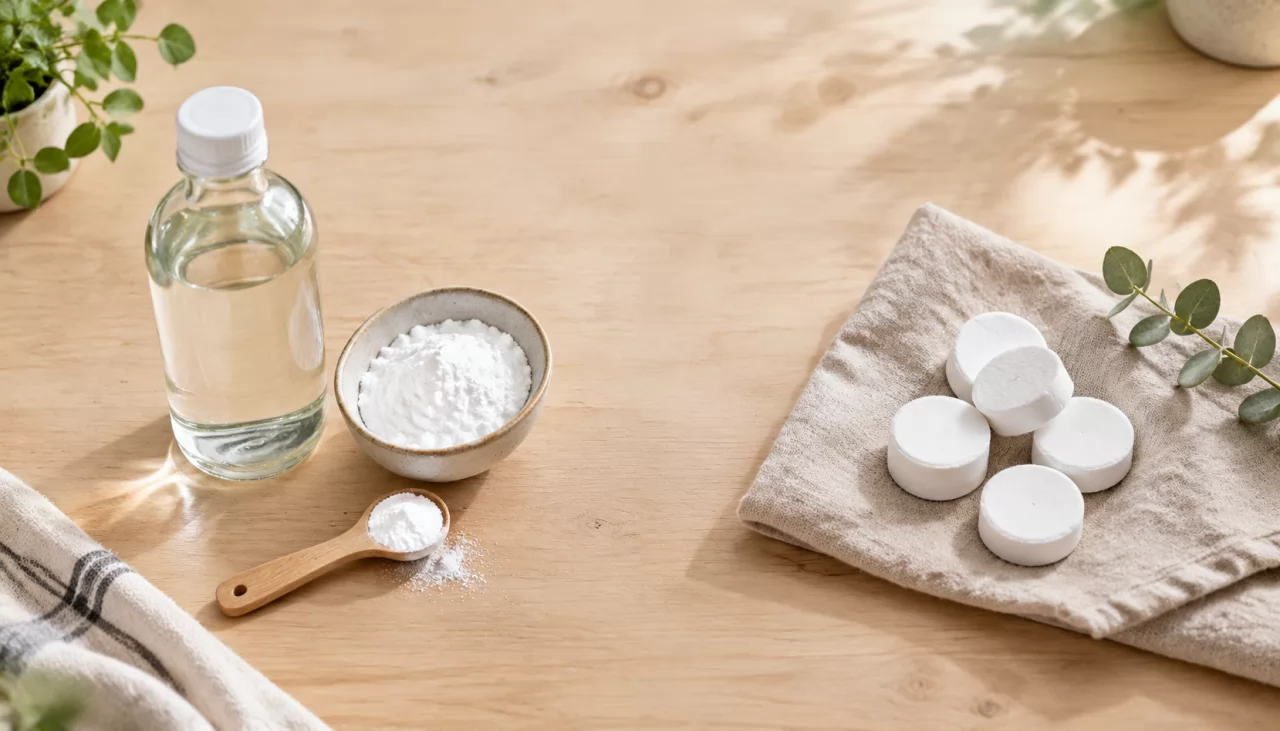
Three myths cause trouble. One is that vinegar plus baking soda is a complete substitute, when they partly neutralise each other and weaken both. Another is that mixing products is harmless. The last is that a stronger smell means stronger cleaning, when heavy fragrance can simply mask odour for a day.
Note: Never combine acid cleaners with chlorine bleach, because toxic chlorine gas can form. Check the machine maker's guidance on acids before recommending any descaling product.
How often to run it depends on water, load and machine type
Roughly monthly is a common recommendation for heavy use, such as large families or frequent low-temperature washes, with longer gaps for light use. Front-loaders tend to be more prone to odour because the door gasket holds moisture, and hard-water areas may call for more regular descaling. The interval on the label should follow what the formula can do and how quickly residue returns, not a wish for repeat sales. Customers spot an over-frequent instruction easily.
What to specify before you sample a washer cleaning tablet
Treat these criteria as a brief for your manufacturer. They decide whether the sample you approve resembles what ships.
Formulation and compatibility
State the active system (oxygen-based, acid-based or combined), the fragrance level, and whether the product is meant for front-load machines, top-load machines or high-efficiency (HE) ones. HE machines use less water, so a high-foaming formula can cause trouble there. Ask how much residue remains after the rinse, since a cleaner that leaves its own film defeats the purpose.
Dosage, tablet format and packaging
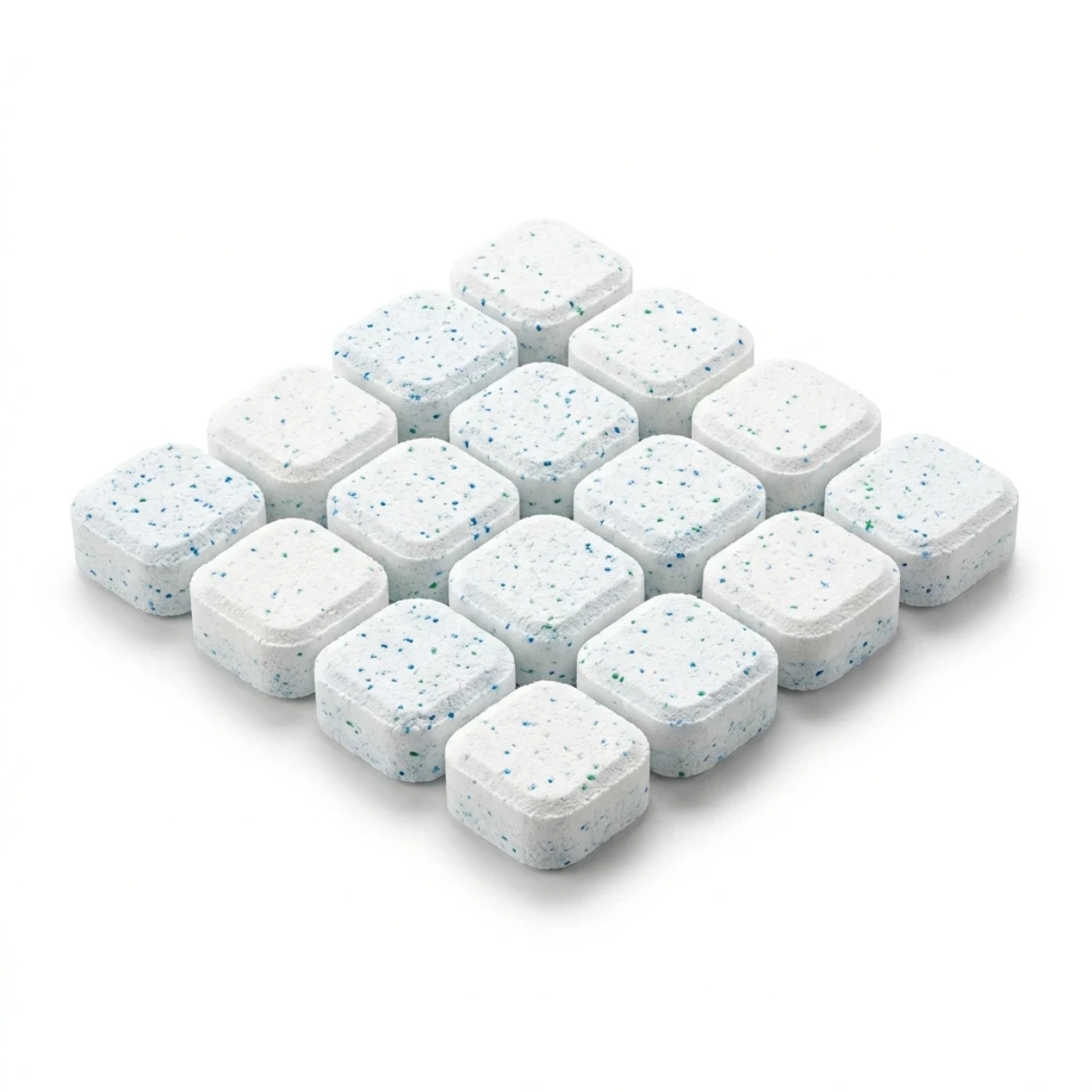
Define tablet weight and hardness. Too soft and it crumbles in transit; too hard and it dissolves late. Effervescent tablets are moisture-sensitive, so individual wrapping such as foil helps protect them, and the outer pouch or box should be chosen for shelf life and shipping. Instructions should be unmistakable: one tablet per cycle, placed in the drum, with the cycle type named.
Claims, documentation and testing
Keep eco and performance claims restrained and tied to something testable. Ask for the MSDS, COA and stability report, and check labelling against the destination market's rules, for example CLP in the EU (the regulation on classification, labelling and packaging of chemical mixtures). Agree a test method up front: a before-and-after inspection of drum and gasket on a machine with known residue, under a fixed protocol of temperature, programme and dose.
Poleview, through its Boymay Cosmetics entity, makes washing machine cleaning tablets, along with toilet bowl, dishwasher and AC drain line tablets, on a custom OEM/ODM basis. Free samples are available, and the standard MOQ is 1,000 units, flexible with the level of customisation.
FAQ
Do washing machine cleaning tablets really work on mould?
Partly. They can help loosen and reduce light mould and biofilm, but heavy mould in gasket folds usually needs manual wiping first. A tablet is better at preventing regrowth than rescuing a neglected machine.
How often should you use washing machine cleaner?
Roughly monthly for heavy use, less often otherwise. Hard water, frequent cold washes and front-loaders may justify shorter intervals.
Is washing machine cleaner vs vinegar and baking soda really a fair fight?
Only partly. Vinegar can dissolve some scale, but the DIY mix gives no dosing control and the two ingredients weaken each other. Tablets offer a repeatable dose and a purpose-built formula.
Can one formula suit front-load and top-load machines?
Often, yes, if foaming is controlled and the cycle instructions are clear. Confirm it on both machine types, including HE models, before claiming it.
Next step: run one controlled sample test first
Before you lock the formula, label or order quantity, put one sample through a defined protocol on a machine with known residue. Record the drum and gasket first, run the stated cycle with one tablet, then inspect and run a following wash. If the result matches your intended claim, the next question is usually how it holds across different water hardness and machine types.