
A tiny plastic figure hidden in a bath bomb can end up in a toddler's mouth. A painted toy can bleed color into the water, and a crumbly bomb can split before it reaches the tub. This guide puts safety first so your homemade bath bombs hold together and fizz as they should.
- Choose the toy first: It must be waterproof, battery-free, and too big to swallow for the child's age.
- Use skin-safe ingredients: Pick cosmetic-grade materials. Skip anything sold only for food or crafts.
- Control moisture: Add liquid slowly so the mix doesn't fizz in the bowl.
- Pack and dry well: Press the mix firmly around the toy and let it dry fully before unmolding.
- Stay careful: Patch-test new ingredients and always supervise kids in the bath.
Which Toys Are Safe to Hide Inside a Bath Bomb?
Safe toys for bath bombs with toys inside are waterproof, battery-free, and too large to be a choking hazard for the child who will use them. The toy should also match the age printed on its own packaging. Toy choice matters more than any other decision in this project.
Size and Age Rules That Prevent Choking Hazards
A small part is any piece small enough to fit in a young child's mouth and block the airway. Toy safety standards such as ASTM F963 (the US toy safety standard) and EN 71-1 (the European standard for mechanical toy safety) restrict small parts in toys meant for children under three.
You don't need to test anything yourself. Read the age label on the toy. If it says it isn't suitable for young children, don't hide it in a bath bomb for a young child.
Once the bomb dissolves, the toy floats free in the water. Treat it like any loose bath toy.
Materials That Hold Up in Water
Solid plastic or silicone figures work well. They don't absorb water and they rinse clean.
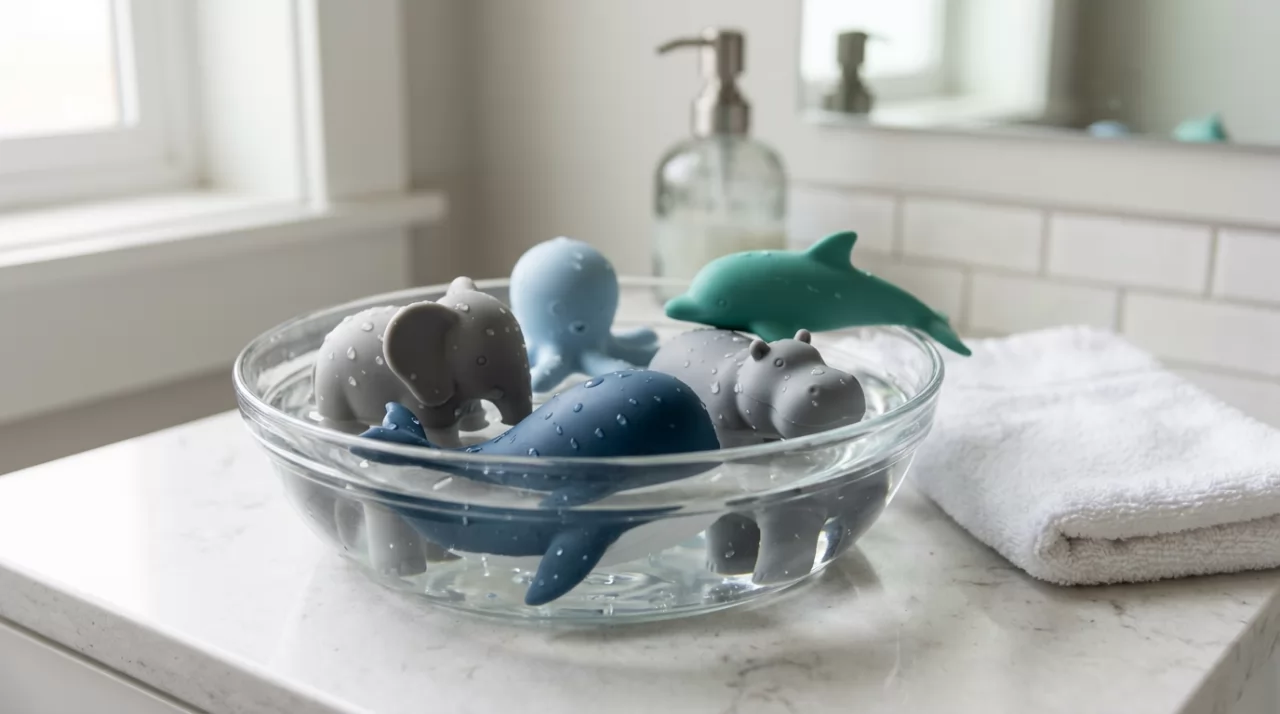
Avoid toys with surface paint that can flake or bleed. Skip glued pieces, which can come apart when wet. Hollow toys with holes are a problem too, since they trap water and can grow mold inside.
Toys to Skip Entirely
- Batteries and electronics: Light-up or sound toys aren't made to sit in damp powder or bathwater.
- Magnets: Small magnets are dangerous if swallowed.
- Sharp edges: Check seams and points with your fingers first.
- Candy look-alikes: A toy shaped like a sweet teaches kids that bath bombs might be edible.
What Do You Need to Make Homemade Fizzy Bath Bombs?
Homemade fizzy bath bombs need a baking soda and citric acid base, a binder, a little oil and liquid, optional cosmetic-grade color, a two-part mold big enough for the toy, and gloves. Every ingredient that touches skin should be sold for cosmetic use, not only for crafts or cooking.
The table below shows what each item does and what to check before you buy.
| Item | Its job | What to look for | Skin-safety note |
|---|---|---|---|
| Baking soda (sodium bicarbonate) | Main fizzing powder | Fine, dry, lump-free | Generally gentle; still patch-test |
| Citric acid | Reacts with baking soda to fizz | Fine powder, kept sealed | Can sting broken skin or eyes |
| Binder (such as cornstarch) | Slows the fizz, helps hold shape | Plain, unscented | Avoid if it causes irritation |
| Oil and a spray bottle of liquid | Moistens the mix so it packs | Light, skin-safe oil; witch hazel or water | Check for nut-oil allergies |
| Colorant, mold, gloves | Color, shape, hand protection | Cosmetic-grade color; two-part mold | Gloves protect hands from citric acid |
The key point: buy cosmetic-grade versions of everything that ends up in the water.
The Citric Acid and Baking Soda Base, Explained Simply
Citric acid and baking soda bath bombs fizz because the two powders react once water dissolves them. That reaction releases carbon dioxide gas, which makes the bubbles.
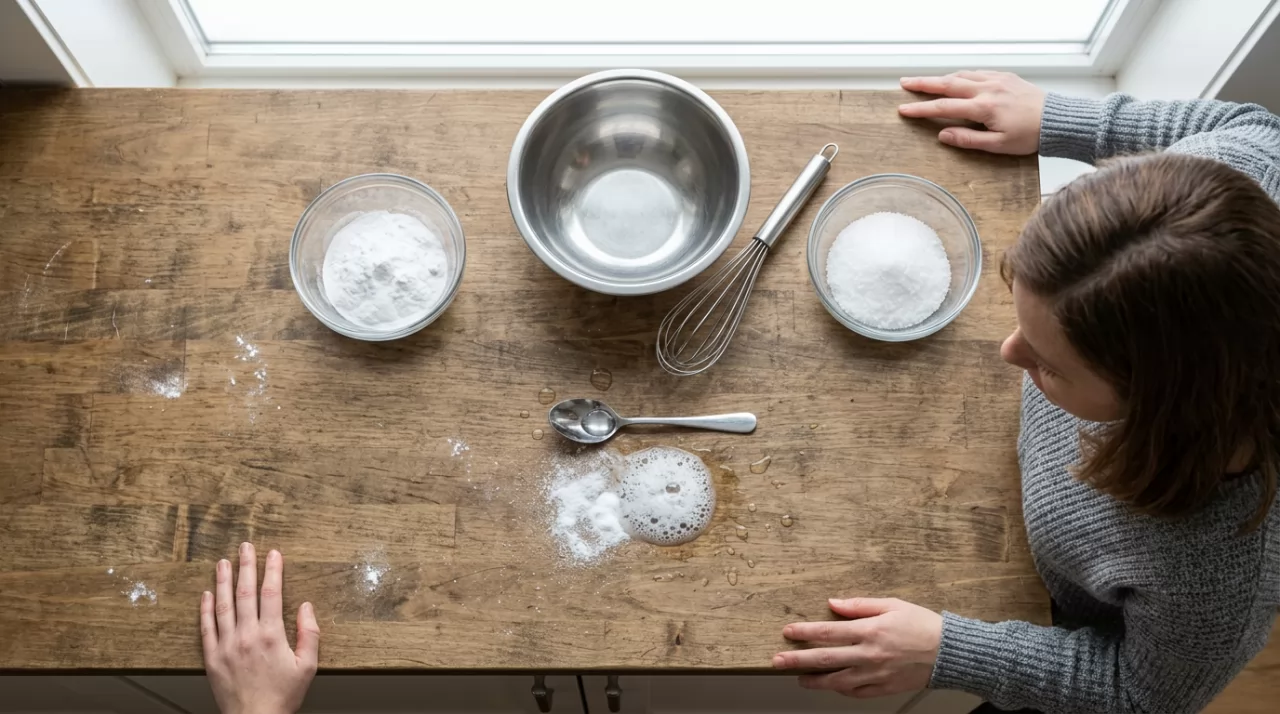
The catch is that any water starts the reaction. Even humid air can set it off early, so both powders must stay dry until bath time.
Skin-Friendly Extras: Oils, Colors, and Scents
Use only colorants labeled for cosmetic use. Food coloring and craft dyes can stain skin and tubs. A little color goes a long way.
For children, unscented is the safer choice. Essential oils and fragrance oils can irritate young or sensitive skin.
Choosing Bath Bomb Molds With Hidden Toys in Mind
Bath bomb molds with hidden toys in mind need extra room. The toy should sit in the center with a firm layer of mix all the way around it.
| Mold type | Pros | Cons |
|---|---|---|
| Two-part sphere | Easy to pack evenly; strong round shape | Must be large enough for the toy |
| Shaped mold (stars, animals) | Fun look for kids | Thin points crack easily around a toy |
For a first try, a sphere that comfortably fits the toy is the easier option.
How to Make Bath Bombs With Toys Inside, Step by Step
Making bath bombs with toys inside takes eight steps: prep your space, mix the dry ingredients, add liquid slowly until the mix feels like damp sand, overfill both mold halves, set the toy in the center, press the halves together, then dry and unmold. Drying fully is what keeps the bomb in one piece.
Steps 1–3: Prep Your Space, Mix the Dry Ingredients, Add Liquid Slowly
- Prep your space. Put on gloves, clear a dry table, and wash and dry the toy. Kids can help with mixing, but an adult should handle the citric acid.
- Mix the dry ingredients. Combine baking soda, citric acid, and the binder in a dry bowl. Break up every lump with your fingers or a whisk. Check: the powder looks smooth and even.
- Add liquid slowly. Stir in the oil, then spritz liquid a little at a time while mixing. Check: squeeze a pinch in your fist. It should hold its shape like damp sand. If it fizzes, stop spraying and stir.
Steps 4–6: Pack, Place the Toy, Press Together
- Overfill both mold halves. Pack each half firmly and mound extra mix above the rim.
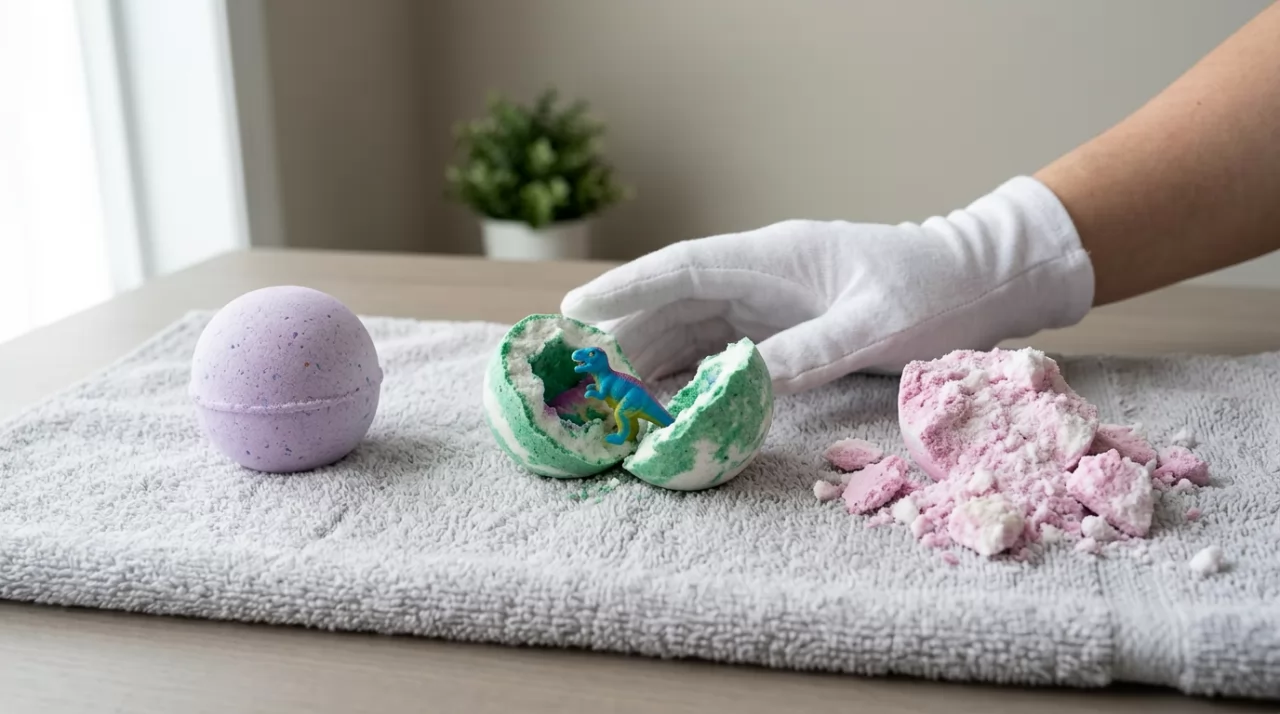
- Place the toy. Push the toy into the center of one half so mix surrounds it. Check: no part of the toy touches the mold wall.
- Press together. Join the halves and press hard without twisting. Twisting breaks the seam. Wipe away the excess that squeezes out.
Steps 7–8: Dry, Unmold, and Store
- Dry. Leave the bombs in the mold, or on a soft towel once firm, in a low-humidity spot.
- Unmold and store. Tap the mold gently and lift off one half at a time. Store finished bombs in an airtight container, out of children's reach, so nobody mistakes them for food.
Why Is My Bath Bomb Crumbling, Cracking, or Fizzing Too Early?
Bath bomb problems usually trace back to moisture, packing pressure, or toy size. Too much liquid makes the mix fizz or swell, too little makes it crumble, and a toy that crowds the mold leaves weak walls. Most fixes mean adjusting one of those three things on the next batch.
| Problem | Likely cause | Fix |
|---|---|---|
| Crumbling | Mix too dry or packed loosely | Spritz a little more liquid; press harder |
| Cracking while drying | Too much liquid; mix expands | Use less liquid; dry somewhere less humid |
| Fizzing in the bowl | Liquid added too fast | Spritz slowly and stir between sprays |
| Warty bumps | Excess moisture reacting on the surface | Use less liquid next time |
| Toy poking through | Toy too big or off-center | Use a smaller toy or bigger mold |
Moisture control fixes most of these issues.
Fixing a Bomb That Splits Around the Toy
A bomb that splits at the toy usually has thin walls. Try a smaller toy or a larger mold.
Pack in thin layers instead of one scoop. Press firmly at the seam. Then leave it alone to dry.
FAQ
Are bath bombs with toys inside safe for toddlers?
Only with care. Use a toy labeled for the child's age, keep the recipe unscented, and supervise the whole bath. Patch-test first, and ask a doctor before use if your child has eczema or sensitive skin.
How long do homemade bath bombs last?
Not long, so use them fairly soon. Moisture slowly weakens the fizz, which is why airtight, dry storage helps.
Can I make bath bombs without citric acid?
Yes, but the fizz is usually weaker. Some recipes swap in cream of tartar or other mild acids. Patch-test any substitute before a full bath.
Will the bath bomb stain the tub or the toy?
It can, mainly with heavy or non-cosmetic color. Use cosmetic-grade colorant sparingly, then rinse the tub and the toy after the bath.
Ready to Make Your First Batch?
Start with the toy. Pick one that is waterproof, battery-free, and labeled for your child's age. Gather cosmetic-grade ingredients and make two or three bombs as a test. If they dry hard and fizz evenly in the tub, you're ready for a full set.