
Should you reach for coconut oil, argan, or castor when your ends are splitting and your hair looks dull by noon? It's a fair question — and the honest answer is that the "best" bottle depends less on marketing and more on your hair's texture, its condition, and what you actually want it to do.
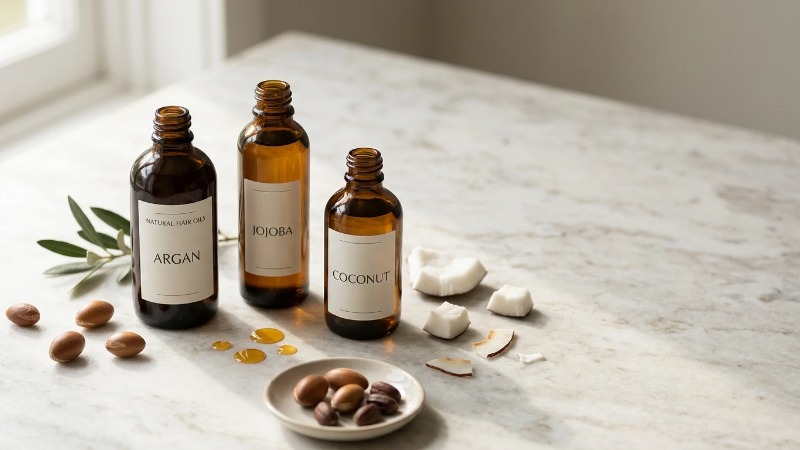
By the end of this guide, you'll be able to look at your own hair, name its type and main concern, and pick an oil with real reasoning behind the choice — not just because a video told you to.
Key Takeaways
- There is no single best oil for hair — the right pick is goal-dependent (dryness, frizz, fine hair, scalp health).
- Argan and jojoba suit the widest range of hair types; both are lightweight and forgiving.
- Coconut oil penetrates the hair shaft to reduce protein loss, but it doesn't work for everyone — protein-sensitive hair can feel stiff.
- Always patch-test a new oil (especially essential-oil blends) before full use.
- Oils condition, seal, and protect — they do not "cure" hair loss. See a dermatologist for persistent shedding or scalp problems.
The Quick Answer: There's No Single "Best" Oil
The best oil for hair is the one that matches your hair's texture and your specific goal. For dry, damaged strands that need real conditioning, penetrating oils like coconut and argan work well. For fine or oily-prone hair that just needs shine without weight, lightweight sealing oils like jojoba or grapeseed are the smarter bet.
It helps to know that oils fall into two broad camps. Penetrating oils (coconut, argan, avocado) can move into the hair shaft and reduce moisture and protein loss from the inside. Sealing or coating oils (jojoba, grapeseed, mineral oil) sit on the surface, smoothing the cuticle and locking in whatever moisture is already there.
How Hair Oils Actually Work
Hair is mostly a protein called keratin, wrapped in overlapping scales called the cuticle. When the cuticle lifts — from heat, bleach, or friction — hair loses water and looks frizzy and dull.
Oils help in two ways. They smooth those raised cuticle scales so light reflects evenly (that's the "shine"), and they slow water loss so hair stays flexible instead of snapping. Some fatty acids, notably the lauric acid in coconut oil, are small enough to bind to keratin and reduce protein loss during washing.
Here's the honest limit: conditioning your hair and growing more of it are two different things. Oils can make existing strands stronger and less prone to breakage, which means you keep more length. That is not the same as a treatment that regrows hair from the follicle.
How to Match Oil to Your Hair Type and Goal
Before you buy anything, do a quick self-diagnosis. Two questions settle most decisions: how thick is a single strand, and what problem are you actually trying to fix?
By Hair Texture
Fine hair is easily weighed down, so a few drops of a light oil (jojoba, grapeseed, sweet almond) go a long way. Use too much of a heavy oil and fine hair looks greasy within hours.
Medium hair is the most flexible — argan is a reliable all-rounder here. Coarse or thick hair, often curly, tends to be drier and can handle richer oils like coconut, avocado, or shea-based blends without looking flat.
By Concern
Match the oil to the symptom. Dryness and breakage call for penetrating, fatty-acid-rich oils. Frizz and dullness respond to a light finishing oil on the surface. Scalp concerns are their own category — you're treating skin, not strands, so lighter oils and properly diluted essential oils are the way to go.
Quick-Match Reference Table
| Hair Type / Goal | Recommended Oils | Why |
|---|---|---|
| Dry / damaged | Argan, avocado | Rich in fatty acids and able to penetrate the shaft |
| Fine / oily-prone | Jojoba, grapeseed | Lightweight and non-greasy; won't flatten hair |
| Curly / coarse | Coconut, shea-based | Deep conditioning that defines curls and tames dryness |
| Scalp / thickness | Castor, rosemary blend | Traditionally used; set realistic expectations on results |
Deep Dive: The Most Popular Hair Oils Compared
Here's where the reputations get earned — or overstated. Let's go through the oils people ask about most.
Argan Oil for Hair
Listed on labels as Argania Spinosa Kernel Oil, argan is prized for a reason: it's rich in oleic and linoleic fatty acids plus vitamin E, and it's light enough for most hair types. This is why argan oil for hair shows up in so many "shine and frizz" products.
A few drops smoothed over dry mid-lengths and ends tames flyaways without the greasy feel of heavier oils. When buying, look for cold-pressed, 100% argan oil in a dark glass bottle. "Cosmetic argan" blends can be diluted with cheaper carrier oils and silicones — fine as a styling product, but not the pure oil you may think you're paying for.
Coconut Oil for Hair Growth
Coconut oil is one of the few oils shown to actually penetrate the hair shaft, thanks to its lauric acid content and small molecular size. That penetration is what reduces protein loss and makes it one of the better options for dry, porous hair.
Two caveats. First, on the topic of coconut oil for hair growth: it strengthens and protects the strands you have, which helps you retain length, but it is not a follicle-stimulating growth serum. Second, protein-sensitive hair (often finer or highly damaged hair) can feel stiff, dry, or "crunchy" after coconut oil. If that's you, switch to a non-penetrating oil.
Jojoba Oil Hair Benefits
Jojoba is technically a liquid wax ester, and its structure is remarkably close to the sebum your scalp produces naturally. Among the jojoba oil hair benefits, that similarity is the headline: it feels balancing rather than heavy, which makes it excellent for fine hair and for anyone whose scalp swings between oily and dry.
Because it's light and non-comedogenic for most people, jojoba is also a sensible choice for scalp massage without clogging.
Castor Oil for Hair Thickness
Castor oil is thick, sticky, and beloved for edges, brows, and lashes. Its main component, ricinoleic acid, is often credited with boosting thickness and growth.
Be clear-eyed here: robust clinical evidence for castor oil growing hair is limited. Many people like how it makes hair look fuller and feel coated, and that's a legitimate cosmetic benefit. Because it's so heavy, always dilute it with a lighter oil and use sparingly, or you'll spend the next wash trying to get it out.
Other Notable Oils
Argan Alternatives: Avocado and Marula
Avocado oil is another penetrating, fatty-acid-rich option ideal for very dry or coarse hair. Marula is lightweight and antioxidant-rich, behaving much like argan for shine and frizz control if you want an alternative.
Lightweight Options: Grapeseed and Sweet Almond
Both are among the best hair oils for dry hair that's also fine. Grapeseed is nearly weightless and great as a heat protectant layer; sweet almond adds a touch more richness while staying light.
Scalp-Focused: Rosemary and Peppermint
These are essential oils, not carrier oils, and they must never be applied undiluted to the scalp. Rosemary oil in particular has drawn interest for scalp circulation, but it should be blended into a carrier (like jojoba) at a low concentration. Overdoing essential oils can irritate or burn skin.
Head-to-Head Comparison Table
| Oil | Penetrating / Sealing | Weight | Best For | Watch Outs |
|---|---|---|---|---|
| Argan | Penetrating | Light–medium | Frizz, shine, most hair types | Check for pure vs. diluted blends |
| Coconut | Penetrating | Medium | Dry, porous, curly hair | Can stiffen protein-sensitive hair |
| Jojoba | Sealing (wax ester) | Light | Fine hair, scalp balance | Subtle results; not deeply conditioning |
| Castor | Sealing | Heavy | Edges, brows, coated fullness | Sticky; dilute and use sparingly |
| Grapeseed | Sealing | Very light | Fine hair, heat protection | Minimal deep conditioning |
| Avocado | Penetrating | Heavy | Very dry, coarse hair | Too rich for fine hair |
Pros and Cons of Using Hair Oils
Natural hair oils are genuinely useful, but they're not magic. Here's the balanced view.
| Pros | Cons |
|---|---|
| Reduces frizz and adds visible shine | Can weigh down and flatten fine hair |
| Seals in moisture and improves manageability | Causes buildup and greasiness if overused |
| Helps protect against heat and mechanical breakage | Not a treatment for hair loss or thinning |
| Affordable and mostly single-ingredient | Essential-oil blends can irritate sensitive skin |
How to Apply Hair Oil the Right Way
Most oil disappointments come from technique, not the oil. Use one of these two methods depending on your goal.
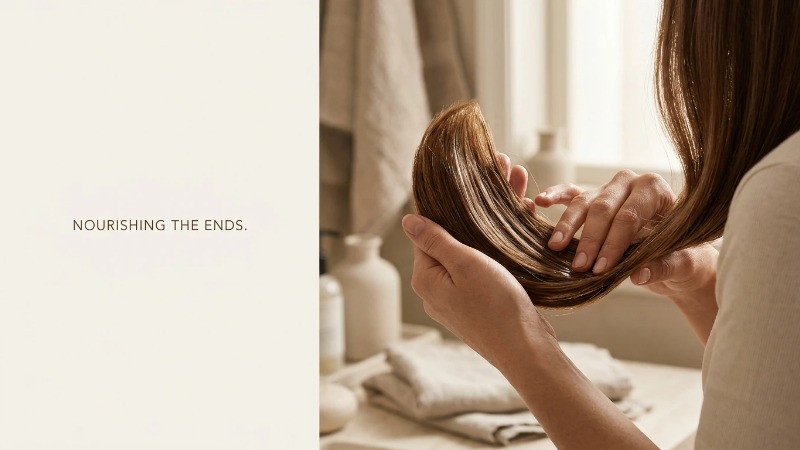
Method 1: Pre-Wash Oil Treatment
This is where penetrating oils shine. Apply oil to dry hair 30 minutes to a few hours before you shampoo, focusing on mid-lengths and ends. The pre-wash contact time lets oils like coconut and argan reduce the protein loss that happens during washing.
- Warm a small amount of oil between your palms.
- Work it through dry hair, ends first, then up toward the mid-lengths.
- Leave it for 30 minutes (or longer for very dry hair).
- Shampoo as normal — you may need two gentle passes to fully rinse.
Method 2: Leave-In / Finishing Oil
For everyday shine and frizz control, use a light oil as a finisher. On damp hair, it helps with detangling and frizz as hair dries. On dry hair, it smooths flyaways and adds gloss.
Golden rule: apply to mid-lengths and ends only, never the roots. A finishing oil at the scalp is the fastest route to a greasy look.
How Much to Use (By Hair Length)
- Short hair: 1–2 drops.
- Shoulder-length: 3–4 drops.
- Long or thick hair: 5–6 drops, warmed and distributed evenly.
Start with less than you think you need. You can always add a drop; you can't easily take it back out.
Safety, Patch-Testing, and What to Look For on the Label
Because anything you put on your scalp interacts with skin, treat oils with the same care you'd give a new skincare product.
Patch-test first. Dab a small amount on the inside of your forearm or behind your ear, then wait 24 hours. This matters most for essential-oil blends (rosemary, peppermint, tea tree), which are potent and a common cause of irritation.
Read the INCI list. The ingredient list uses standardized botanical names — argan appears as Argania Spinosa Kernel Oil, jojoba as Simmondsia Chinensis Seed Oil. If a product claims to be "pure" but lists silicones, fragrance, or mineral oil high on the list, it's a blend, not a single oil. Neither is bad, but you should know what you're buying.
Understand certifications. "Cold-pressed" signals the oil was extracted without high heat, which better preserves its fatty acids. "Organic" refers to how the source crop was grown. Both are quality signals — they do not guarantee a particular result on your hair.
If you're dealing with persistent hair loss, sudden shedding, an itchy or flaking scalp, or any painful scalp condition, see a dermatologist. No oil substitutes for a medical evaluation, and treating a real condition with oil alone can delay care that works.
Common Mistakes to Avoid
- Oiling the scalp when you shouldn't. Finishing oils belong on lengths and ends, not roots — unless you're specifically doing a scalp treatment.
- Using too much. More oil doesn't mean more benefit; it means buildup and greasiness.
- Skipping the patch test, especially with essential-oil blends.
- Expecting oils to reverse hair loss. They protect and condition; they don't regrow follicles.
- Applying heavy oils like castor undiluted, then struggling to wash them out.
Frequently Asked Questions
Which oil is best for hair growth?
No topical oil is a proven guaranteed grower. What oils can do is reduce breakage so you retain more length — coconut and argan are strong choices for that. Rosemary oil has attracted research interest for the scalp, but it must be diluted in a carrier oil. For genuine growth concerns, a dermatologist can assess the actual cause.
Can I leave oil in my hair overnight?
Yes, an overnight pre-wash treatment can deeply condition dry or coarse hair. Protect your pillow with a towel or silk cover, and wash the oil out in the morning. If you have a fine, oily-prone scalp, keep overnight oiling to the ends only or skip it in favor of a shorter treatment.
Is coconut oil good for all hair types?
No. Coconut oil is excellent for dry, porous, and curly hair, but its penetrating, protein-binding nature can make protein-sensitive or very fine hair feel stiff and dry. If coconut oil leaves your hair crunchy, switch to a sealing oil like jojoba or grapeseed.
How often should I oil my hair?
For pre-wash treatments, once or twice a week suits most people. For light finishing oils, a couple of drops on the ends can be part of your daily routine. Fine hair generally needs less frequent, lighter application than coarse or curly hair.
Do hair oils cause buildup or acne?
They can, if overused or applied to the scalp and hairline. Heavy oils near the forehead or back may contribute to breakouts in acne-prone skin. Stick to lengths and ends, use small amounts, and choose lighter oils (jojoba, grapeseed) if you're prone to congestion.
Conclusion and Next Step
The whole game comes down to one principle: match the oil to your hair's texture and your specific goal, not to whatever's trending this week. Dry and coarse hair wants penetrating richness; fine hair wants a light finishing touch; scalp concerns want gentle, properly diluted care.
Your next step: use the quick-match table above to identify your hair type and main concern, pick one oil that fits, and patch-test it. Then give it a fair trial — about two weeks of consistent use — before deciding whether it's earned a permanent spot in your routine. And if hair loss or a scalp condition is the real issue, book that dermatologist visit first.