
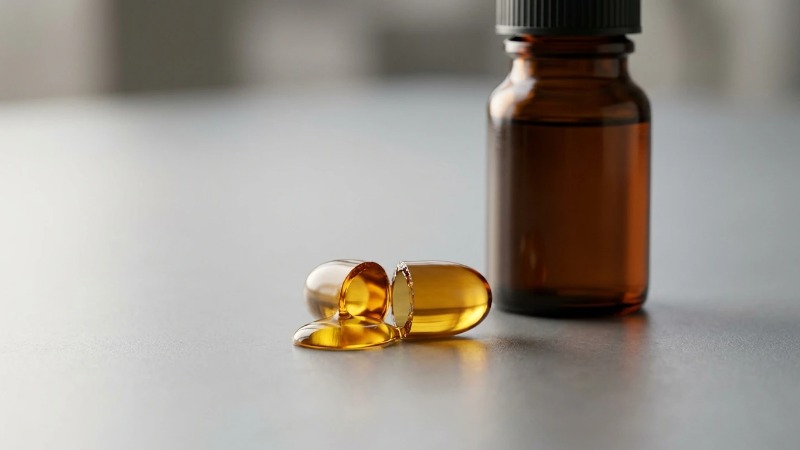
Snip open a soft amber capsule, squeeze out the golden oil, and dab it onto a healing cut or a fresh surgical scar. That ritual has been handed down through generations of medicine cabinets — a folk remedy so widespread that many people never stop to ask whether it works.
Here's what you'll walk away knowing: whether this beloved habit actually improves how scars look, what the dermatology research genuinely shows, and — if the answer disappoints you — what to do instead. No hype, no miracle claims, just an honest look at a very popular idea.
The Quick Answer
Vitamin E is a well-studied antioxidant and a decent moisturizer, but current evidence does not show it reliably improves scar appearance. In several controlled studies it performed no better than a plain emollient, and in one frequently-cited trial a meaningful share of participants developed contact dermatitis. The honest answer is more nuanced than the marketing suggests.
Key Takeaways
- The verdict: Research does not support vitamin E as an effective scar treatment — it usually performs no better than a basic moisturizer.
- The risk: Topical vitamin E can trigger contact dermatitis in some users, and in acne-prone skin it may clog pores.
- The caveat: Any "improvement" people notice often comes from hydration, which any occlusive moisturizer provides.
- What works instead: Silicone gel or sheets plus daily sun protection are the evidence-backed basics for scar management.
- When to escalate: Raised, spreading, or persistent scars deserve a board-certified dermatologist, not a capsule.
What Vitamin E Actually Is (and Why It Ended Up in Scar Products)
Vitamin E is a fat-soluble nutrient that acts as an antioxidant — it helps neutralize the unstable molecules (free radicals) that damage cells. On the skin, it's a legitimate moisturizer and a common ingredient in creams and serums.
That much is real. The trouble starts when "helps protect and hydrate skin" gets stretched into "erases scars."
Tocopherol vs. Tocopheryl Acetate: Reading the INCI Label
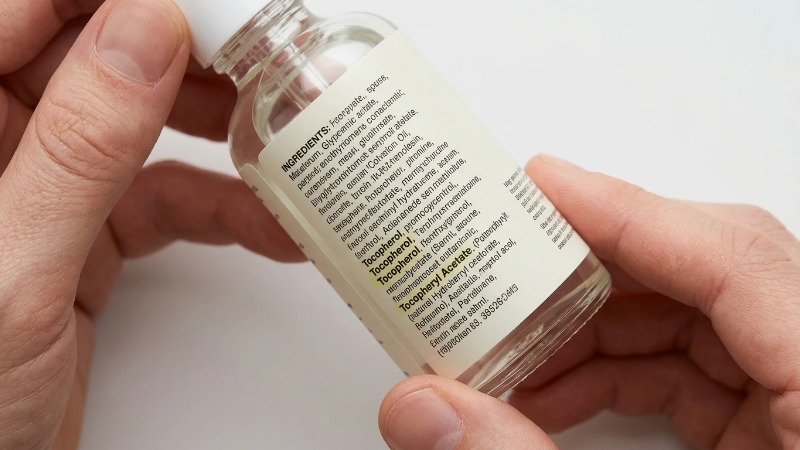
Flip a product over and you'll see vitamin E listed by its INCI (International Nomenclature of Cosmetic Ingredients) name. Two forms dominate:
- Tocopherol — the active, ready-to-work form. More potent as an antioxidant but less stable, so it degrades faster.
- Tocopheryl Acetate — a stabilized derivative that lasts longer in the bottle. Your skin has to convert it before it becomes active, which happens inefficiently on the surface.
You may also see alpha-tocopherol or mixed tocopherols. The form matters for shelf life and absorption — a useful thing to know, though it doesn't change the core evidence about scars.
Why Vitamin E Became the Go-To "Scar Vitamin"
Its reputation isn't pulled from thin air. Vitamin E genuinely is a lipid-soluble antioxidant that keeps skin supple and supports the skin barrier. Decades of skincare marketing took that real, modest function and inflated it into scar-erasing promises. A helpful moisturizer became a "healing hero" — and the myth stuck.
How Scars Actually Form (The Part Most Articles Skip)
To judge any scar treatment fairly, you need a quick tour of how scars are built in the first place.
The Three Phases of Wound Healing
Wound healing moves through three overlapping stages:
- Inflammation — the body cleans and protects the injury (the first days).
- Proliferation — new tissue and collagen fill the gap (weeks).
- Remodeling — collagen reorganizes and the scar matures, a process that can run 12 months or longer.
That remodeling phase is where a scar's final appearance is really decided. It's also long — which is exactly why people credit whatever they happened to be applying when a scar naturally faded over a year.
Types of Scars — Because "Scar" Isn't One Thing
Different scars behave differently, and no single product suits all of them:
- Flat/mature scars — settled, pale, level with the skin.
- Hypertrophic scars — raised and red but staying within the wound border.
- Keloids — raised scars that grow beyond the original injury and often need professional treatment.
- Atrophic (pitted) scars — depressions in the skin, classically from acne or chickenpox.
What nudges one type can do absolutely nothing for another. That alone should make you skeptical of any product claiming to fix "scars" as a whole.
Does Vitamin E Reduce Scar Appearance? What the Research Shows
This is the heart of the matter, so let's be careful and specific.
The Direction of the Evidence
Multiple controlled studies published in peer-reviewed dermatology journals have compared topical vitamin E against a plain base emollient on scars. The general finding: vitamin E offered no measurable improvement in cosmetic scar outcome over the moisturizer alone. In one well-known study, a notable portion of participants actually developed contact dermatitis from the vitamin E preparation.
Clinical reviews summarizing this body of work reach a consistent conclusion: the data don't support vitamin E as an effective treatment to improve the look of scars.
Board-certified dermatologists generally advise that while vitamin E is a fine moisturizing ingredient for intact skin, it should not be relied upon to change how a scar looks — and patients prone to sensitive skin should be cautious, since irritation is a documented risk.
Where the Confusion Comes From
Here's the twist that keeps the myth alive: keeping a healing scar moisturized genuinely makes it look and feel better in the short term. Hydrated skin is smoother, less itchy, and less prone to cracking. So people apply vitamin E oil, see real improvement, and give the vitamin the credit — when any occlusive moisturizer would have delivered the same effect.
It's a classic case of mistaking correlation for cause. The oil did something; it just wasn't the vitamin E doing the heavy lifting.
Vitamin E and Scar Tissue: The Realistic Take
Let's separate what vitamin E can plausibly do from what it can't:
- Can: hydrate the skin surface, provide mild antioxidant support on intact skin, improve immediate softness and comfort.
- Cannot: dissolve scar tissue, remodel established collagen, or "remove" a mature scar.
If a claim promises to erase scar tissue with topical vitamin E, treat it as marketing, not medicine.
Vitamin E for Old Scars vs. Fresh Wounds
On Fresh Wounds and Post-Surgical Scars
A common habit is to start applying vitamin E oil the moment stitches come out. Two cautions here. First, never apply it to broken or open skin — that raises the risk of irritation and interferes with the wound's own healing process. Second, even once the skin has closed, the evidence doesn't show vitamin E outperforming a basic moisturizer during that critical remodeling window.
On Old, Established Scars
People often search for the best vitamin E treatment for old scars, hoping to smooth something that's been there for years. The honest answer: a mature scar is stable, reorganized collagen. A topical antioxidant is very unlikely to alter its structure. For old scars, the realistic goal is management — keeping them supple, protected from the sun, and less noticeable — not erasure.
Pros & Cons of Using Vitamin E on Scars
| Potential Pros | Documented Cons / Limits |
|---|---|
| Cheap and widely available | No strong evidence it improves scar appearance |
| Genuine moisturizing / emollient effect | Can cause contact dermatitis in a meaningful share of users |
| Antioxidant properties on intact skin | May worsen appearance in some cases, per studies |
| Low barrier to try at home | Not suitable on open wounds; can clog pores in acne-prone skin |
What Dermatologists Recommend Instead (Evidence-Backed Options)
Debunking is only half the job. Here's what actually has support behind it.
Silicone Gel and Sheets — The Current Standard
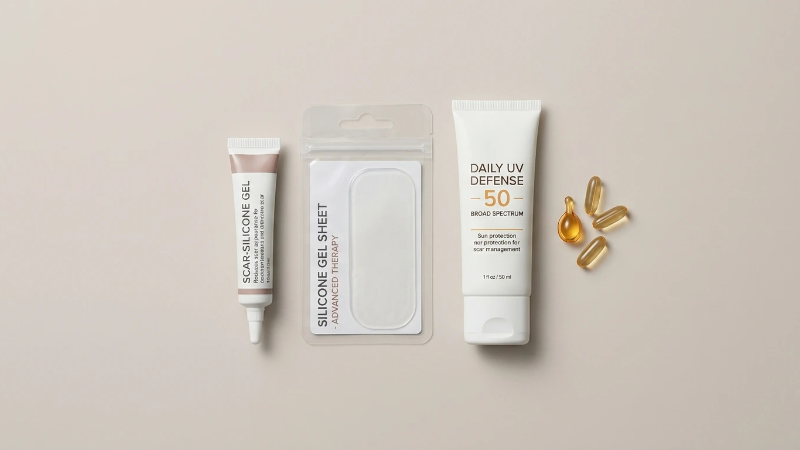
Silicone-based products are widely considered a first-line option for scar management and are backed by clinical guidelines. Applied consistently over weeks to months, silicone helps flatten and soften raised scars and reduce redness, likely by maintaining hydration and regulating collagen at the surface. It's the closest thing to a well-supported over-the-counter workhorse.
Sun Protection — The Most Underrated Step
Fresh scar tissue is vulnerable to the sun. UV exposure can darken a scar and lock in hyperpigmentation, making it far more visible long-term. Daily broad-spectrum SPF on a healing or recent scar is, for many people, more impactful than any serum in the drawer. It's simple, cheap, and genuinely evidence-aligned.
Other Options to Know
Depending on the scar type, dermatologists may also consider:
- Onion extract gels — popular over the counter, with mixed but not unreasonable evidence.
- Proper moisturizing and occlusion — keeping the area hydrated supports comfortable healing.
- In-office procedures — laser resurfacing, microneedling, or corticosteroid injections for keloids and hypertrophic scars. These require a qualified professional and aren't DIY.
How to Patch-Test and Use Vitamin E Safely (If You Still Want To)
If you'd still like to try it — for its moisturizing quality, with realistic expectations — do it carefully.
Step-by-Step Patch Test
- Apply a small amount to the inner forearm.
- Wait 24–48 hours without washing the area heavily.
- Check for redness, itching, swelling, or bumps before using it on your face or scar.
Safe-Use Guidelines
- Apply only to fully closed, intact skin — never open wounds or fresh stitches.
- Stop immediately if irritation appears.
- Be extra cautious if you have sensitive or eczema-prone skin, or a known vitamin E allergy.
- If you're acne-prone, remember pure oils can clog pores.
- See a dermatologist rather than self-treating if the scar is raised, spreading, painful, or emotionally distressing.
Common Mistakes People Make With Vitamin E and Scars
- Applying capsule oil to open wounds — a genuine irritation and healing risk.
- Expecting old scars to disappear — mature collagen doesn't respond to topical oils.
- Skipping the patch test — the fastest way to discover a contact allergy the hard way.
- Ignoring sunscreen — arguably the single biggest missed opportunity in scar care.
- Assuming "natural" or "vitamin" means "risk-free" — vitamins can still cause reactions.
Frequently Asked Questions
Does vitamin E oil remove scars completely?
No. There's no reliable evidence that vitamin E oil removes or erases scars. It can moisturize the skin and make a scar feel softer, but it won't dissolve established scar tissue or make a scar vanish.
Is vitamin E or vitamin C better for scars?
They play different roles. Vitamin C is more studied for supporting collagen production and helping with pigmentation and overall brightness, which can be relevant for discolored scars. Vitamin E's scar-specific evidence is weak. Neither is a guaranteed fix, but for pigmentation concerns vitamin C generally has the stronger rationale.
Can I put vitamin E on a fresh wound or stitches?
Avoid applying it to open skin, fresh stitches, or unhealed wounds. It can cause irritation and may interfere with healing. Wait until the skin has fully closed, and even then, prioritize evidence-backed options like silicone and sun protection.
How long does vitamin E take to work on scars?
Since the evidence doesn't show it meaningfully improves scar appearance, there's no reliable timeline for a cosmetic result. Any softness or comfort you notice is a hydration effect and appears within days — but that's moisturizing, not scar remodeling. Scars naturally mature over 12 months or more regardless of what you apply.
Does vitamin E help with acne scars specifically?
Not meaningfully for the pitted (atrophic) scars acne commonly leaves behind. Those depressions involve lost tissue that topical oils can't rebuild. Procedures like microneedling or laser, performed by a professional, are far more relevant for that scar type.
Are there side effects of putting vitamin E on skin?
Yes. The most documented is contact dermatitis — redness, itching, and irritation — which can affect a meaningful share of users. In acne-prone skin, pure vitamin E oil can also clog pores and trigger breakouts. That's exactly why a patch test matters.
The Bottom Line & Your Next Step
Vitamin E is safe-ish and moisturizing for most people on intact skin, but it is not a proven scar treatment. The research repeatedly finds it performs no better than a plain emollient, and it carries a real risk of irritation. The evidence points elsewhere — toward silicone gel or sheets, diligent sun protection, and professional guidance for scars that concern you.
So here's your practical move: if you want to keep using vitamin E for its moisturizing feel, patch-test first and apply only to closed skin. But for results that actually matter, put your energy into the evidence-backed basics — and book a board-certified dermatologist for any scar that's raised, spreading, or simply won't settle.