
For decades, the standard advice for thinning hair was a trip to the pharmacy for a bottle of minoxidil and a twice-daily commitment you couldn't skip. Then a 2015 clinical trial quietly compared a humble herb-derived oil against that same drug — and the results made people rethink what was sitting in their kitchen cabinet.
Rosemary oil isn't magic, and it won't reverse genetic baldness overnight. But used correctly, it's one of the few natural scalp treatments with actual research behind it. This guide walks you through exactly how to use it, how much to use, and what to realistically expect.
Key Takeaways
- What it does: Rosemary oil may support hair growth by improving scalp circulation and reducing inflammation — it's most useful for mild thinning and poor scalp health, not advanced genetic loss.
- Dilution ratio: Use 3–5 drops of rosemary essential oil per tablespoon of carrier oil (about 1–2% concentration). Never apply it undiluted.
- Frequency: Apply to the scalp 2–3 times per week for best results.
- Timeline: Expect visible changes only after 3–6 months of consistent use.
- Safety: Always do a 24-hour patch test first, and consult a doctor for sudden or patchy hair loss.
What Is Rosemary Oil and Why Do People Use It for Hair?
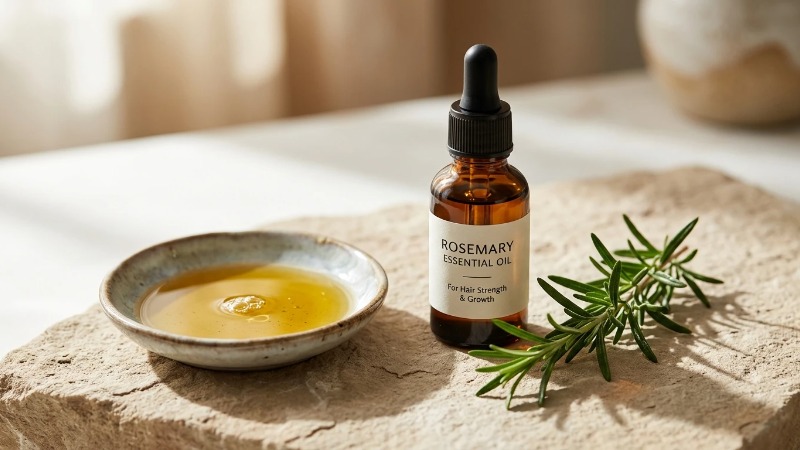
Rosemary essential oil (INCI: Rosmarinus officinalis leaf oil) is a concentrated plant extract steam-distilled from the leaves of the rosemary herb. On the scalp, it's valued for its ability to stimulate blood flow and its anti-inflammatory, antioxidant properties — both linked to a healthier environment for hair follicles.
So does it work? Yes — rosemary oil may support hair growth by improving scalp blood flow and calming inflammation. The key is using it correctly and consistently, which is exactly what the steps below cover.
The Evidence: What Research Actually Shows
The most frequently cited study is a 2015 trial published in Skinmed that compared rosemary oil against 2% minoxidil in people with pattern hair loss over six months. Both groups saw a comparable increase in hair count by the end, and the rosemary group reported less scalp itching.
That sounds impressive, but context matters. The sample was relatively small, it studied one specific type of hair loss, and "comparable to a low-dose formula" isn't the same as "cures baldness." Smaller lab and animal studies suggest rosemary compounds like carnosic acid may help repair nerve and tissue damage tied to follicle health, but human evidence is still limited.
Bottom line: rosemary oil shows genuine promise, but results vary by person, and it is not a guaranteed treatment for genetic hair loss or medical conditions.
Before You Start: Prerequisites and Realistic Expectations
Rosemary oil works best for people dealing with mild thinning, a dry or flaky scalp, product buildup, or generally sluggish growth. If your scalp health is poor, this is a low-risk place to start.
It is not the right first move if you're experiencing sudden shedding, patchy bald spots, hair loss after illness or childbirth, or any loss paired with itching, pain, or scaling. Those patterns can signal thyroid issues, autoimmune conditions, or infections — see a dermatologist instead of self-treating.
Finally, set your clock correctly. Hair grows roughly a centimetre a month, so no topical treatment shows meaningful results in weeks. Consistency over 3–6 months matters more than any single application.
What You'll Need: Tools and Materials
The shopping list is short, but quality matters more than quantity — especially with the oil itself.
- Pure rosemary essential oil. Look for "100% pure," a listed Latin name (Rosmarinus officinalis), GC/MS testing, and a dark glass bottle (light degrades essential oils). Avoid anything labelled "fragrance oil" — that's synthetic and not for skin use.
- A carrier oil to dilute it (details below).
- Optional tools: a dropper bottle for pre-mixing blends, a scalp massage brush, an applicator brush for sectioning, and a microfiber towel to protect pillows and clothing.
Quick Comparison Table: Best Carrier Oils to Pair With Rosemary Oil
| Carrier Oil | Best For Hair Type | Key Benefit | Texture / Weight |
|---|---|---|---|
| Jojoba | All types, oily scalps | Closest to natural sebum; non-greasy | Light |
| Coconut | Dry, coarse hair | Penetrates the shaft; reduces protein loss | Medium (solid at cool temps) |
| Argan | Dry, frizzy, damaged hair | Rich in vitamin E and fatty acids | Medium |
| Castor | Thinning edges, overnight use | Thick and conditioning; popular for growth blends | Heavy (dilute with a lighter oil) |
How to Apply Rosemary Oil to Your Scalp: Step-by-Step
Follow these six steps in order. The first one is non-negotiable, and the rest take about 10 minutes once you have your blend mixed.
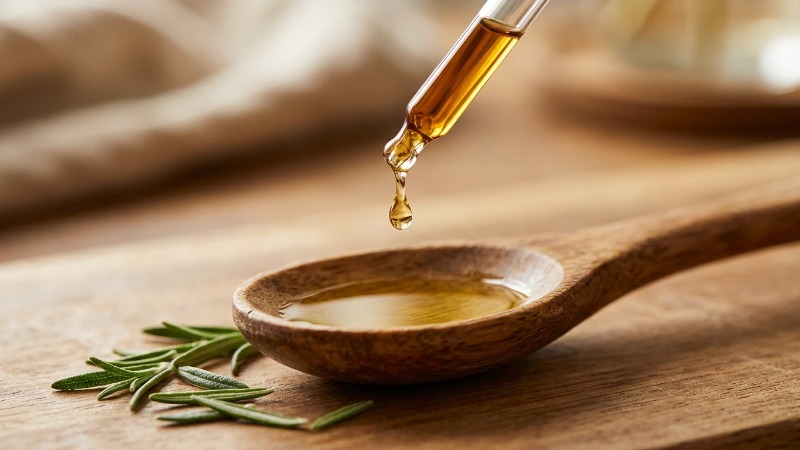
Step 1: Do a Patch Test First (Non-Negotiable)
Mix a small amount at your intended dilution, then apply a dab to the inner forearm or behind the ear. Cover it lightly and wait 24 hours.
Watch for redness, itching, burning, swelling, or a rash. If any of these appear, wash it off and don't use the blend. No reaction after a full day means you're clear to move on.
Step 2: Dilute the Rosemary Oil Correctly
Add 3–5 drops of rosemary essential oil to 1 tablespoon (about 15 ml) of carrier oil. That lands around a safe 1–2% concentration. Undiluted essential oil can irritate or even burn the skin, so this step is not optional — more oil is not better.
Step 3: Warm and Apply to Your Scalp
Gently warm the blend by rubbing it between your palms or resting the bottle in warm water for a minute (never microwave essential oils). Part your hair into sections and apply the oil directly onto the scalp, not just the lengths — the follicles you want to help are at the roots.
Step 4: Massage for 3–5 Minutes
Use your fingertips (not nails) to massage in slow circular motions across the whole scalp. This is where a lot of the benefit comes from — scalp massage itself has been associated with increased hair thickness in small studies. [Image placeholder: circular fingertip massage technique across a sectioned scalp.]
Step 5: Leave In or Rinse — Choosing Your Method
You have two options. For a rinse-out treatment, leave the oil on for 30 minutes to an hour, then shampoo it out. For an overnight treatment, wrap your hair in a towel or cap to protect bedding and wash it out in the morning.
Lighter blends (jojoba, argan) work well left in on non-wash days; heavier ones (coconut, castor) are better rinsed. When washing out, apply shampoo to dry-ish hair first, then add water — it lifts oil more effectively.
Step 6: Track Your Progress
Take a photo of the same area — hairline, part, or crown — under the same lighting every two weeks. Progress is slow and easy to miss day to day, so a 12-week photo journal is the honest way to judge whether it's working for you.
3 Easy DIY Rosemary Oil Hair Treatments
Once you're comfortable with the basics, these beginner-friendly recipes give you a starting point for different needs.
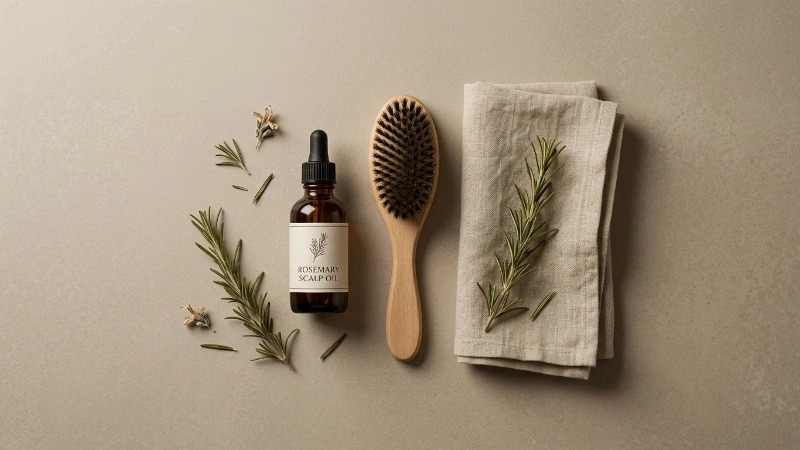
Recipe 1: Simple Scalp Massage Oil
Combine 2 tablespoons jojoba oil with 8–10 drops rosemary essential oil. Massage into the scalp 2–3 times a week and rinse after 30–60 minutes. A reliable all-purpose blend for weekly use.
Recipe 2: Overnight Growth Serum
Mix 1 tablespoon castor oil, 1 tablespoon argan or coconut oil, and 8–10 drops rosemary oil. The castor oil is thick and conditioning, so this is best applied at night and washed out in the morning. Use once or twice a week.
Recipe 3: Rosemary Water Rinse (Alcohol-Free Alternative)
Simmer a handful of fresh rosemary sprigs (or 2 tablespoons dried) in 2 cups of water for 15 minutes, cool, and strain. Pour over your scalp as a final rinse after shampooing. Ideal for sensitive scalps or anyone who dislikes oil buildup — no essential oil concentration to worry about.
Rosemary Oil vs. Minoxidil: How Do They Compare?
If you're weighing your options, it helps to see them side by side without hype in either direction.
Comparison Table
| Factor | Rosemary Oil | Minoxidil |
|---|---|---|
| Evidence level | Limited; one notable small human trial plus lab studies | Strong; FDA-approved with decades of clinical data |
| Side effects | Mainly skin irritation if under-diluted | Scalp dryness, initial shedding, unwanted facial hair in some users |
| Cost | Low; one bottle lasts months | Moderate; ongoing repurchase |
| Regulatory status | Not FDA-approved for hair loss | FDA-approved for pattern hair loss |
| Best for | Mild thinning, scalp health, natural-first users | Diagnosed pattern hair loss wanting proven results |
Pros and Cons of Using Rosemary Oil for Hair
| Pros | Cons |
|---|---|
| Natural and widely available | Results are slower and less consistent |
| Affordable, one bottle lasts a long time | Can irritate skin if not diluted properly |
| Low side-effect risk when used correctly | Not FDA-approved for hair loss |
| Doubles as a scalp-health and circulation aid | Won't reverse advanced genetic baldness |
Troubleshooting: Common Mistakes and How to Fix Them
Scalp irritation or itching? You're likely using too much essential oil or applying too often. Drop back to 3 drops per tablespoon and reduce to once or twice a week.
Hair feels greasy? Use less oil, switch to a lighter carrier like jojoba, and make sure you shampoo dry hair before wetting it. Rinse-out beats overnight if your hair runs oily.
No results after a few months? Reassess honestly. Confirm you've been consistent, pair the oil with good habits (balanced diet, gentle handling, managing stress), and consider that your type of hair loss may need medical treatment.
Buildup or flaking? Add a clarifying shampoo once a week to clear residue, and don't layer oil on an already-oily scalp.
Safety, Precautions, and Who Should Avoid It
Essential oils are potent, and "natural" doesn't mean risk-free. As a commonly advised precaution, people who are pregnant or breastfeeding should avoid rosemary essential oil unless cleared by a doctor.
Those with epilepsy or high blood pressure are also frequently advised to be cautious with rosemary oil, so check with a healthcare provider first. Keep it away from young children, and be extra careful if you have sensitive skin or known plant allergies.
Never apply it undiluted, keep it out of the eyes, and stop use if irritation develops. For any hair loss that is sudden, patchy, or accompanied by other symptoms, consult a dermatologist rather than relying on home remedies.
Frequently Asked Questions
How long does rosemary oil take to grow hair?
Most people need at least 3–6 months of consistent use (2–3 times weekly) before noticing changes, since hair grows slowly. The 2015 comparison study measured results at six months.
Can I leave rosemary oil in my hair overnight?
Yes, as long as it's properly diluted in a carrier oil. Protect your pillow with a towel or cap and wash it out in the morning. If your scalp gets irritated, switch to a 30–60 minute rinse-out treatment instead.
How often should I use rosemary oil on my scalp?
Two to three times per week is the sweet spot. More frequent use raises the risk of buildup and irritation without adding benefit.
Is rosemary oil better than minoxidil?
Not necessarily "better" — one small study found comparable results for a specific type of hair loss, but minoxidil has far stronger, FDA-approved evidence. Rosemary oil is a gentler, more affordable natural option with a lower side-effect profile.
Can rosemary oil regrow bald spots?
There's no reliable evidence that it regrows fully bald areas. It may help with mild thinning and scalp health, but established baldness usually needs medical treatment. See a dermatologist for bald patches.
Does rosemary oil have side effects?
The main risk is skin irritation, redness, or itching — usually from applying it undiluted or too often. Rare allergic reactions are possible, which is why the patch test matters.
Final Recap and Your Next Step
The routine is simple: dilute 3–5 drops of rosemary oil in a tablespoon of carrier oil, massage it into your scalp for a few minutes, and repeat 2–3 times a week. Give it a full 12 weeks before judging results, and track your progress with photos. It's an affordable, low-risk option — just not a miracle cure.
Your next step: Do a patch test today with whatever blend you plan to use. If your skin stays calm after 24 hours, commit to the 12-week routine and start a simple photo journal so you can actually see what's changing. And if your hair loss is sudden or patchy, book a dermatologist appointment first — that's the smartest move you can make.