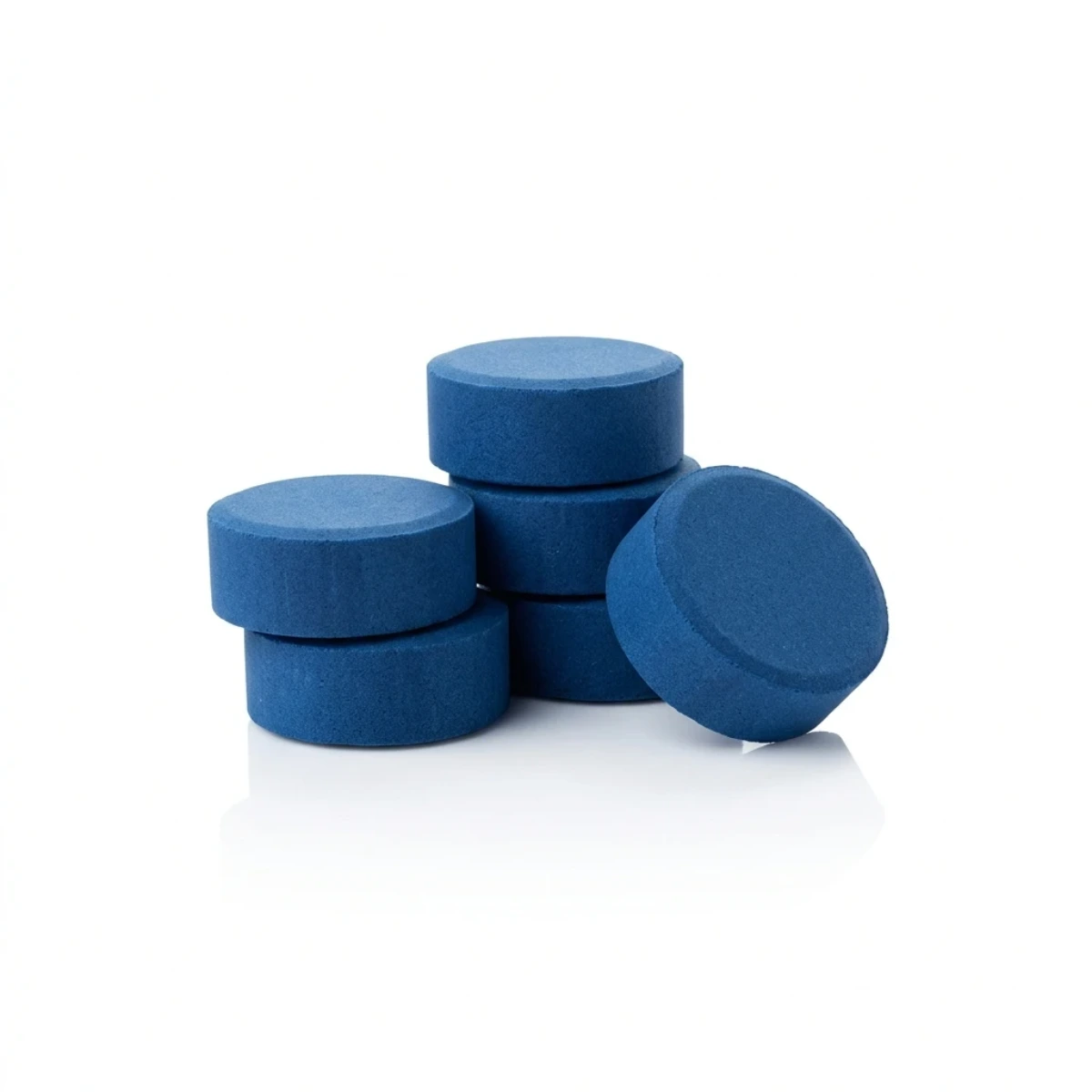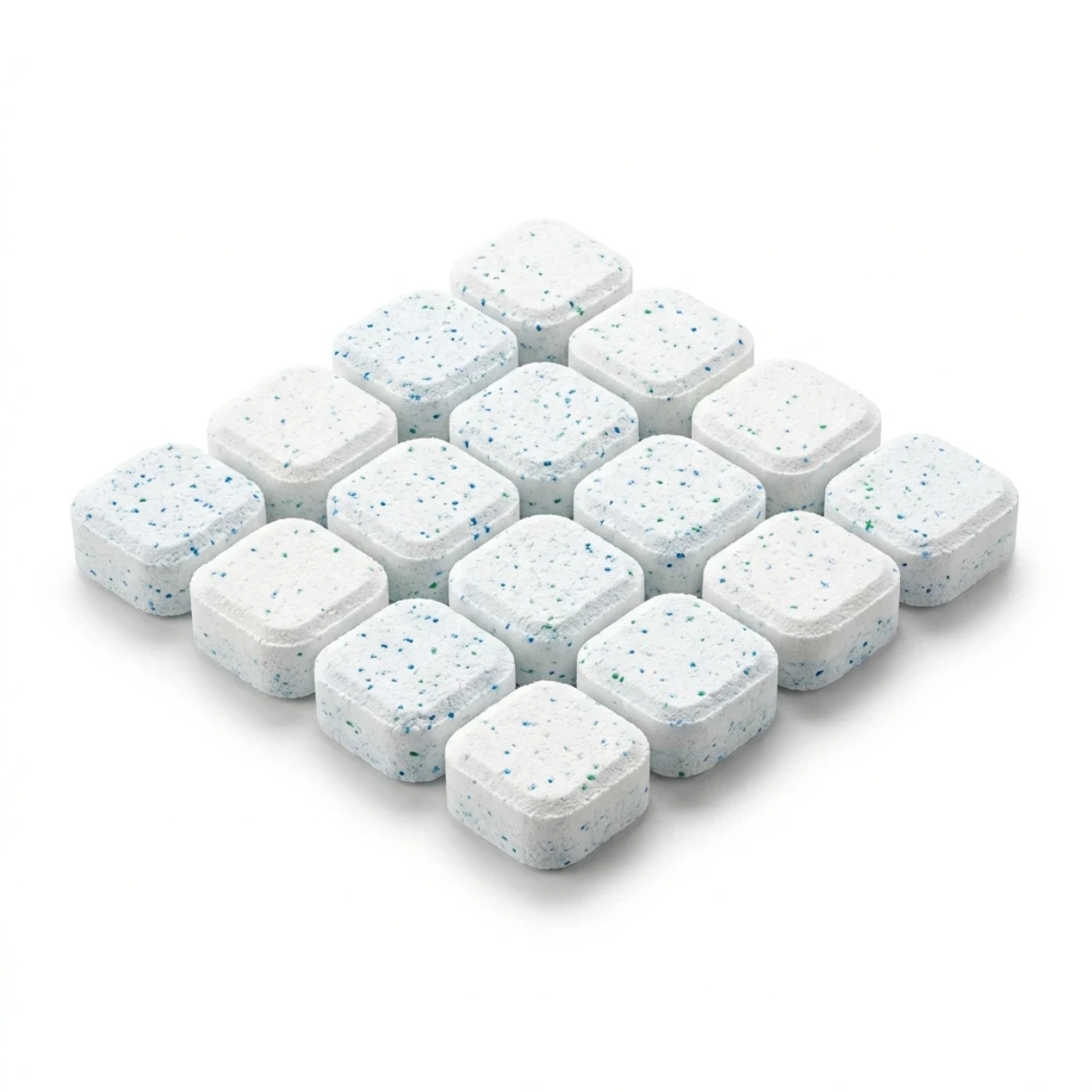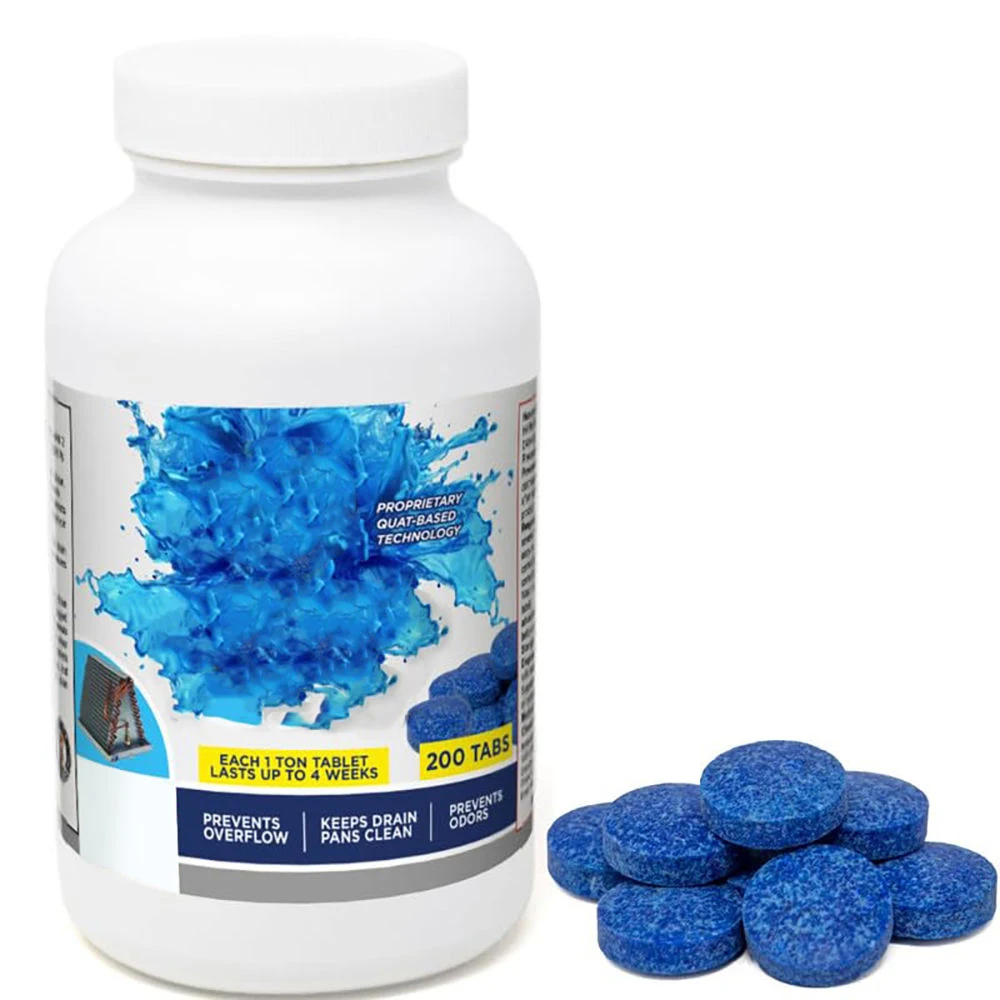

An antacid tablet fizzing in a glass of water is harmless, yet nobody leaves the packet within a toddler's reach. Toilet cleaning tablets sit in the same gap between "fine in use" and "not fine in the wrong hands," and the question of whether they are safe is settled mostly by formulation, packaging and labeling. Used as directed and stored properly, they are usually safe. That changes when the actives are concentrated, the pack is easy to open, or the label says more than the data can support, and the manufacturer controls most of those variables.
- Fizz tells you nothing about irritation; the acid, oxidizer and surfactant system does.
- Child-resistant packaging and clear dosing matter more than "non-toxic" wording on the front.
- Septic, natural and biodegradable claims need documents behind them before they reach artwork.
- Request the safety data sheet and confirm hazard classification for the destination market early.
"Effervescent Means Gentle": Actives and Irritation Risk
Toilet cleaning tablets are not automatically mild because they fizz. Effervescence comes from an acid reacting with a carbonate in water, and it says nothing about how the finished product behaves on skin, eyes or mucous membranes. Irritation potential depends on which acid, oxidizer or surfactant sits in the tablet and at what level.
How toilet bowl cleaning tablets work
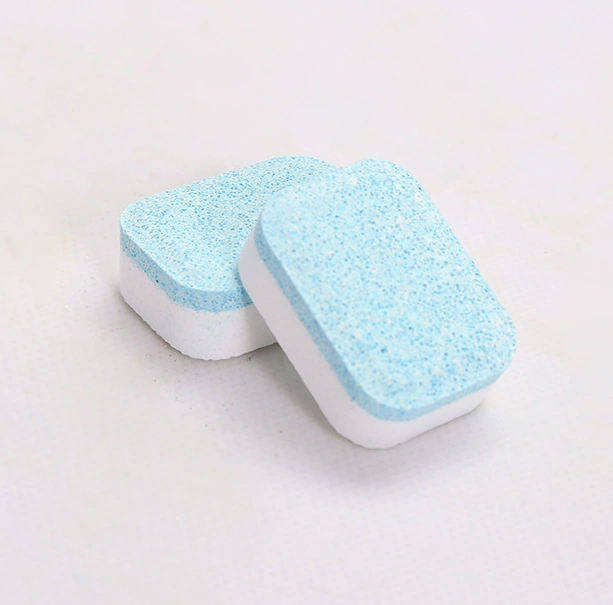
An effervescent cleaning tablet is a pressed solid that dissolves in water and releases gas while it does. In a mild system the pair is typically citric acid and sodium bicarbonate. The acid softens mineral scale and limescale; the bubbling agitates the water and helps spread the dissolved actives around the bowl. Surfactants lift soil and grease so they can be rinsed away with a flush or a brush. Fragrance and colorant are usually added for the user's benefit, not the cleaning's.
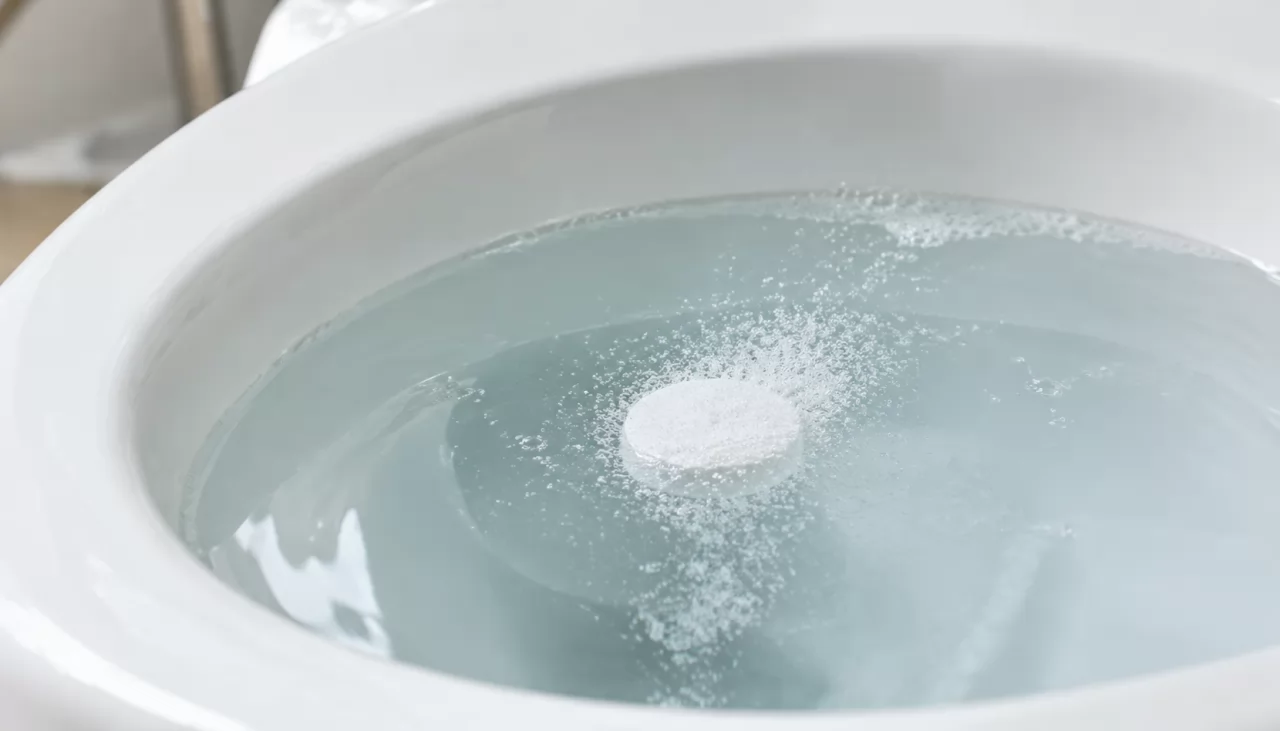
Stronger systems exist. Some tablets use a more aggressive acid for heavy scale, and others release chlorine to bleach and disinfect. They clean differently, and they carry a different hazard profile. A chlorine-releasing tablet should never be treated as a variation on a citric acid one.
Skin and eye irritation in handling
Risk shows up in three places. Pressing and packing can raise fine dust, which irritates eyes and airways. Wet hands touching a tablet or its residue can dry or sting the skin. And a tablet dropped, split or handled with a splash into the eye is a real exposure, however unlikely. Formulators typically reduce this by controlling the particle size going into the press, using binders that limit dusting, and choosing milder surfactants. Individually wrapped tablets also keep hands away from the product until the moment of use. None of this removes hazard labeling where it applies, and you should not expect it to.
Formulation choices to specify in your brief
Tell the manufacturer which active system you want and which you refuse. Say whether the tablet is meant for routine freshening or heavy descaling, because the two pull in opposite directions: more cleaning strength usually means more irritation potential. Do not combine acid-based and chlorine-releasing actives in one product or in one multi-pack, since contact between them can release hazardous gas. And fix the fragrance and colorant before stability testing, not after (a changed fragrance can change the hazard profile and the shelf behavior of the tablet).
Are Toilet Cleaning Tablets Safe for Pets and Kids?
Toilet cleaning tablets are not risk-free around children and pets, whatever the front of the pack says. A tablet is small, brightly colored and often scented, which makes it look like candy. A dissolved tablet leaves cleaning residue in the bowl, and pets drink from it. If swallowed, even a mild-acid tablet can upset the stomach, and a stronger one can burn. "Non-toxic" and "natural" are not accepted safety statements in most markets for this reason, and they can invite the very behavior you want to prevent.
Child-resistant packaging and dosage format
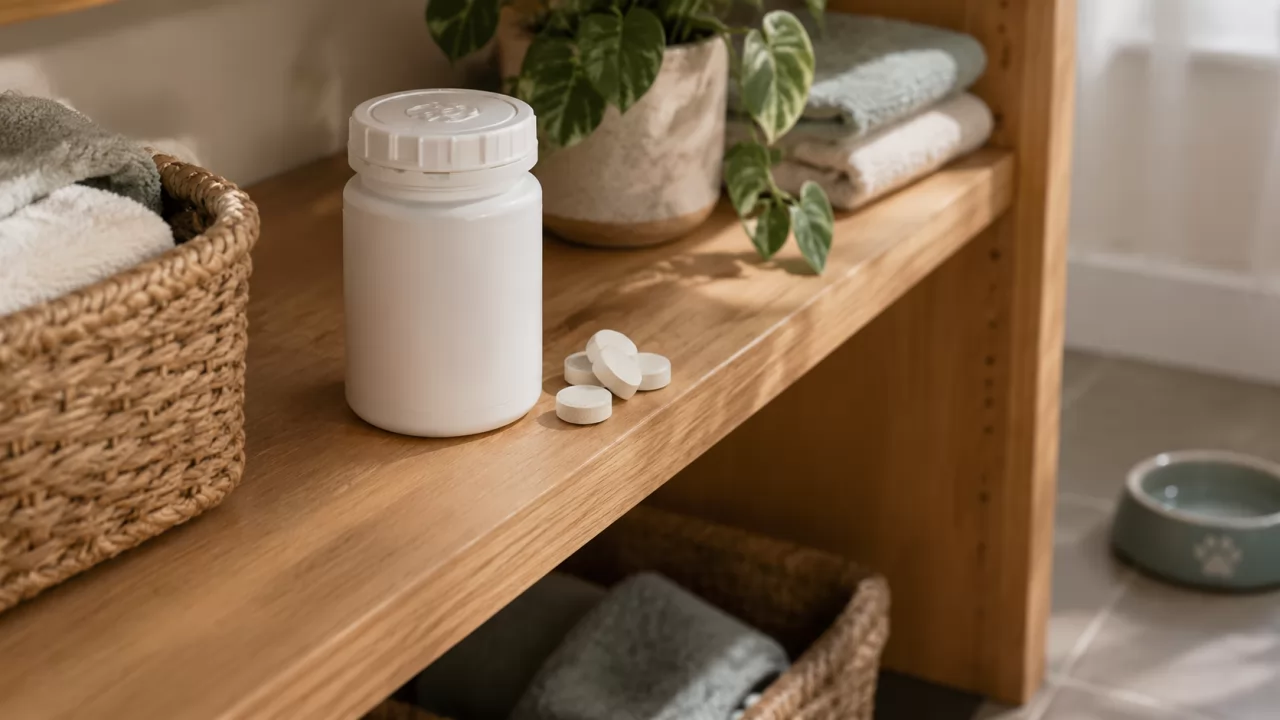
Child-resistant closures are required for some household chemical products in some markets, so check the rule for yours rather than assume. Where they are not mandatory, they are still worth specifying on jars and resealable pouches, since those are the formats most likely to be left open. A rigid jar with a proper closure is easier to make child-resistant than a soft pouch. A box with a tuck flap is the weakest option. Individual wrapping helps in two ways: it keeps the dose to one tablet per use, and it adds a layer a toddler has to get through. Wrap material, whether shrink film, foil or biodegradable film, should also protect the tablet from humidity, because a tablet that starts reacting in the pack is a quality problem and a safety one.
Warnings that actually change behavior
People read the part of a label that tells them what to do next. Put "keep out of reach of children," a short first-aid line and "close the lid after use" where the eye falls first, on the front or the back panel, not buried in a block of small type. A pictogram helps where the market requires hazard symbols. And a tip worth acting on: write the dosing instruction as a single action ("drop one tablet into the bowl") so the pack never has to be read twice.
Are Toilet Bowl Cleaner Tablets Safe for Septic Tanks?
Whether toilet bowl cleaner tablets are safe for septic tanks depends on the formulation and how often the tablet is used, not on the word "biodegradable." A septic system relies on bacteria to break down waste, and strong oxidizers, chlorine-releasing actives or heavy surfactant loads can stress that population if dosed frequently. Mild acid-carbonate tablets are generally considered a lower concern, but "septic-safe" is a claim you should only print with support.
Biodegradable surfactants and what the term covers
"Biodegradable" describes how a substance breaks down in the environment, usually judged by a recognized test method, and it does not mean a product is harmless to a septic tank or to people. Ask the manufacturer which surfactants are in the formula, whether the supplier can document biodegradability for them, and at what dose per use the product was designed. If the documentation covers the raw material but not the finished tablet, word the claim to match. Something like "formulated with biodegradable surfactants" is easier to defend than "septic-safe," and regulators in several markets look closely at unqualified green claims.
"Natural Formula" Is Not a Safety Claim
Natural, paraben free, cruelty free and no GMO describe sourcing or ingredient choices. They do not describe hazard. A natural acid can still irritate eyes, and a plant-derived surfactant can still sting broken skin. Buyers sometimes treat these phrases as a safety pass, and consumers read them the same way, which is exactly why they need careful placement on pack.
Keep each claim to what it states. "Paraben free" means the formula contains no parabens; it should not sit beside a line implying the product is gentle. "Cruelty free" is a statement about animal testing, and some markets or retailers expect specific proof or a recognized scheme before you use it. Claims also travel unevenly: wording that passes in one country can be challenged in another, so check each destination before locking the artwork. If a claim cannot be traced to a document, a supplier declaration or a test report, shorten it or drop it.
Standards, Documents and Compliance Checks
A safety data sheet (SDS, often still called MSDS) is a structured document that lists a product's composition, hazards, handling, first-aid and storage information. It is the first thing to request, and the hazard classification in it drives the label. In the EU, classification and labeling follow the CLP Regulation (EC) No 1272/2008; many other markets use the Globally Harmonized System (GHS) as their base, with local variations in format and language.
Beyond the SDS, ask for a certificate of analysis (COA) for the production batch, a stability report showing how the tablet holds up in its pack, and an audit report or quality system certificate. ISO 22716 is a guideline for good manufacturing practice in cosmetics; it is relevant evidence of process discipline, but toilet cleaning tablets are generally regulated as household chemicals or detergents, not cosmetics, so the product rules differ from the factory-quality rules. Detergent-specific requirements, such as the EU Detergents Regulation (EC) No 648/2004, can add ingredient and labeling duties.
One note that saves a reprint: confirm the hazard classification for your destination market before the artwork is finalized, because the signal word, pictograms and precautionary statements all follow from it.
Sourcing Safe Tablets as a Private Label Brand
A toilet cleaning tablets private label manufacturer should be able to show where safety is controlled at each step. At inquiry, you set the active system, the use case and the target market. At sampling, you test real use: dissolve rate, residue, fragrance in a closed bathroom, how the wrapped tablet behaves after a few weeks in a humid cupboard. During production, in-process checks catch weight, hardness and pressing consistency. Final inspection confirms the pack, closure, dose and printed label match the approved sample. Any change after approval to fragrance, color or binder should restart the review, since these alter the hazard profile as well as the look.
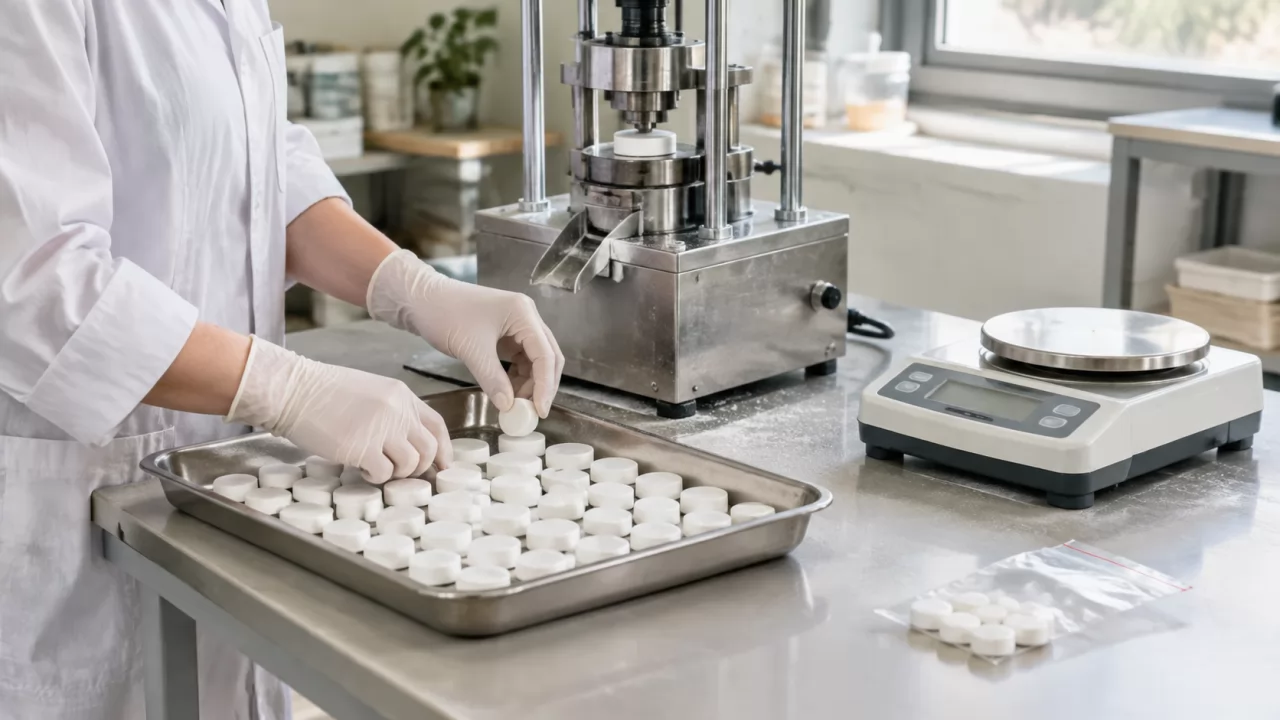
Poleview Group runs a six-step customization process of inquiry, design, sampling, production, inspection and delivery, and can supply an MSDS, COA and stability report alongside the samples, which keeps the documents tied to the exact formula you approve.
Poleview offers toilet bowl, dishwasher, washing machine and AC drain line cleaning tablets as customizable formats, with free samples available. Standard MOQ is 1,000 units, flexible depending on customization, and lead time runs 15-30 days depending on quantity and customization.
Safe Handling and Storage: Closing Checklist
Before you approve a launch, run through these points.
- Define the active system and the actives you will not allow.
- Set the packaging format, closure and individual wrapping.
- Request the SDS, COA and stability report.
- Test samples in real bathrooms, with real water and storage conditions.
- Review every label claim against a document.
FAQ
Can toilet cleaning tablets be used with other cleaners?
Not safely as a rule. Mixing acid-based products with bleach or chlorine-releasing cleaners can release hazardous gas, so the label should say to use the tablet alone and flush before using anything else.
What should be on the safety data sheet and label?
The SDS lists composition, hazard classification, first aid, handling, storage and disposal. The label carries the elements that follow from that classification in your market, such as signal word, pictograms and precautionary statements, plus directions, a keep-away-from-children line and contact information.
Do toilet cleaning tablets damage pipes or toilet surfaces?
Mild acid-carbonate tablets used as directed are generally not expected to, but stronger acid or chlorine systems used too often can wear on some finishes, seals and fittings. Ask for compatibility information on the specific formula and test it on the surfaces your customers actually have.
What does a private label manufacturer need from me to start a toilet cleaning tablet project?
Typically the use case, target markets, preferred actives, tablet size and weight, fragrance and color direction, packaging format and label artwork, plus your expected quantity. If you are unsure about any of it, say so; a manufacturer can propose options, but only you know which markets you will register in.
The next thing you will probably ask is how a sample should be stress-tested for shelf life and humidity before you commit to a first order.