
That half-used mascara at the back of your drawer? It might be older than you think — and quietly less safe to use. The good news: figuring out whether your makeup and skincare have expired takes about a minute once you know where to look.
Quick Answer: How to Check If Your Cosmetics Have Expired
To check a cosmetic expiration date, look for a printed expiry (EXP or BBE), read the PAO symbol (the little open-jar icon with a number followed by "M" for months), or decode the batch code using a free online checker. If none are visible, trust your senses — a changed smell, texture, or color usually means it's time to toss it.
The 3 Ways to Check at a Glance
- Look for a printed expiry date (EXP / BBE)
- Read the PAO symbol (open-jar icon with a number)
- Decode the batch code using a free online checker
Why Cosmetic Expiration Dates Matter
Picture reaching for that back-of-drawer mascara before a night out. It still has product left, so why waste it? The problem is that once opened, cosmetics slowly become a home for bacteria, and the preservatives that keep them fresh don't last forever.
Using expired products can mean reduced performance, unpleasant smells, and — in some cases — skin or eye irritation. This is especially true for anything used near the eyes or lips, where hygiene matters most.
What Happens When Makeup Expires
Over time, preservatives lose their effectiveness, oils can go rancid, and active ingredients degrade. A foundation might separate, a cream might change color, and a sunscreen may no longer deliver its full SPF protection.
Eye and lip products carry the highest hygiene risk because applicators travel back and forth between the product and sensitive areas. That's why they tend to have the shortest usable life.
Before You Start: What You'll Need
You don't need much to run a quick audit of your beauty bag:
- The product(s) you want to check
- A smartphone or computer for batch code lookups
- Good lighting or a magnifying glass — printed codes are tiny
- Optional: a fine-tip marker to log opening dates going forward
Method 1: Find the Printed Expiration Date
This is the most straightforward method. Many products, especially those with a shelf life under 30 months, print a clear expiry date somewhere on the packaging.
Understanding Common Date Labels
| Label | Meaning | What to Do |
|---|---|---|
| EXP | Expiration date | Discard after this date |
| BBE / BB | Best Before End | Quality guaranteed until this date |
| MFG / M | Manufacturing date | Calculate shelf life from here |
| PAO | Period After Opening | Countdown starts once opened |
Where to Look on the Packaging
Dates hide in predictable spots: the base of a bottle or jar, the crimped end of a tube, the bottom of the outer box, or along the edge of a label. Turn the product over first — that's usually where you'll find it.
Method 2: Read the PAO Symbol (Period After Opening)
The PAO symbol is your best friend when there's no printed expiry date. It's built specifically to tell you how long a product stays good after you break the seal.
What the Open-Jar Symbol Means
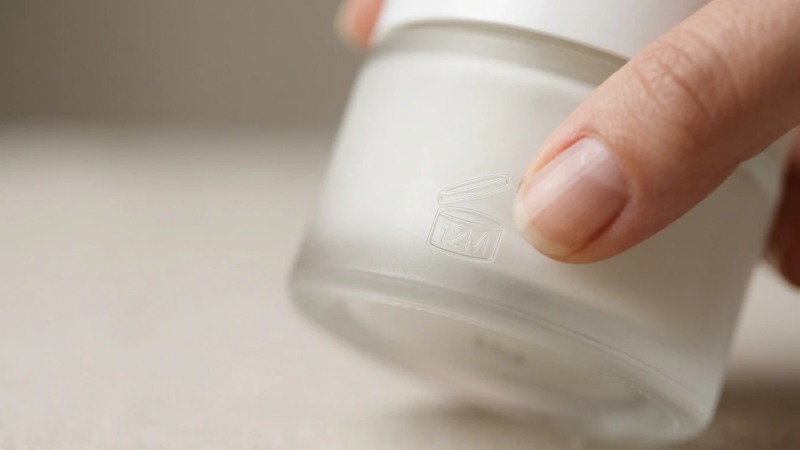
The PAO symbol looks like a small open cosmetic jar with a number and the letter "M" — for example, "6M" or "12M." That number tells you how many months the product remains safe to use after opening.
The key point: the countdown starts from your first use, not from the manufacturing date or the day you bought it. A "12M" cream opened today should be finished within roughly twelve months.
PAO Timelines by Product Type
These are typical industry guidelines, not hard guarantees — actual shelf life varies by brand and formulation.
| Product | Typical PAO | Notes |
|---|---|---|
| Mascara | 3–6M | Highest bacteria risk; replace sooner |
| Liquid foundation | 6–12M | Watch for separation |
| Lipstick | 12–18M | Discard if the smell changes |
| Powder products | 12–24M | Longer life; keep dry |
| Skincare creams | 6–12M | Jars expire faster than pumps |
| Sunscreen | Check EXP | Follow the printed expiry strictly |
Sunscreen deserves special attention. Because SPF efficacy is regulated and tied to safety, always follow the printed expiration date rather than relying on a PAO estimate.
Method 3: Decode the Batch Code
When a product shows neither an expiry date nor a PAO symbol, the batch code is your backup — and it's how you can estimate a product's manufacturing date.
What Is a Batch Code?
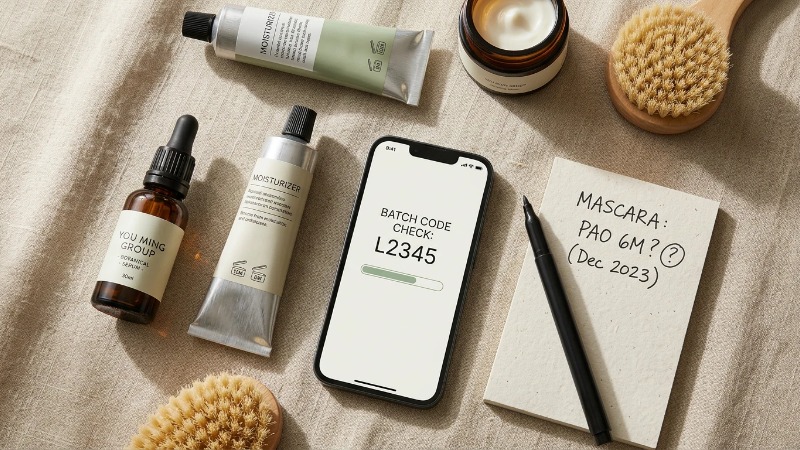
A batch code is a short alphanumeric string that brands stamp on products for production tracking. It usually encodes the manufacturing date, but it isn't human-readable on its own — you'll need a lookup tool to translate it.
How to Find and Read Your Batch Code
- Locate the code — it's stamped or ink-printed, often separate from the barcode
- Write it down exactly, including every letter and number
- Enter it into a free batch-code checker website
- Read the estimated manufacturing date the tool returns
- Apply the product's typical shelf life to estimate when it expires
[Screenshot of a batch code location on a product base]
[Screenshot of a batch code checker result]
Free Tools to Look Up Manufacturing Dates
Several free online batch-code lookup services let you enter a code and a brand name to get an estimated production date. Coverage varies by manufacturer, and the results are third-party estimates rather than official figures.
Treat these tools as a helpful clue, not a final verdict. If the result seems off, cross-check it against the product's smell and texture.
How to Spot Expired Cosmetics Without a Date
Codes wear off, boxes get tossed, and symbols fade. When that happens, your senses become the most reliable tool you have.
Warning Signs to Watch For
- A changed smell — sour, rancid, or oddly chemical
- Separation or curdling in liquids and creams
- A noticeable color shift or darkening
- Dry, crumbly, or hardened texture
- Stinging or irritation on application — stop using it right away
If a product causes any irritation, discontinue use immediately. When introducing a replacement, patch-test it on a small area first, especially if you have sensitive skin.
Troubleshooting: Common Problems When Checking
"I Can't Find Any Date or Symbol"
Check every surface — base, cap, tube seam, and label edge — under bright light or with a magnifier. If nothing turns up, fall back to the batch code, and if that's missing too, rely on the sensory signs above.
"The Batch Code Checker Doesn't Recognize My Product"
Batch-code databases don't cover every brand. If your product isn't recognized, contact the brand's customer service directly — most companies will decode the date for you if you provide the exact code.
"My Product Has No PAO Symbol"
Not every region or product type requires a PAO icon. In that case, use the manufacturing date (from the batch code) plus the typical shelf life for that product category to estimate expiry.
Best Practices to Extend Cosmetic Shelf Life
- Store products away from heat, humidity, and direct sunlight — the bathroom shelf is often the worst spot
- Keep lids sealed tightly and avoid double-dipping fingers into jars
- Sanitize brushes and applicators regularly
- Write the opening date on the product with a marker
- Buy smaller or travel sizes for products you use slowly
Frequently Asked Questions
Does makeup really expire if it's unopened?
Yes. Even sealed, products have a finite shelf life because preservatives and active ingredients degrade over time. Unopened items generally last longer than the PAO period, but they still don't last forever — check the printed expiry or batch code.
How long does mascara last after opening?
Most mascaras are best replaced within 3 to 6 months of opening. The wand repeatedly moves between the tube and your lashes, pumping in air and bacteria, which makes it one of the fastest products to spoil.
Is it safe to use makeup past its PAO date?
It's not recommended, particularly for eye and lip products where bacterial risk is highest. An expired product may underperform, smell off, or irritate skin. If you notice any adverse reaction, stop using it.
Where is the batch code on my product?
Look at the base of jars and bottles, the crimped end of tubes, or the underside of the outer packaging. It's usually a small stamped or printed code, distinct from the scannable barcode.
Do natural or preservative-free products expire faster?
Often, yes. Fewer or gentler preservatives typically mean a shorter shelf life, so these products may need to be used up more quickly. Follow the PAO symbol closely and store them carefully.
Take Control of Your Beauty Bag Today
Grab five products from your makeup bag right now and run them through the three methods — printed date, PAO symbol, and batch code. It takes just a few minutes and could save your skin some trouble.
Going forward, mark the opening date on each new product with a marker so you never have to guess again. Bookmark the PAO reference table above, do a quick audit, and safely discard anything past its prime — your skin will thank you.