
The brief usually exists first. Concept, price point and sales channel are set, and what remains is the mechanics of turning a sketch into a boxed bar of private label exfoliating soap. The sections below start from the finished bar and work back to the decisions that produce it. The last one covers the first thing to check before you send anything out.
How does private label exfoliating soap work from brief to shelf?
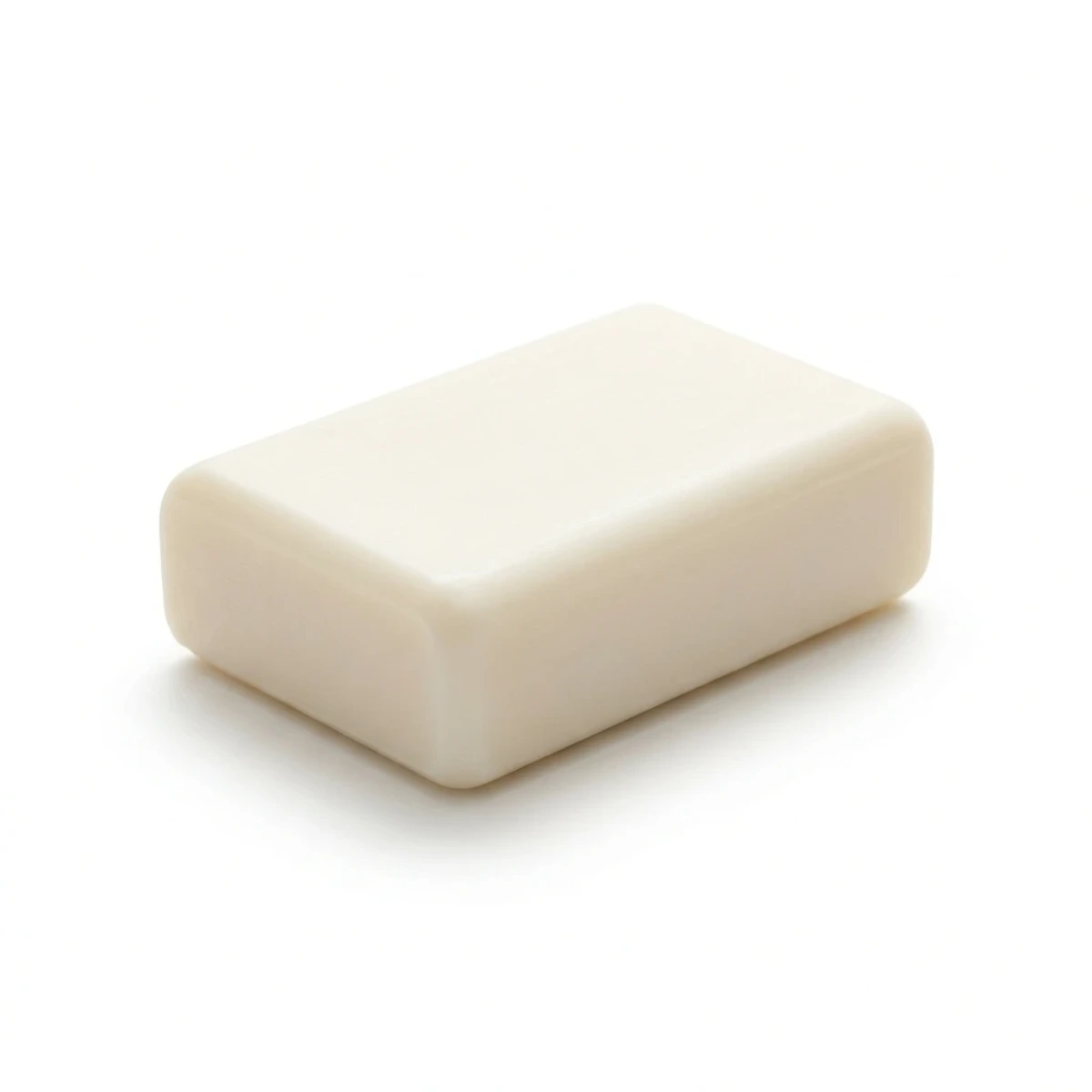
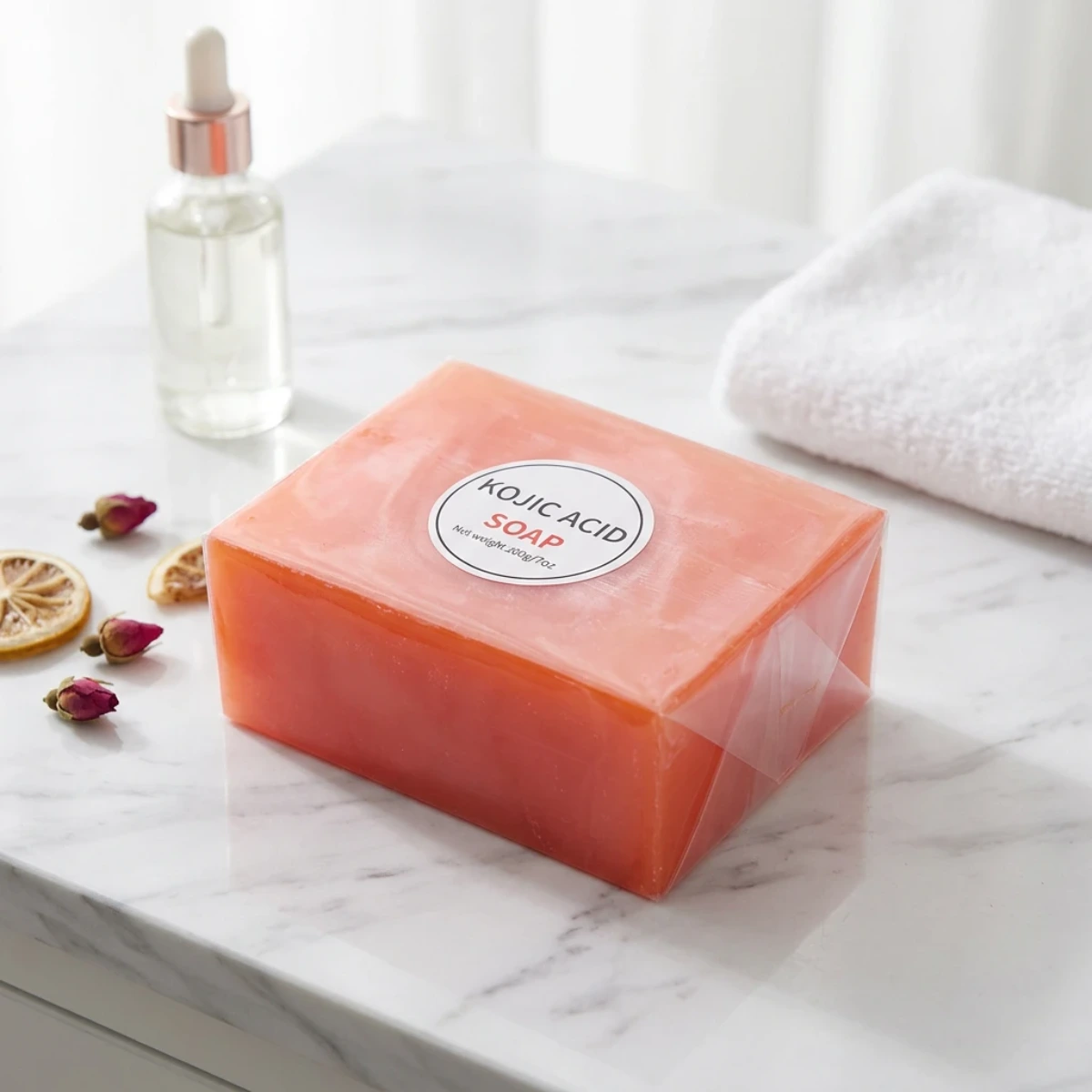
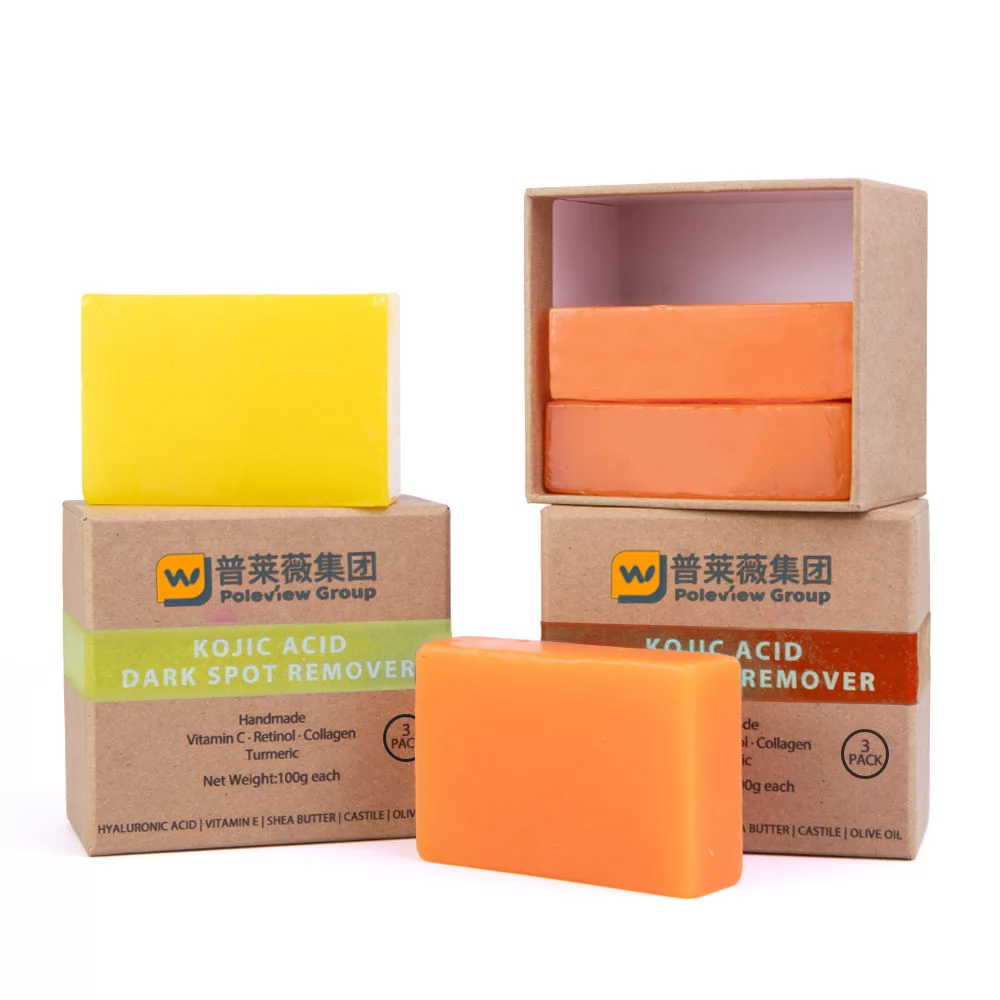
Private label exfoliating soap is a bar made by a contract manufacturer and sold under your brand. You supply the concept, name and artwork. The manufacturer supplies the formula, production and packing. There are three ways in: rebrand an existing formula, modify one, or commission a new one. Each trades speed against control.
A rebranded stock formula is the fastest route and carries the lowest minimums. The catch is that the base recipe is shared with the maker's other clients, so you differentiate through shape, scent, color and packaging. A modified formula keeps the proven base while you change the exfoliant, the fragrance or the additives. A new formula gives you full ownership of the feel, but it needs more sampling rounds and usually a higher minimum.
A good bar is defined by spec before scent
Work backwards from the bar on the shelf. In the hand it should feel gently gritty, not sharp. It should be hard enough to survive a wet soap dish, with no cracking at the edges and no beads of moisture on the surface (sweating). After weeks in a carton, color and fragrance should look the same as they did on the sample table.
Each trait becomes a line in the brief. "Scrub feel" turns into a named exfoliant, a particle size range and an approximate level in the formula. "Hardness" becomes a request for a bar that holds up in normal use, plus your own drop-and-soak routine on the sample. For "no sweating or cracking", ask for a stability report and a storage test at the temperatures your shipping lanes will see. "Stable color and fragrance" means approving a retained reference bar that every production batch is compared against.
Fragrance needs its own line, because scent can shift a bar's color. Some pigments fade or bleed next to certain fragrance oils, so name both and ask the maker to flag known conflicts.
Tip: Write acceptance criteria before you request samples. If "good" is defined only after the sample arrives, you will end up judging by mood, and the maker cannot hit a target you have not set.
Base and exfoliant choices decide feel, cost and shelf life
Two choices explain most of the gap between quotes from different suppliers: the soap base and the exfoliant. Box, label and carton move the price by smaller amounts. If two quotes differ widely, compare these two lines first.
Melt-and-pour or cold process: what changes for you
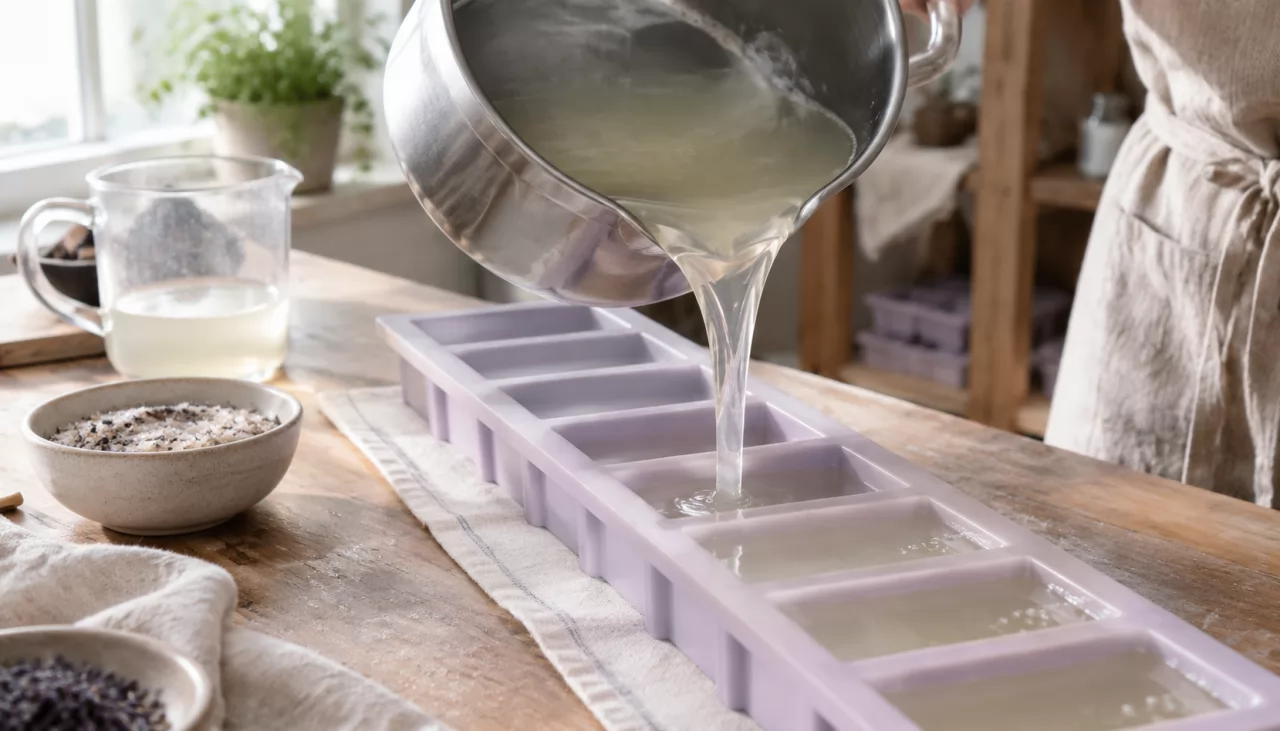
Melt-and-pour is a ready-made soap base that is melted, colored, scented and poured into molds. Cold process soap is made from oils and lye through saponification, then cut and cured. Melt-and-pour gives more room for shapes, layers and clear or bright looks, and batches tend to be consistent because the base already exists. Cold process bars usually look more rustic and handmade, and the formula can be tuned more deeply. The price is cure time and batch-to-batch variation, which need more attention. Neither is better; they suit different shelf stories.
Choosing the exfoliant: particle type, size and distribution
The exfoliant is the particle that does the scrubbing. Natural granules, ground shells or seeds, and other options differ in feel, visibility and behavior inside the bar. Coarse particles feel more aggressive and show clearly. Fine ones feel smoother but may disappear into the bar. Distribution matters as much: in a poured bar, heavy particles can sink and leave one face rough and the other smooth, so ask how the maker keeps them suspended. Whatever you choose, ask for its INCI name. INCI (International Nomenclature of Cosmetic Ingredients) is the standard naming system on ingredient lists, and your label needs the exact name.
How to choose: five questions that narrow the formula
Begin with the skin-feel target, since it decides the most. A light polish for daily use needs a different particle and level than a body bar meant for rough areas. Next, the look: visible granules, a smooth face or a layered design each point to a base and a method. The ingredient story comes third, because natural, vegan or sulfate-free positioning limits both base and exfoliant. Then set a price ceiling, since natural exfoliants, special bases and extra packaging all raise unit cost. Last, the sales market, because the destination decides which ingredients and claims are acceptable. Fix feel and look first, then let the ingredient story and the price ceiling cut the list down.
How does private label soap manufacturing work, step by step?
A customization path usually runs through six stages, and each has a typical point where projects slip.
- Inquiry: send your requirements and specifications, because vague briefs produce vague quotes.
- Design: the team prepares drafts and 3D renders for your approval, and changes are cheapest here.
- Sampling: physical samples are made for you to check, so judge them against your written criteria.
- Production: mass production runs with in-process quality checks, and late spec changes can reset the schedule.
- Inspection: a 100% final inspection happens before packaging, so agree what counts as a defect beforehand.
- Delivery: safe packaging and global shipping close the job, with terms such as FOB or CIF set in the quote.
Inquiry and design: the brief, drafts and 3D renders
Slippage here is almost always ambiguity. Write "exfoliating soap" with no weight, shape or exfoliant, and the maker fills the gaps with assumptions that you discover at sampling. Drafts and 3D renders let you approve shape, emboss and packaging before anything physical exists. Use them to settle mold depth, label position and wrapping.
Sampling: what to check on the physical sample
Judge the sample against your acceptance criteria, not your first impression. Rub it wet to test the scrub feel. Check that particles are spread evenly through the bar, and look for rough edges or surface moisture. Compare color and scent with your reference, then keep part of the sample aside to watch how it ages. One more question is worth asking: was the sample made on production equipment or by hand? A hand-made sample can be better than what the line will deliver.
Production, inspection and delivery: in-process checks, final inspection, packing and shipping terms
Delays at this stage usually come from late artwork changes, packaging that arrives after the soap, or unclear carton and pallet specifications. Confirm the packing method (shrink wrap, foil or biodegradable film), how many bars go in a carton, and whether palletization is needed. On shipping, FOB, CIF and airport delivery are all available, and larger orders can go directly to Amazon FBA warehouses if that is your channel.
The standard minimum is 1,000 units, though it can flex with the level of customization. Production lead time is typically 15 to 30 days, depending on order quantity and customization. Cost follows how far the product departs from a stock formula, the packaging, and the order size. Free samples are available, and Poleview's bar soap range includes goat milk, exfoliating and other styles, plus melt-and-pour soap base.
Labeling, documents and patch testing keep the bar sellable
A bar that feels right still cannot ship if the paperwork is incomplete. What you need on file depends on the destination market. Rules differ by country and change over time, so this section stays general on purpose.
Start with the ingredient list. Cosmetic labels in most markets list ingredients by INCI name, usually in descending order of concentration, and the maker should give you the full formula in that form. Label basics typically also cover product name, net content, the responsible company's name and address, batch information and any required warnings, though the exact set and wording vary by market.
Manufacturing practice comes next. ISO 22716 is the international guideline for cosmetic Good Manufacturing Practice (GMP), covering production, control, storage and shipment. A maker certified to it shows that processes are documented and controlled, but the certificate does not replace the market-specific registration your brand may need. Ask also for the documents that let you check the product itself. The MSDS (Material Safety Data Sheet) covers handling and transport. The COA (Certificate of Analysis) shows what a given batch was tested against. The stability report describes how the formula holds up over time, and the audit report covers factory-level checks.
An exfoliating bar calls for extra care. Particles act mechanically on the skin, and sensitive users may react to the abrasive, the fragrance, or both. Patch testing, in which a small amount is applied to a limited skin area before wider use, is a standard step in checking tolerance, and many brands also add a short usage note. Ask the maker what testing the formula has already been through and what you need to commission yourself for your market.
Note: Avoid efficacy or skin-benefit claims that your documents do not support. "Smoother skin" or "removes dead skin" needs evidence behind it, while a plain description of the bar's ingredients and texture does not.
Before you print labels, put market-specific rules in front of a regulatory adviser. Requirements for claims, responsible-person registration, safety assessments and notifications differ between regions, and a short consultation costs far less than relabeling a shipped order.
Check your brief before sending the RFQ
The first thing to check is whether your spec is clear enough that two suppliers would quote the same bar. If one quote assumes a 100 g bar with coarse granules and another assumes a lighter bar with fine ones, the price gap tells you nothing. Run through these checks before you send the request.
- Have I stated the format, shape and finished weight of the bar?
- Have I named the exfoliant and the approximate level, with fragrance and color specified?
- Have I listed ingredient restrictions, such as vegan, sulfate-free or paraben free?
- Do I have packaging, label artwork and the documents I need written down?
- Have I given a target MOQ, timeline and shipping terms?
When you compare a custom exfoliating soap OEM project with an exfoliating soap bar manufacturer's stock formulas, keep the comparison fair. Stock formulas are quicker and carry lower minimums, but you inherit their base and exfoliant choices. A custom job costs more time and sampling, and in return you decide the feel. Ask each supplier to quote both routes against the same written spec, so the difference shows up in numbers.
FAQ
How do I start a private label exfoliating soap brand with a small first order?
Start with a stock or lightly modified formula. The standard MOQ is 1,000 units and can be flexible depending on customization, so keep shape and packaging simple at first. Add custom features once the bar sells.
Can I change an existing formula, or must I develop a new one?
Yes, you can modify one. Changing the exfoliant, fragrance, color or additives on a proven base is common and faster than a new formula, though each change needs a fresh sample and a stability check.
How long do samples and production usually take?
Production typically takes 15 to 30 days, depending on order quantity and customization. Sample timing depends on how custom the bar is, so ask for a schedule that includes revision rounds, not only the first sample.
Which documents should I ask for before approving production?
Ask for the MSDS, COA, stability report and audit report. Also request the full INCI list and any ISO 22716 certificate, then have an adviser confirm what your destination market additionally requires.
If two suppliers cannot quote the same bar from your brief, rewrite the brief before you compare prices.