
Hotel linen and hotel toiletries get bought the same way — by the pallet, judged by a guest in about three seconds. Only one of them is a regulated chemical product with a paper trail. That difference is why choosing a private label hotel shampoo bars supplier in China is a specification exercise rather than a price negotiation.
A hotel amenity shampoo bar is a small, hard-pressed solid shampoo sized for one to three washes, supplied under a hotel group's or brand's own label. It suits hospitality programs moving away from bottles. The decisive factors are bar weight, wrap format, batch consistency and whether the factory can hand over formula-specific documentation.
- MOQ sits near 1,000 units for standard private label work, with flexibility tied to how much you customize.
- Weight drives everything — cost per stay, dissolve behaviour, guest perception.
- Hardness matters more than scent on amenity bars; soft bars slump in humid bathrooms.
- Compliance is your side of the table; the factory supplies the supporting data.
- Back-plan from the opening date: sampling, 15–30 days production, then freight.
What Exactly Is a Hotel Amenity Shampoo Bar, and How Does It Differ from Retail?
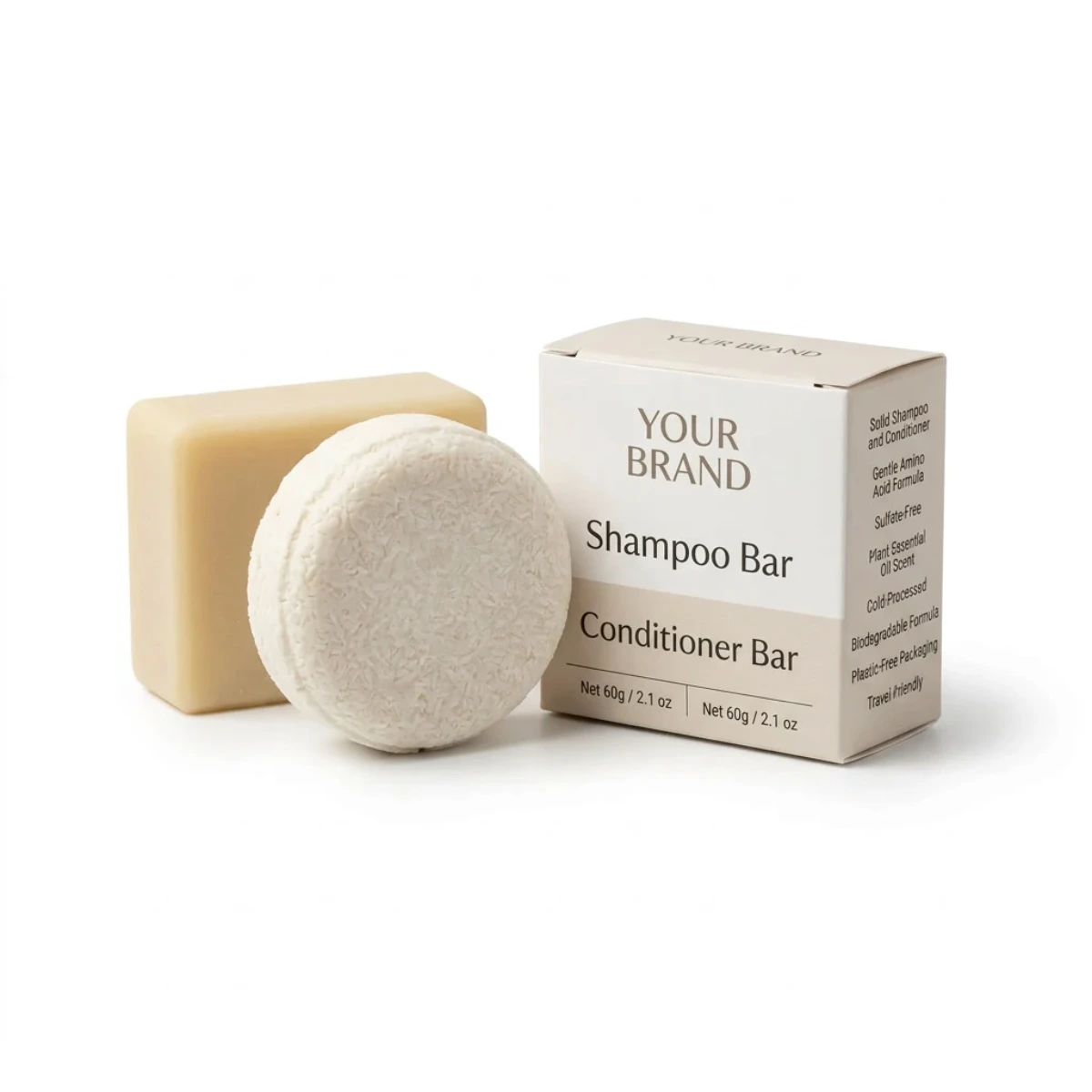
A hotel amenity shampoo bar is a concentrated solid shampoo, usually between roughly 15 g and 40 g, formatted for a single stay rather than months of home use. Compared with retail bars it is smaller, harder, more simply scented, and wrapped for housekeeping handling instead of shelf display.
Format and weight options hotels actually use
Three formats dominate hospitality specifications. Mini single-use bars, typically in the 15–20 g range, give the lowest cost per stay and are usually replaced after each checkout. Guest bars of roughly 25–40 g cover two or three washes and read as more generous in an upscale room.
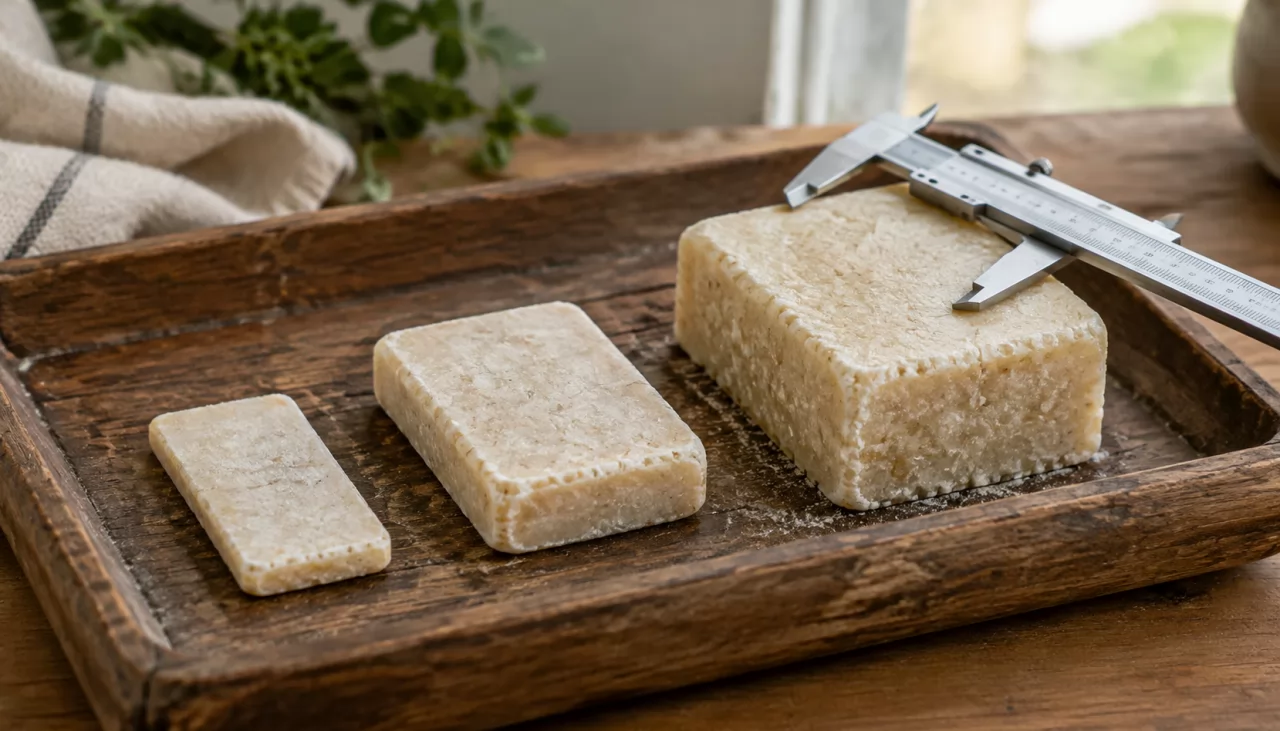
Larger bars, often 60 g and above, sit beside shared wall-mounted holders in hostels, gyms and spa areas. Cost per stay falls, but you accept slower turnover and more variation in how long a bar stays in service.
Why solid formats appeal to hospitality groups
The operational logic is straightforward. Bars carry no water, so a pallet holds far more washes than the same pallet of 30 ml bottles, and air or sea freight per wash drops accordingly.
Housekeeping carts also benefit: a solid bar does not leak, pump-fail or decant. And a paper-wrapped bar supports plastic-free amenity positioning in markets where single-use plastic rules are tightening — a positioning claim you still need to verify against your own packaging specification, since most wraps are only partly paper.
The trade-off rarely discussed in supplier decks: guests are less familiar with bars than with bottles, so usage instructions on the wrap or a tent card become part of the product. Expect to spend design time there.
How Do You Find a Reliable Private Label Shampoo Bar Supplier in China?
Verify manufacturing scope, cosmetic quality systems, documentation and sampling behaviour before you discuss unit price. A trading company can quote a shampoo bar and ship it; it cannot reformulate one when your first sample feels too soft or the lather sits below expectation. That distinction decides most hotel programs.
Factory versus trading company: questions that separate them
Ask how many formulations the plant holds and how many it developed in-house. Ask whether solid shampoo is pressed, extruded or poured on site, and on which line. Then ask for an MSDS (Material Safety Data Sheet), a COA (Certificate of Analysis) and a stability report for a bar they already produce.
A manufacturer sends those within a day or two because the files exist. An intermediary forwards a brochure, asks what you need written on it, or goes quiet. Also check who answers technical questions — a formulator's reply reads differently from a salesperson's.
One more test: request a small formula change on the sample. Lower the fragrance load, swap a surfactant for a sulfate-free alternative, shift the pH direction. Whoever can discuss the consequence honestly, including "that will make the bar softer", is working from the bench.
Where hair care bar production clusters sit
Guangdong province carries a large share of OEM hospitality toiletries supply, with bath, body and solid hair care plants concentrated around the Pearl River Delta and nearby cities such as Huizhou. Proximity to Shenzhen and Guangzhou ports shortens inland transit before FOB.
Poleview Group, established in 1995 and based in Ma'an Town, Huicheng District, Huizhou, is one example of that cluster: a 40,000 m² site, more than 200 employees, over 20 production lines and more than 3,000 formulations across shampoo bars, conditioner bars, bar soap, bath bombs and shower steamers, with dust-free workshop areas and automatic stamping, filling, labelling and packing equipment.
Which Supplier Criteria Matter Most for Hotel Programs?
Score candidates for a hotel shampoo bar manufacturer in China on cosmetic GMP systems, repeatability across repeat orders, documentation depth, customization range and logistics flexibility — roughly in that order. A hospitality program runs for years on reorders, so consistency outranks the quality of a single hand-finished sample.
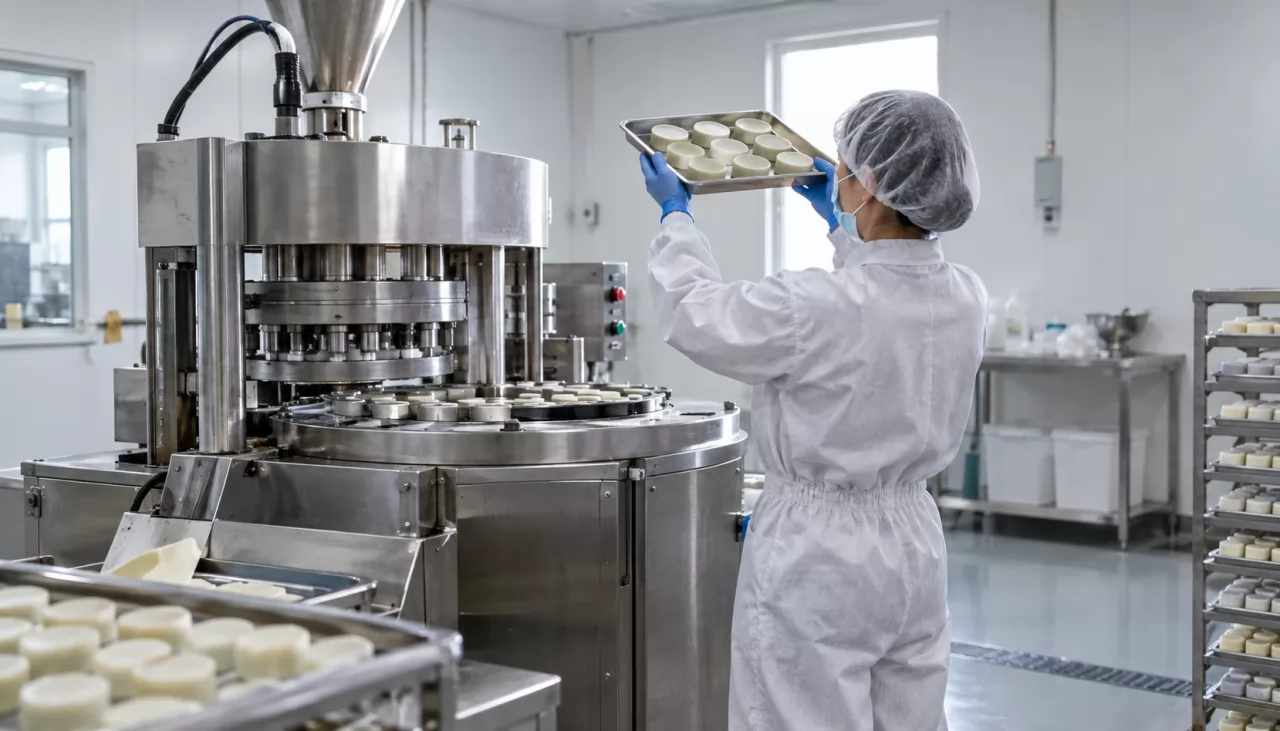
- Cosmetic quality system. Check whether production runs under ISO 22716, the international guideline for Good Manufacturing Practices for cosmetics, or an equivalent GMPC framework. It tells you batch records, cleaning and traceability exist before you need them.
- Repeatability. Ask for two retained samples from different batches of the same SKU and compare colour, scent strength and hardness yourself. Guests notice when the bar in room 412 smells heavier than the one in 318.
- Documentation depth. Formula-specific MSDS, COA and stability data matter; generic factory certificates do not substitute for them.
- Customization scope. Confirm in writing what can change: shape and size, essential oil blends or custom scents, sulfate-free and vegan ingredient options, single or multi-colour pigments, and label finishes in matte, glossy or metallic.
- Logistics flexibility. FOB, CIF and direct airport shipping cover different program shapes; custom palletization matters if cartons go to individual properties rather than one central warehouse.
- Responsiveness under pressure. Time how long a straight technical question takes to answer during sampling. That response speed is what you get during a production problem.
Rule of thumb: if a supplier cannot show you two batches of the same bar and explain what changed between them, treat the quote as indicative only.
Customization scope you should confirm in writing
Put the variables in the PO, not the email thread: bar weight and tolerance, dimensions, colour reference, fragrance dosage, wrap material and print finish, carton count, pallet pattern. Hardness deserves its own line — ask for a descriptive specification plus an approved physical reference bar, since there is no single industry hardness grade for solid shampoo.
What Standards, Certificates and Documents Should You Ask For?
Request the quality-system certificate, a third-party audit report, an MSDS, a COA and a stability report tied to your own formula. Generic brochures prove nothing about the bar you are buying. Market-entry registration remains a brand or importer duty in nearly every destination.
Quality system and social audit
Four reference points carry real weight in cosmetics sourcing. ISO 22716 covers cosmetic GMP. GMPC (Good Manufacturing Practice for Cosmetics) serves a similar purpose in buyer audits. ISO 9001 addresses general quality management rather than cosmetic hygiene specifically. SMETA, the Sedex Members Ethical Trade Audit, reports on labour, health and safety, environment and business ethics.
Poleview lists ISO 22716, ISO 9001-2008, GMPC, SMETA/Sedex, SGS, TRA, FSC and FDA among its certifications, and makes an audit report, MSDS, COA and stability report available. FSC — Forest Stewardship Council — applies to paper and board, which is relevant if your wrap and carton carry a sustainability message.
Market-entry paperwork is your side of the table
In the European Union, cosmetic products fall under Regulation (EC) No 1223/2009: a Responsible Person established in the EU must hold a Product Information File, commission a safety assessment and notify the product through the CPNP (Cosmetic Products Notification Portal). A Chinese manufacturer supplies formula data, test results and stability evidence to support that file; it cannot be your Responsible Person.
In the United States, the Modernization of Cosmetics Regulation Act of 2022 introduced facility registration and product listing duties with the FDA, alongside existing labelling expectations. The United Kingdom runs its own notification route after Brexit. Across all three, full INCI (International Nomenclature of Cosmetic Ingredients) declaration on the wrap is standard practice.
Decide early who holds these obligations — your company, a local importer, or the hotel group — because the answer changes what you need from the factory and when.
How Much Is the MOQ, and How Long Is the Lead Time?
Hotel amenity shampoo bar OEM work typically starts around a 1,000-unit MOQ per SKU, flexible depending on how much customization you request. Production commonly runs 15–30 days after sample and artwork approval, with sampling ahead of that and ocean or air freight after. Those are Poleview's stated terms.
What drives unit cost on a solid bar
Bar weight comes first — a 40 g bar is not twice a 20 g bar in price, but raw material scales close to linearly. Essential oil loading follows, since natural oils cost multiples of synthetic fragrance at the same perceived strength.
After that it is all handling. Individual wrapping style, number of colours in the bar and on the label, SKU count per run, and carton or pouch complexity each add labour or changeover time. Two scents in one order mean two line setups, two artwork approvals and two inspection passes.
Pallet configuration quietly affects landed cost too. A carton size that fills a pallet cleanly ships cheaper per bar than one that wastes two inches of height.
Sampling and timeline planning
Poleview's process runs in six steps: inquiry, design with drafts and 3D renders, physical sampling, production with in-process checks, 100% final inspection before packaging, then packing and shipping. Free samples are available.
Back-plan from the property opening or program switchover date. Reserve time for at least two sample rounds, artwork proofing, the 15–30 day production window, inspection, and sea freight that commonly takes four to six weeks to Europe or North America. Programs that miss dates usually lose the time in artwork revisions, not on the production line.
Packaging, QC and Shipping Decisions for Hospitality Orders
The wrap and carton decide whether a bar reaches the guest in presentable condition, so lock packaging specification and inspection terms before mass production starts. Solid shampoo is sturdy but not indestructible — edges chip, and unprotected bars absorb ambient humidity during long ocean transit.
Wrap and multi-pack choices
Individual wrapping options include shrink wrap, foil and biodegradable film; paper sleeves and board cartons suit plastic-free messaging. Multi-pack formats cover boxes, jars and resealable pouches, which matter if the hotel group also sells bars at reception.
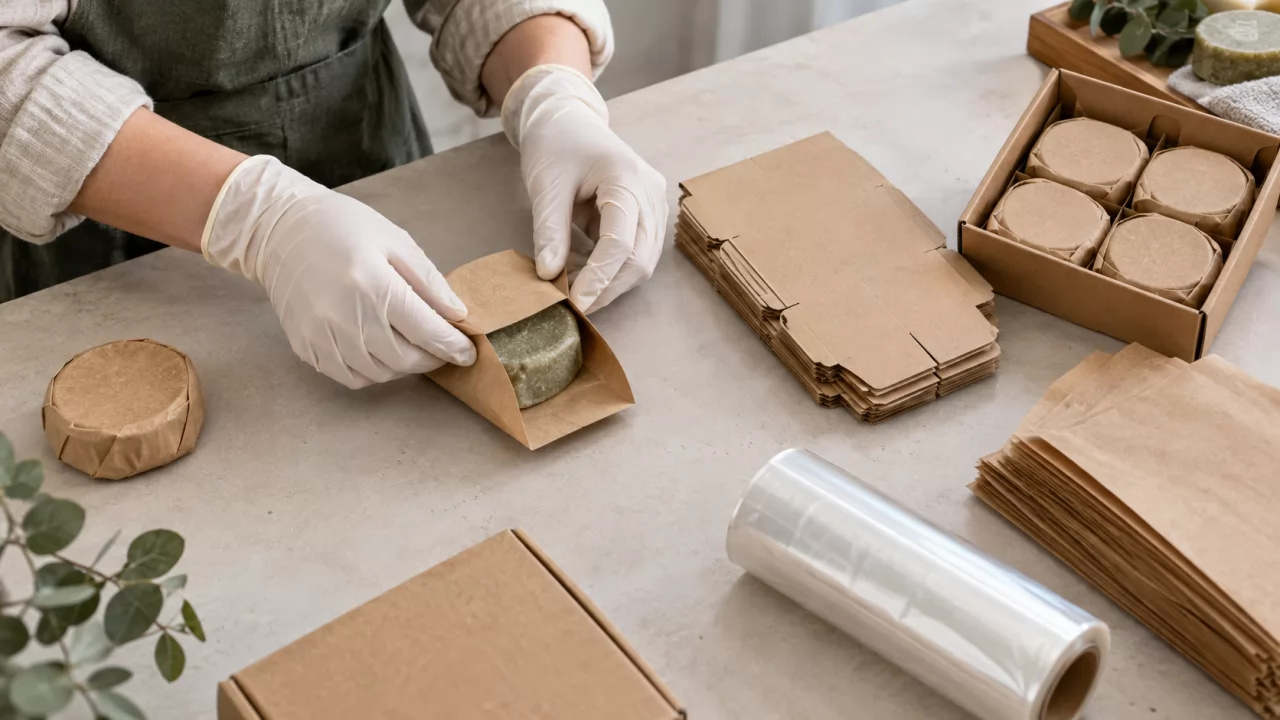
Weigh moisture barrier against the environmental claim honestly. Fully paper wraps give the cleanest sustainability story and the least protection; foil or film protects better. Many hospitality specifications land on a paper outer with a thin inner barrier, and state the material composition plainly on the pack.
QC terms worth writing into the PO
Specify in-process checks during pressing, 100% final inspection before packaging where the supplier offers it, and an AQL sampling plan on appearance, weight and wrap seal at finished-goods stage. Name the defect classes: chipped edges, off-weight bars, misaligned labels, scent carryover between SKUs.
Ask for retained samples per batch, kept at the plant for a defined period, and request the batch code format in advance so your warehouse can trace a complaint back to a production run.
Freight and delivery routes
FOB, CIF and direct airport shipping cover most hospitality orders, with worldwide delivery available and large orders shippable directly to Amazon FBA warehouses — useful if you run a retail line alongside the amenity program. Custom palletization helps when cartons are pre-sorted by property.
Pre-Order Checklist for Custom Solid Shampoo Bars for Hotels
Send this list with your RFQ so quotes come back on comparable terms rather than as six different interpretations of "hotel shampoo bar".
- State bar weight, dimensions and acceptable weight tolerance.
- Define hair care positioning: sulfate-free, vegan, paraben-free, fragrance direction.
- Approve a physical reference bar for hardness, colour and scent strength.
- Request MSDS, COA and stability report for your own formula, not a similar one.
- Confirm who acts as Responsible Person or importer of record in each destination market.
- Specify wrap material, print finish and full INCI text placement on artwork.
- Fix carton count, carton dimensions and pallet pattern before pricing freight.
- Write the AQL plan, defect classes and retained-sample terms into the purchase order.
- Ask for two retained samples from different batches of an existing SKU.
- Agree the sampling calendar and production window against your opening date.
- Clarify Incoterms — FOB, CIF or air — and who books the inspection.
FAQ
Can I order a low MOQ private label shampoo bar run to trial one property?
Usually yes. A standard MOQ around 1,000 units per SKU is workable for a single-property pilot, and Poleview states MOQ flexibility depending on the level of customization. Custom moulds or bespoke packaging tooling raise the practical minimum.
Are sulfate-free and plastic-free hotel hair care bars harder to formulate?
They are more demanding. Sulfate-free surfactant systems behave differently in lather and hardness, and paper-only wraps offer less moisture protection during long transit. Both are routinely produced, but expect more sample rounds and a clear stability report before you commit volume.
Who is responsible for compliance in my destination market?
Your brand or your importer. Under EU Regulation 1223/2009 a Responsible Person inside the EU must hold the Product Information File and notify via the CPNP; US duties sit with the registrant under MoCRA. The manufacturer supplies formula, safety and stability data to support those filings.
Can one supplier handle bars, soap and bath amenities in the same order?
Often yes. Plants producing solid shampoo and conditioner bars frequently also run bar soap, bath salts, bath bombs and body care — Poleview lists all of these across more than 20 production lines. Consolidating SKUs simplifies freight, though each SKU still carries its own MOQ.
Next Steps on Your Hotel Shampoo Bar Program
Put your specification into one brief: bar weight, scent direction, sulfate-free or standard base, wrap format, annual volume, destination market and target date. Then request samples plus the formula-specific documentation set. Poleview can be reached at [email protected] or on WhatsApp at +8615819872310 (Grace) in Huizhou, Guangdong.