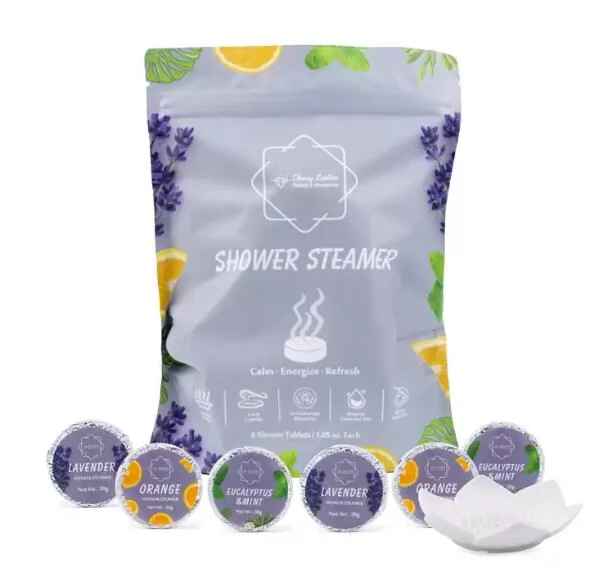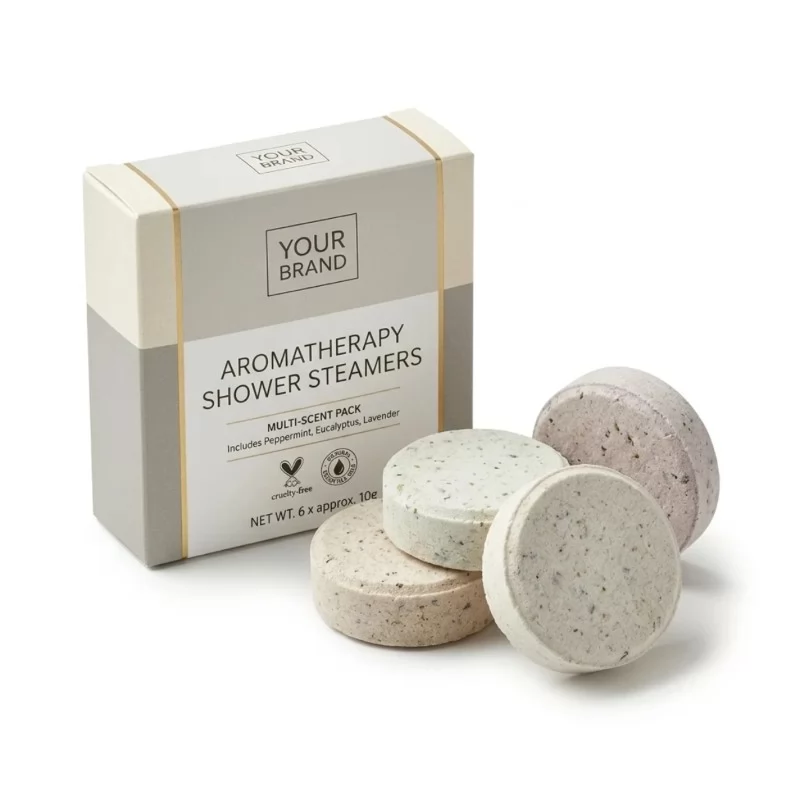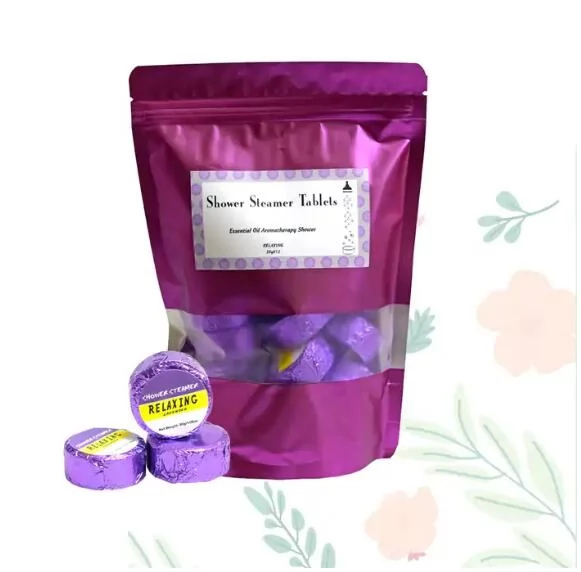

Put the ingredient lists from three supplier quotes side by side and count how much of the formula is actually specified. Usually you get a base, a scent name and a colour. The percentages, the binder and the fragrance basis are left blank. This guide treats shower steamer ingredients as a series of decisions: base, fragrance, colour, development route and paperwork. It is a decision guide, not a recipe.
What are shower steamers made of?
A shower steamer is an effervescent base of baking soda (sodium bicarbonate) and citric acid, plus a binder that holds the pressed tablet together, fragrance, and sometimes colour. The base does the work. The rest decides how the tablet feels, smells and survives shipping.
The tablet is pressed or moulded, and it releases carbon dioxide when wet. Water from the shower reaches it, the acid and the bicarbonate dissolve and react, and the gas carries fragrance into the air around the user. It usually sits on the shower floor, out of the direct spray, so it dissolves gradually rather than all at once.
That reaction sets the order of every later decision. Base ratio and moisture content control fizz and hardness; the binder controls dissolve time. Fragrance has to survive contact with an acid-base mixture and then a hot, wet room, and colour has to dissolve without staining the tray. Change one input and the others move, which is why a quote listing only "scent" and "colour" tells you very little.
Shower Steamer Ingredients: Base, Binder and Hardness
Base ratio, binder and moisture together decide fizz, hardness, shelf stability and breakage in transit. The table lists the usual components with the trade-off each brings.
| Ingredient | Typical role | INCI name | Trade-off |
|---|---|---|---|
| Baking soda | Alkaline half of fizz | Sodium Bicarbonate | Excess lowers hardness |
| Citric acid | Acid half of fizz | Citric Acid | Reacts with any moisture |
| Cornstarch | Filler, slows dissolving | Zea Mays (Corn) Starch | Longer life, softer fizz |
| Carrier oil | Binder, fragrance carrier | Varies by oil used | Too much weakens the tablet |
| Essential oil or fragrance | Scent | Parfum or named oils | Needs safety-based limit |
| Pigment | Colour | CI number | Can stain surfaces |
Use the table as a checklist. If a quote cannot name each row, the formula is not yet defined.
Baking soda and citric acid
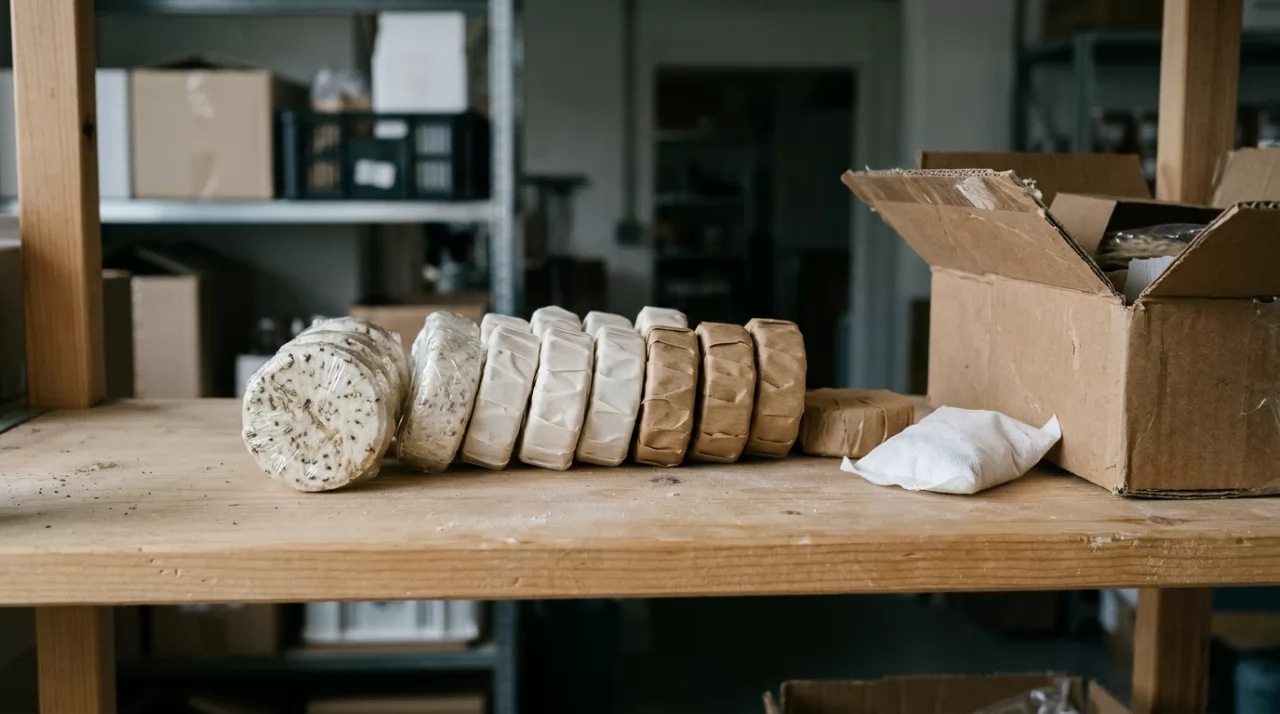
The two powders react as soon as they meet water, and humidity counts as water. Moisture in the air during mixing, pressing and packing starts the reaction early, so the tablet may have lost some fizz before it is wrapped. Humidity-controlled production areas, sealed wrapping and packaging planned around desiccants all follow from that one fact. The ratio matters too: more acid or more bicarbonate than the reaction needs leaves unreacted powder behind.

Binders, fillers and carriers
Starch is a filler that slows dissolving, so the tablet lasts longer under the water. Carrier oils bind the mix and help carry fragrance, but too much oil softens the tablet and can leave a film on the tray. The binder also shapes the surface. A drier mix presses to a matte, slightly chalky finish; a damper one looks smoother but is more likely to crack as it dries.
Sulfate-free and vegan options
A plain effervescent tablet often has no sulfate surfactant at all, so "sulfate-free" is usually a matter of confirming the spec rather than reformulating. Vegan requests change more. Check the binder, any wax or butter, and the fragrance components, and ask for the declaration in writing. Find out which ingredients the supplier is vouching for and which are only claimed on the raw-material sheet.
Shower Steamer Essential Oil Percentage Is a Safety Decision, Not a Scent Preference
Fragrance load should come from the supplier's safety assessment and the limits that apply to rinse-off or shower products, not from how strong the sample smells. A stronger sample is easy to make and easy to overdo. No single number fits every oil, so none is given here. Ask for the basis: which assessment, which limits, and which individual oils or fragrance components set the cap.
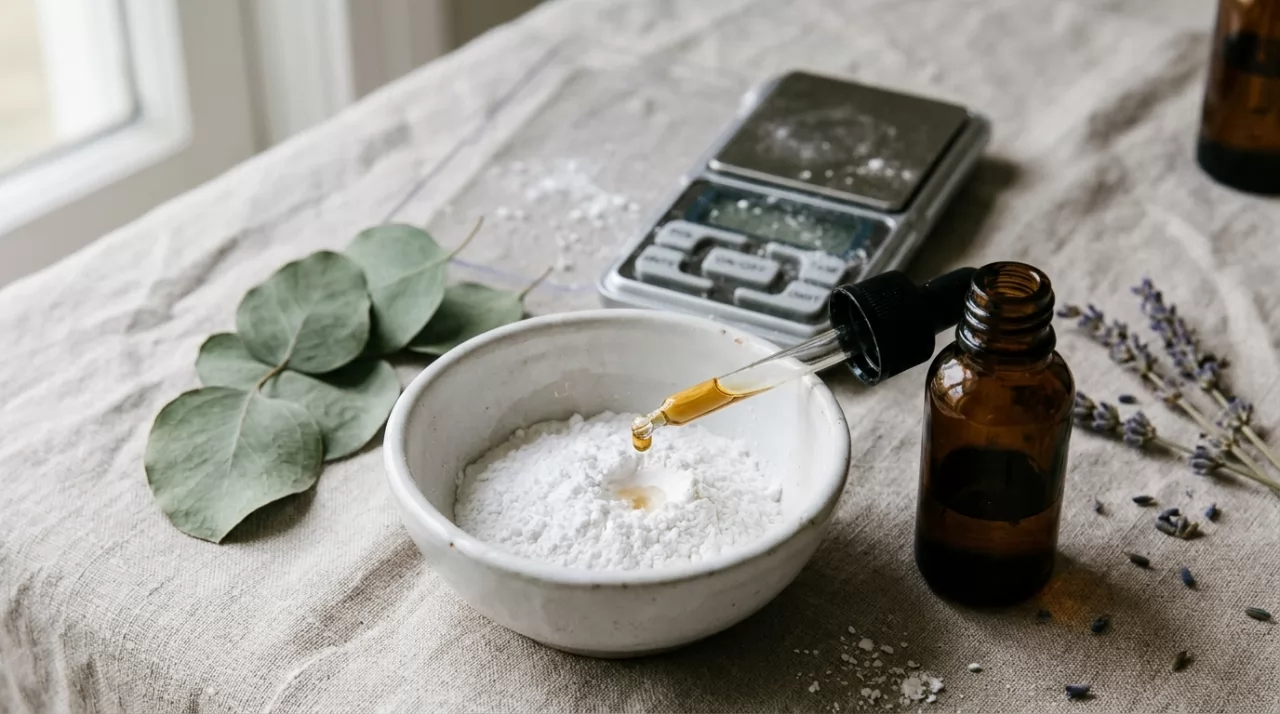
Some essential oil constituents are known skin sensitisers, and some are regulated as declarable allergens in certain markets. A patch test on the finished product, run under the supplier's or your own safety process, is a reasonable step before launch. It does not remove the risk of individual reactions, so labelling should tell users to stop if irritation occurs.
Essential oil blends versus fragrance oils
Essential oil blends are plant-derived and suit natural positioning, but they cost more, vary by harvest and can fade faster. Fragrance oils are compounded for stability and cost, and the scent repeats more reliably from batch to batch. Labelling differs as well. A fragrance oil is often declared as Parfum, whereas essential oils may be named individually and may need allergen declarations depending on the market. Customers who see "essential oil" on the front expect it, so the spec and the claim have to agree.
Menthol and eucalyptus aromatherapy lines
Menthol and eucalyptus oil are volatile and strong, and in a hot, steamy room they evaporate quickly. They feel intense at first, then thin out sooner than other scents. Keep the wording sensory: a cooling, fresh scent experience. Phrases such as "relieves congestion" or "clears sinuses" drift toward medical claims, which many markets regulate differently for cosmetics.
Scent loss over shelf life
Scent fades through evaporation and through reaction with the base. Wrap type matters, since shrink wrap, foil and biodegradable film differ in how well they block air and moisture, and a film that breathes loses scent sooner. Store cartons away from heat. Ask for a stability result that covers scent, not only appearance.
Colour: Skin-Safe Pigments and Tub Staining
Pigments must be permitted cosmetic colorants in your market, identified by CI number on the INCI list. Strong pigments can leave a tint on tubs, grout and light shower trays, especially if the tablet sits on a wet surface. Multi-colour tablets also look different once wet, because the layers blend as they dissolve. Judge the colour in a shower, not only on the dry shelf.
How do you formulate shower steamers for private label without starting from zero?
There are three routes: start from a stock formula, adapt an existing one, or commission a fully custom one. Stock is fastest and cheapest, custom gives the most control, and adapted sits between them. The right choice depends on order size, how far you need to differ from competitors, and your launch date.
| Route | What changes | Sample rounds | Best when |
|---|---|---|---|
| Stock formula | Label, wrap, maybe scent | Usually one | Fast launch, small volume |
| Adapted formula | Scent, colour, shape | Usually one to two | Some differentiation needed |
| Custom formula | Base, binder, claims | Often more than two | Distinct product, larger volume |
Most first orders suit the adapted route, because it changes what customers notice without re-testing the whole base.
Other levers sit beside the route: shape and size, extra-strength or menthol-infused versions, organic or natural claims, and wrapping format. Each affects pressing, drying time or stability, so put them in the first brief rather than adding them after sampling.
The sequence is the same on every route. You send an inquiry with requirements; the supplier prepares drafts and 3D renders for approval; physical samples follow, then production with in-process checks, final inspection and shipping. Poleview offers shape, size, fragrance, colour, formula and packaging customisation, with free samples.
Stock, adapted or custom: which fits your volume?
Under the supplier's standard minimum of 1,000 units, stock or lightly adapted is the practical choice. Above that, custom becomes reasonable if you can name what the stock formula cannot do. A fixed launch date favours stock, since every extra sample round adds days. A distinct scent that customers will notice justifies adapting. A different base rarely does, unless a claim depends on it.
What to put in your formulation brief
A usable quote needs a handful of facts:
- Target scent, with a reference sample or note descriptors
- Intended claims, kept to cosmetic wording
- Colour, and whether it is single or multi-colour
- Hardness and dissolve time you expect
- Pack format, wrap type and carton size
- Markets where the product will be sold
The last item is the one most often missing, and it changes fragrance limits, labelling and documents.
Compliance Paperwork Depends on Where the Tablet Is Sold
Rules and labelling differ by market. The INCI list on the pack must match the formula as actually made, fragrance components and colorants included. A list copied from a stock sheet after the scent was changed is a common error.
ISO 22716 is the international good manufacturing practice (GMP) standard for cosmetics, covering premises, hygiene, documentation and batch records. Among its certificates, Poleview lists ISO 22716, and the audit report is the evidence to ask for. SGS is a third-party testing and inspection body, so an SGS report shows who tested and what was tested, not that the product is approved everywhere. An FDA reference needs care. A mention on a website does not say whether a facility is registered or a product was tested, so ask what exactly is meant and request the document.
Ask for the MSDS, the COA for the batch, a stability report and the audit report. Each answers a different question: what is in the product, whether this batch matches spec, how it holds over time, and how the plant is run.
Confirm claims and label wording with your own regulatory adviser for each market. This guide gives general direction only.
Terms Used in This Guide
- INCI: the International Nomenclature of Cosmetic Ingredients, the standard naming used on ingredient lists.
- Effervescence: gas release, here carbon dioxide, when acid and bicarbonate dissolve in water.
- Binder: an ingredient that holds powders together so the tablet keeps its shape.
- Fragrance load: the share of fragrance or essential oil in the finished formula.
- Stability test: storage testing under set conditions to check appearance, scent and performance over time.
- COA: certificate of analysis, a batch-specific report of results against specification.
FAQ
Can the same formula be made with natural or vegan ingredients?
Often yes, but not automatically. The base is simple, while binders, oils and fragrance components may need swapping. That can change hardness and scent, so expect a fresh sample round.
Why do some tablets crumble or lose fizz in storage?
Usually moisture. Humidity during production or weak wrapping starts the acid-base reaction early, and too much oil or too little binder adds to breakage in transit.
How many sample rounds should you expect before approval?
One to two for stock or adapted formulas, often more for custom ones. Clear briefs on scent, hardness and colour cut the count.
Which documents should you ask for before placing a first order?
MSDS, a batch COA, a stability report and the audit report. Ask for the full INCI list too, matched to the formula that will be produced for your market.