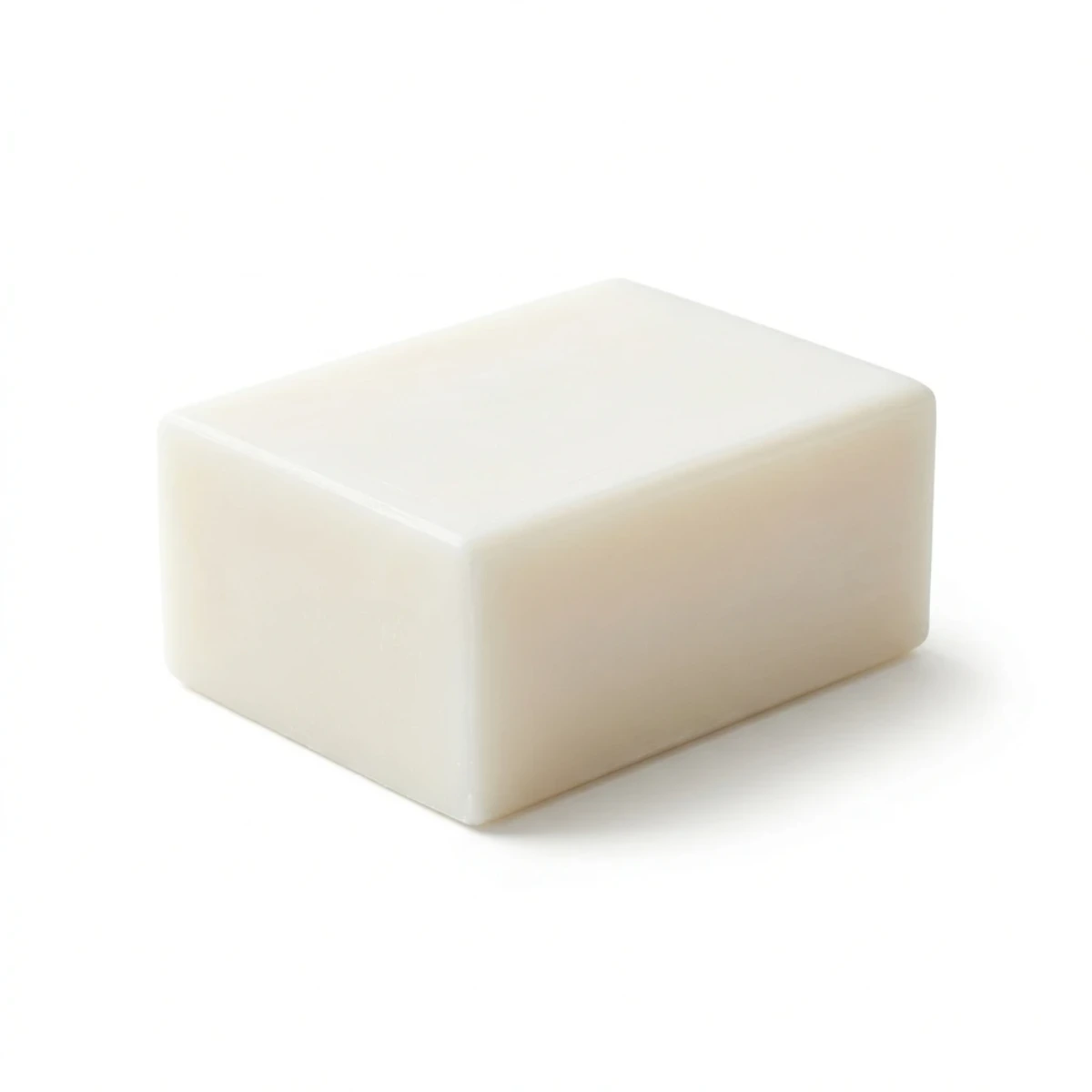

A wrong format choice is expensive. Once the jar, preservative system and fill line are set, changing course means new samples, new stability data and often new packaging. The central decision with body butter manufacturers in China is whipped (a water-containing emulsion) or anhydrous (butters and oils with no water phase). It drives preservation, packaging, shipping and shelf life. Below you can compare the two formats, vet suppliers and brief an RFQ.
Whipped Versus Anhydrous Butter
Whipped body butter is usually an emulsion that holds water and is aerated into a light, mousse-like texture. Anhydrous body butter is a blend of butters and oils with no water. Whipped suits brands selling a soft, quick-absorbing feel in controlled climates. Anhydrous suits a dense, rich product with a simpler preservation story and more tolerance for transit.
Formulation and Process
An emulsified whipped butter starts with an oil phase (butters, oils, emulsifiers) and a water phase. The two are combined, then the mass is cooled and aerated until it holds air. Sequence matters here: air added too early or too hot collapses later. Heating, emulsifying, cooling, whipping, in that order.
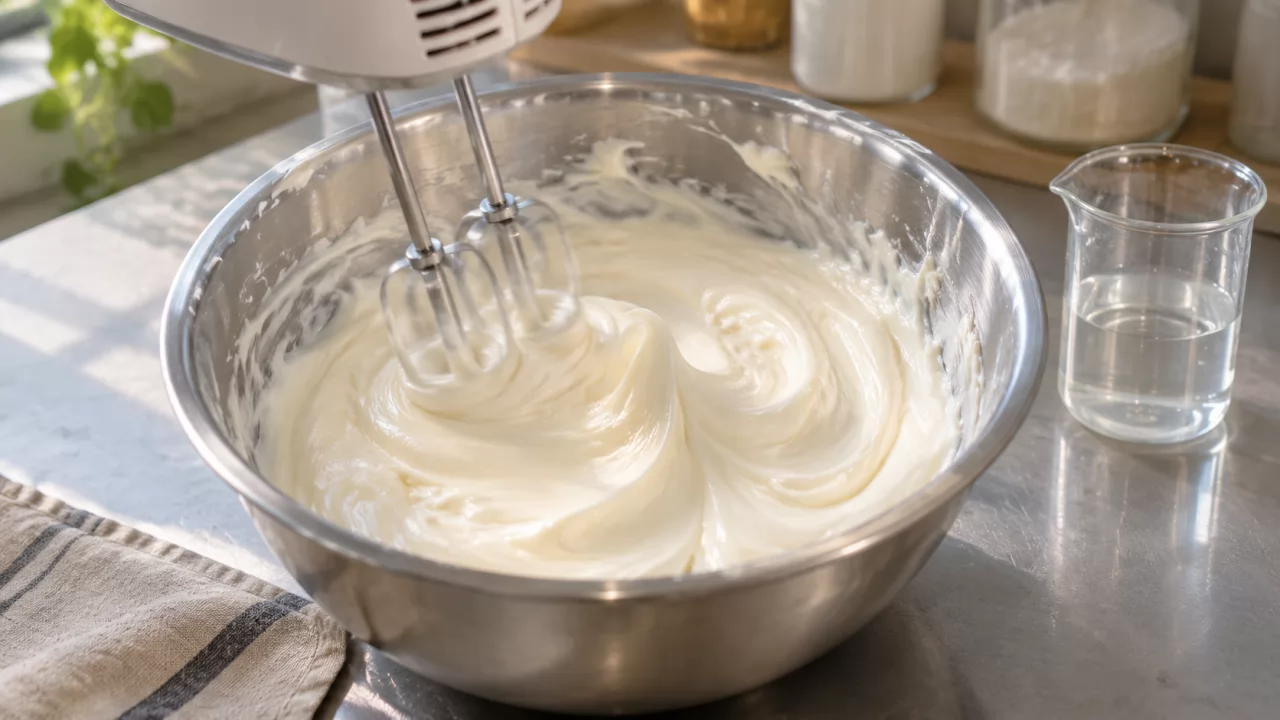
An anhydrous butter is closer to melting and blending. Butters such as shea or cocoa are melted with oils, cooled under control and sometimes lightly whipped. Think of how chocolate goes grainy if it cools badly: the cooling profile decides crystal size, and crystal size decides whether the texture is smooth or gritty.
Stability and Shelf Life
Water is the dividing line. Any product containing water needs a preservative system, verified by challenge testing, a lab method that inoculates the product with microbes to see whether the preservative holds. Anhydrous products carry a much lower microbial risk, though oxidation of oils and contamination from wet fingers in a jar still matter.
Heat is the other variable. Both formats soften in warm transit. Butters that melt and then re-solidify slowly can turn grainy, because fatty acid fractions crystallize unevenly, and whipped products may also lose volume or separate if the emulsion is stressed.
| Criterion | Whipped | Anhydrous |
|---|---|---|
| Texture | Light, airy, soft | Dense, rich, balm-like |
| Water phase | Present | None |
| Preservation approach | Preservative system, challenge testing | Antioxidant focus, less microbial risk |
| Heat sensitivity | Can deflate or separate | Softens, may turn grainy |
| Filling and packaging fit | Jars with liners, tight seals | Jars, tins, some tubes |
| Typical buyer use case | Mainstream retail, sensory-led brands | Natural-positioned, long-transit lines |
Whipped wins on feel for most mainstream retail lines. Anhydrous is the lower-risk base for long shipping lanes and minimal-ingredient stories.
Which Format Fits Your Brand?
Five criteria settle it, roughly in this order. First, climate and transit. If pallets will sit in hot containers or non-climate-controlled warehouses, anhydrous tolerates this better, and a whipped product needs tested packaging and a realistic heat plan. Second, the sensory goal: if reviews will praise a cloud-like, fast-absorbing feel, only whipped delivers it. Third, the ingredient story. Natural, vegan or sulfate-free positioning is possible in either format, but a shorter ingredient list is easier to hold in anhydrous, while in whipped the preservative choice becomes a claims question.
Fourth, packaging. Jars suit both formats. Tubes work only when the texture flows, which often means a softer, adapted formula. Fifth, shelf life and the regulatory market: water-containing products face closer scrutiny of preservation data, and some markets expect a stated period after opening.
As a rule of thumb, choose whipped when the feel sells the product and you control the shipping conditions. Choose anhydrous when the product must survive uncertain conditions or you want the simplest preservation file.
Private Label or Custom Formula
Private label adapts an existing base to your brand; a custom OEM or ODM project builds a formula around your brief. The first buys speed, the second buys control.
Existing Base, Your Branding
The formula stays fixed and you customize around it: fragrance (essential oil blends or custom scents), color with skin-safe pigments, jar and closure, label finish (matte, glossy or metallic) and outer cartons. The base already has stability and safety data behind it, so sampling is short. The catch is that changes to the core ingredients, or large changes to scent load, can invalidate that data.
Developing a New Formula
A new formula starts with a brief covering target texture, ingredient exclusions, claims, fill size and a benchmark product you like. Expect several sampling rounds, since texture, scent and color each need adjusting, then stability work before production. Every round adds time. Development effort commonly feeds into minimums and unit cost, especially when you specify unusual raw materials.
| Step | You provide | Manufacturer returns |
|---|---|---|
| Inquiry | Requirements and specifications | Feasibility and quotation |
| Design | Branding and artwork direction | Drafts and 3D renders |
| Sampling | Feedback on physical samples | Adjusted samples |
| Production | Approvals and order confirmation | Mass production with in-process checks |
| Inspection | Acceptance criteria | 100% final inspection before packaging |
| Delivery | Shipping terms and destination | Safe packing and global shipping |
Production lead time is typically 15-30 days, depending on order quantity and the degree of customization. Sampling comes on top.
How to Find a Reliable Body Butter OEM Supplier in China
A reliable supplier is one whose process control and paperwork hold up when you ask for specifics. Website claims are cheap; batch records are not. Vet the process first, then the paper.
Documents to Request
A COA (certificate of analysis) shows that a batch met its specification, though it says nothing about the formula's long-term behavior. An MSDS (safety data sheet) covers handling and hazards. A stability report shows how the formula held up under defined storage conditions, so check the conditions and duration. An audit report records what a third party found at the facility on a given date. None of these proves your specific formula is compliant in your market.
Standards and Certificates
ISO 22716 is the international guideline for good manufacturing practice in cosmetics. It covers premises, personnel, documentation, batch records and complaint handling. GMPC is a related cosmetics GMP certification scheme. ISO 9001 certifies a quality management system, not product safety. SMETA is an ethical-trade audit format, usually shared through the Sedex platform, and it addresses labor and working conditions rather than formulation. Read each certificate for scope, issuing body and validity dates. Poleview Group lists ISO 22716, GMPC and SMETA/Sedex among its certificates, so request copies and confirm the scope covers the site producing your order.
FDA deserves a specific question. A supplier listing "FDA" does not necessarily hold a facility registration, and the US does not approve cosmetics before sale. Ask what exists: a registration number, a test report, or neither.
Questions That Expose Weak Suppliers
Ask how a finished jar is traced back to a batch and its raw material lots. Ask whether preservative challenge testing was done on this formula or only on a similar one. Find out what is checked during production (temperature, viscosity, fill weight) and whether retained samples are kept for each batch. And ask directly whether any step, filling or packaging included, is subcontracted. Vague answers are an answer.
Wholesale Body Butter MOQ and Lead Time
Minimums and timing follow complexity. A stock jar with a standard fragrance moves fast. Custom color, custom scent, sourced packaging and extra sampling rounds each add days and push quantities up.
| Parameter | Value |
|---|---|
| Standard MOQ (units) | 1,000, flexible with customization level |
| Production lead time (days) | 15-30 |
| Samples | Free samples available |
| Shipping terms | FOB, CIF or direct airport shipping |
| Longer-end drivers | Custom scent, custom color, new packaging |
If your launch date is fixed, settle packaging and fragrance first, since those choices most often stretch the schedule.
Compliance by Market
Rules differ by market, so treat this as orientation, not advice. Most markets expect a full ingredient list using INCI (International Nomenclature of Cosmetic Ingredients) names. The EU and UK require a designated responsible person, a product safety assessment and a product notification before sale. The US relies on labeling rules and a manufacturer's duty to substantiate safety.
Claims are where brands get caught. "Natural", "hypoallergenic" or anything implying treatment of a skin condition can move a product into stricter territory, so keep claims to what your documents support. Declare fragrance allergens where the market requires it, and ask about patch testing on the finished formula. Confirm specifics with a regulatory specialist for your market before printing labels.
Quality Control and Shipping
In-process checks should cover batch temperatures, texture and fill weight; final inspection should cover sealing, labeling and appearance. Packaging does the rest in transit. Induction or foil seals, inner liners, snug cartons and sensible palletization limit leakage and crushing, and for heat-sensitive formulas the shipping season matters.
Before shipment, check:
- Batch number on the COA matches the cartons.
- Fill weight sampled against the stated net content.
- Seals intact, with no leakage after a drop test.
- Label text and ingredient list match the approved artwork.
- FBA labels and carton marks applied if shipping to Amazon.
On arrival, open a few jars from different cartons and look for separation, graininess and any off smell.
Sample Brief for Your Supplier
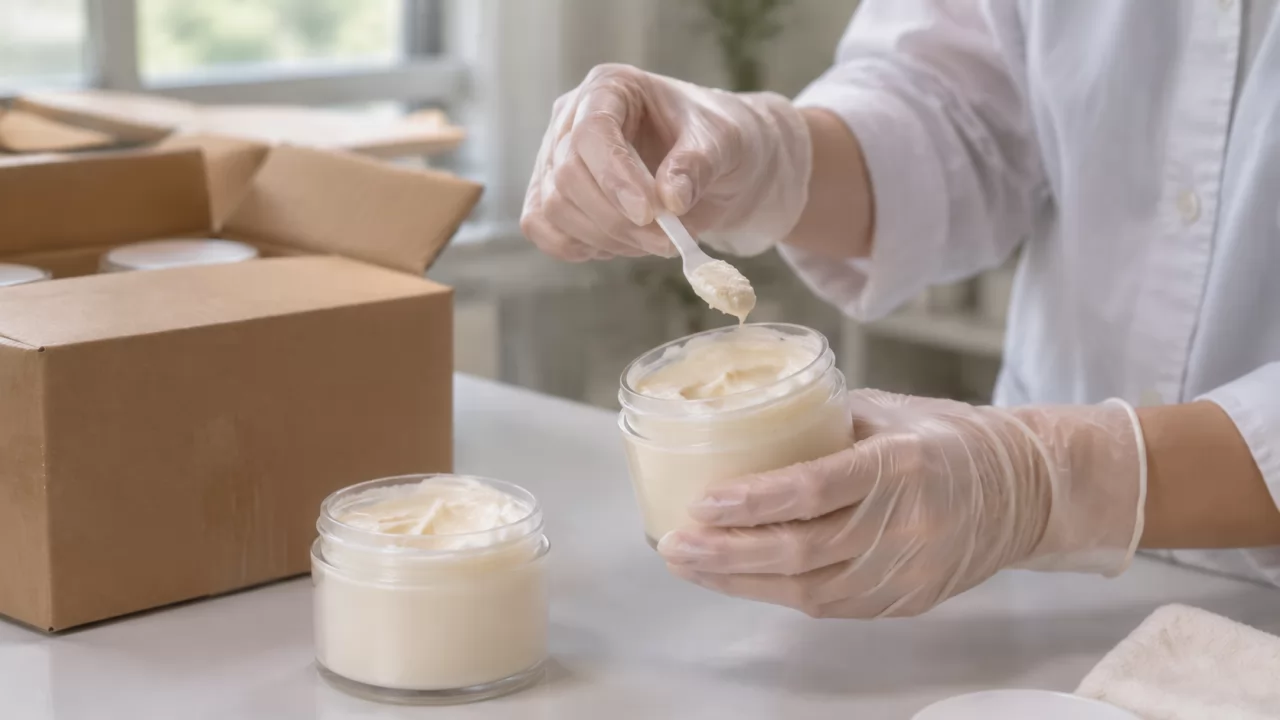
Poleview's body care range already includes body lotion and face and body cream, so a body butter can be briefed alongside them, with design and technical support. Send your format preference, target market, fill size and packaging idea with your RFQ to [email protected], or message Grace on WhatsApp at +8615819872310.
FAQ
Is whipped body butter harder to ship than anhydrous?
Generally yes. The water phase makes it more sensitive to heat and to emulsion stress. Anhydrous butters also soften in heat, but they carry no emulsion to break.
Can I get a free sample before committing to the 1,000-unit minimum?
Yes, free samples are available. Test them for texture, scent and behavior in warm conditions before you confirm quantities.
Do I need my own formula to launch a private label line?
No. You can adapt an existing base with your own fragrance, color, packaging and label. A custom formula is only needed when an existing base cannot meet your brief.
Which documents should arrive with the first production batch?
A batch-specific COA and an MSDS at minimum. Ask for the stability report and the relevant certificate copies before the order is confirmed.