
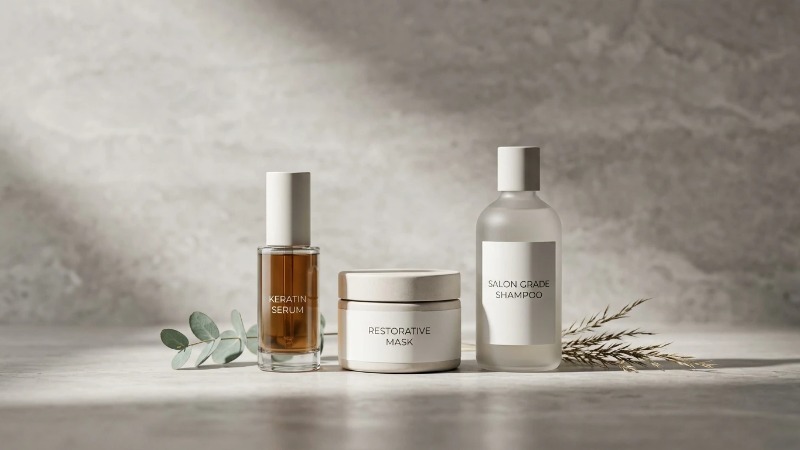
Behind every celebrated shampoo, restorative mask, and salon-grade keratin serum stands a manufacturer with the science, scale, and supply chain to bring it to market. For business decision-makers, knowing who these producers are—and how to work with them—can unlock one of the most profitable opportunities in beauty today.
This listicle profiles the global manufacturing powerhouses shaping premium hair care. Then it maps the private label pathway that lets ambitious brands compete without owning a single factory.
Introduction: Why Hair Treatment Manufacturers Matter to Your Business
The global hair care market keeps climbing, pushed by consumer demand for premium, results-oriented products. Shoppers no longer settle for basic cleansing. They want repair, hydration, and salon-quality results at home.
That shift toward premium and professional-grade treatments has turned the choice of a manufacturing partner into a genuine strategic decision. The right factory shapes your product quality, margins, speed to market, and ability to scale.
The Business Case for Private Label Hair Treatment
Reselling established brands ties you to thin distributor margins and gives you no control over pricing or positioning. Private label hair treatment production flips that equation entirely.
When you own the brand, you capture the full retail margin—often 40% to 70% versus the 15% to 25% typical of reselling. You also control formulation, packaging, and story. That builds an asset that appreciates over time, rather than one that depends on someone else's catalog.
How This List Was Compiled
Our selection weighed five criteria that matter to serious buyers: manufacturing scale, research and development capability, global reach, breadth of product portfolio, and flexibility for OEM/ODM partnerships.
The result blends consumer-brand giants with dedicated professional hair care product suppliers. That way you can benchmark both the household names and the specialists best suited for private label work.
The Global Hair Care Manufacturing Market at a Glance
Understanding market fundamentals helps decision-makers time their entry and position their brand intelligently. The category is large, resilient, and increasingly premiumized.
Market Size & Growth Projections
| Metric | Value | Reference Year |
|---|---|---|
| Global hair care market size | ~USD 95–100 billion | 2026 |
| Hair treatment/mask segment CAGR | ~6.5% | 2026–2030 |
| Fastest-growing region | Asia-Pacific | 2026 |
| Private label share of category | ~18–22% | 2026 |
Note: figures are indicative market estimates aggregated from industry sources and should be verified against the latest reports for precise business planning.
Key Trends Shaping Demand
- Keratin and bond-repair treatments continue to dominate the premium tier, with consumers seeking visible damage reversal.
- Sulfate-free and pH-balanced formulas are now table stakes for the discerning shopper.
- Sustainability influences packaging, sourcing, and cold-process manufacturing decisions.
- Clean beauty pushes manufacturers toward transparent ingredient decks and naturally derived actives.
The 9 Leading Hair Treatment Manufacturers in the World
The list below combines multinational consumer-brand conglomerates with specialist producers. The former show scale and R&D depth. The latter—including dedicated OEM/ODM houses—offer the agility private label founders actually need.
Comparison Table: Top 10 Hair Treatment Manufacturers at a Glance
| Rank | Manufacturer | HQ / Country | Specialty | OEM/ODM for Third Parties |
|---|---|---|---|---|
| 1 | L'Oréal Group | France | Professional & retail hair care | Limited |
| 2 | Procter & Gamble | USA | Mass-market treatments | No |
| 3 | Unilever | UK / Netherlands | Global brands, sustainability | No |
| 4 | Henkel | Germany | Salon & keratin expertise | Limited |
| 5 | Kao Corporation | Japan | Hair mask technology | No |
| 6 | Shiseido | Japan | Premium repair science | No |
| 7 | Estée Lauder / Aveda | USA | Luxury botanical care | No |
| 8 | Coty Inc. | USA | Professional & licensed brands | Limited |
| 9 | Amka & Regional Specialists | Various | Emerging-market production | Yes |
1. L'Oréal Group
The world's largest beauty company, L'Oréal runs an unrivaled portfolio spanning professional salon lines and mass retail. Its dedicated professional division sets many of the benchmarks in salon-grade hair care manufacturing.
Backed by one of the industry's deepest R&D investments, L'Oréal excels at breakthrough actives and clinical-grade repair systems—though third-party manufacturing access is generally reserved for internal brands.
2. Procter & Gamble (P&G)
P&G commands enormous mass-market hair treatment production capacity through household names sold in nearly every country. Its strength is efficient, high-volume manufacturing at consistent quality.
As a vertically integrated brand owner, P&G focuses on its own portfolio rather than contract work for external labels.
3. Unilever
Unilever pairs vast global brand reach with a leading sustainability agenda that increasingly shapes formulation and packaging choices. Its scale across developed and emerging markets is hard to match.
Like its peers, Unilever concentrates manufacturing on proprietary brands rather than open contract production.
4. Henkel
This German powerhouse holds a strong position among professional and retail hair care manufacturers, with notable keratin and styling expertise. Its salon business serves stylists worldwide.
Henkel's technical depth in treatment chemistry makes it a respected reference point for anyone benchmarking global keratin treatment brands.
5. Kao Corporation
Japan's Kao is known for meticulous innovation in hair mask and treatment technology. Its formulations emphasize sensory experience, precision, and gentle-yet-effective repair.
Kao's laboratories are often credited with advancing conditioning and moisture-lock science that later reaches the broader market.
6. Shiseido
Shiseido brings premium positioning and advanced R&D to hair repair, drawing on its heritage in skin science to inform scalp and fiber care. Its products target the luxury and dermatological-adjacent tier.
The brand's research culture makes it a leader in high-performance, science-forward hair repair.
7. Estée Lauder / Aveda
Through Aveda, Estée Lauder occupies a distinctive space blending luxury with botanical, plant-derived salon-grade positioning. Sustainability and sensory ritual sit at the center of the brand story.
Aveda shows how naturally derived formulations can command premium price points—an instructive model for aspiring private label founders.
8. Coty Inc.
Coty runs a broad professional beauty business alongside a portfolio of licensed brands. Its manufacturing serves salon channels and prestige licensing partners.
Coty illustrates the value of licensed and professional distribution, though open OEM access remains limited.
9. Amka & Regional Specialist Manufacturers
Beyond the multinationals, a tier of agile top cosmetic manufacturing companies serves emerging markets with regionally tailored formulations. Amka and similar specialists prove that nimble producers can win share against giants.
These manufacturers often welcome contract and private label work, making them relevant to founders exploring hair treatment suppliers outside the Western majors.
What to Look for in a Hair Treatment Manufacturing Partner
Choosing among hair treatment suppliers takes more than comparing price sheets. The following criteria separate reliable partners from risky ones.
Manufacturing Capabilities & Certifications
Confirm that any partner holds recognized certifications such as GMP and ISO standards, and can meet the regulatory requirements of your target markets. Compliance protects both product safety and your brand reputation.
Ask for documentation of quality-control processes, batch testing, and traceability before you commit.
R&D and Formulation Flexibility
The best hair care manufacturers can adapt formulas to your positioning—whether that means clean-beauty actives, bond-repair technology, or region-specific claims. Custom formulation is what sets you apart from generic competitors.
A partner with an in-house lab and skilled chemists lets you iterate quickly and protect your unique selling proposition.
Minimum Order Quantities & Scalability
MOQ affects startups and established brands very differently. A low MOQ lets new entrants test the market with limited capital, while high-capacity lines support scaling once demand grows.
Seek a partner able to grow with you—from a modest launch run to full commercial volumes without switching factories.
International Trade & Logistics Support
Export experience reduces operational risk. A manufacturer fluent in international documentation, compliant labeling, and shipping logistics saves you costly delays and customs headaches.
This capability is especially valuable for buyers importing across borders for the first time.
The Private Label Opportunity: Building Your Own Hair Care Brand
Private label hair treatment production is no longer reserved for large corporations. Today, a well-positioned entrepreneur can launch a competitive brand with the right manufacturing partner behind them.
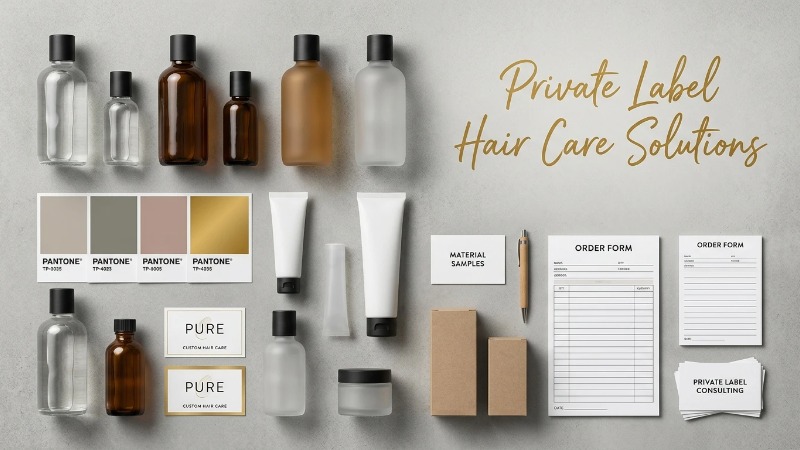
OEM vs. ODM: Which Model Fits Your Business?
OEM Explained
Under the Original Equipment Manufacturer model, you supply the formula or precise specifications, and the manufacturer produces to your design. This suits brands with proprietary formulations they want to protect.
ODM Explained
Under the Original Design Manufacturer model, the factory hands you ready-to-brand, market-tested formulas that you package under your own label. ODM gets you to market far faster and at lower development cost—ideal for first-time founders.
Cost & Margin Advantages
| Model | Setup Cost | Time to Market | Margin Potential |
|---|---|---|---|
| Reselling established brand | Low | Immediate | Low (15–25%) |
| OEM private label | Higher | 4–8 months | High (40–70%) |
| ODM private label | Moderate | 2–4 months | High (40–65%) |
The table lays out the strategic trade-off. Reselling is fast but low-margin. Private label demands upfront investment, yet it builds a durable, high-margin brand asset.
Why Partner with China Poleview Biotechnology
China Poleview Biotechnology Co., Ltd. was built for exactly this opportunity. Its advanced research lab and experienced R&D team can develop bespoke masks, keratin treatments, and clean-beauty formulations aligned with your brand vision.
With deep international trade experience, Poleview handles the technical and logistical complexity so you can focus on marketing and growth. The result is a genuinely hassle-free, effort-saving partnership—the kind that lets a new brand punch far above its weight.
Frequently Asked Questions (FAQ)
What is the difference between a hair care manufacturer and a supplier?
A manufacturer physically produces the product—formulating, blending, filling, and packaging. A supplier may be a manufacturer or a distributor who provides finished goods or raw materials. Working directly with hair care manufacturers usually means better pricing, customization, and quality control than buying through intermediary suppliers.
How much does private label hair treatment production cost?
Costs depend on formulation complexity, ingredients, packaging, order volume, and certification requirements. ODM projects using existing formulas cost less than fully custom OEM development. Many founders start with a few thousand dollars for a pilot run and scale as demand grows; request a detailed quotation to plan accurately.
What are the minimum order quantities for OEM/ODM hair products?
MOQs vary widely by manufacturer and product type. ODM programs often start lower—sometimes a few hundred to a few thousand units per SKU—while fully custom OEM runs may require larger commitments. Discuss MOQ early, since flexible partners can accommodate startups testing the market.
How long does it take to develop a custom hair mask or treatment?
An ODM product using a proven base can reach production in roughly two to four months. A fully custom OEM formulation—including R&D, stability testing, and regulatory checks—typically takes four to eight months. Timelines depend on complexity and how quickly samples are approved.
Are Chinese hair care manufacturers reliable for global export?
Leading Chinese manufacturers meet international standards, hold GMP and ISO certifications, and bring extensive export experience. A reputable partner like China Poleview Biotechnology pairs advanced R&D with proven trade capabilities, making cross-border sourcing both reliable and cost-effective—provided you verify certifications and request samples.
How do I start building my own hair treatment brand?
Start by defining your target market, positioning, and product concept. Next, select a manufacturing partner with strong R&D and export experience, request samples, finalize formulation and packaging, then place your first production order. A capable OEM/ODM partner guides you through each step to launch.
Conclusion & Call to Action
From L'Oréal and Unilever to Kao, Shiseido, and dedicated specialists, the world's leading hair treatment manufacturers set the standard for quality and innovation. Yet the most compelling opportunity for today's decision-makers isn't competing with these giants at retail—it's owning your own brand through private label production.
Private label lets you capture premium margins, control your story, and build a lasting business asset—all without the capital burden of running a factory.
Start Your Private Label Journey Today
Ready to build a hair care brand that competes on quality and margin? China Poleview Biotechnology Co., Ltd. offers expert OEM/ODM hair treatment manufacturing backed by an advanced research laboratory, an experienced formulation team, and deep international trade experience.
Choose a partner who makes the process hassle-free and effort-saving. Contact China Poleview Biotechnology today to request a consultation, samples, and a tailored quotation—and take the first step toward launching your own successful hair care line.