
A comprehensive resource for brand owners, procurement leaders, and product developers navigating the complexities of scaling custom skincare production.
Scaling a skincare brand is rarely a linear journey. The moment a hero product goes viral or a retail account expands nationwide, your manufacturing partner becomes either your greatest asset or your most limiting constraint. This guide unpacks what scalability genuinely means in custom skincare manufacturing—and how to evaluate partners who can grow alongside your ambitions.
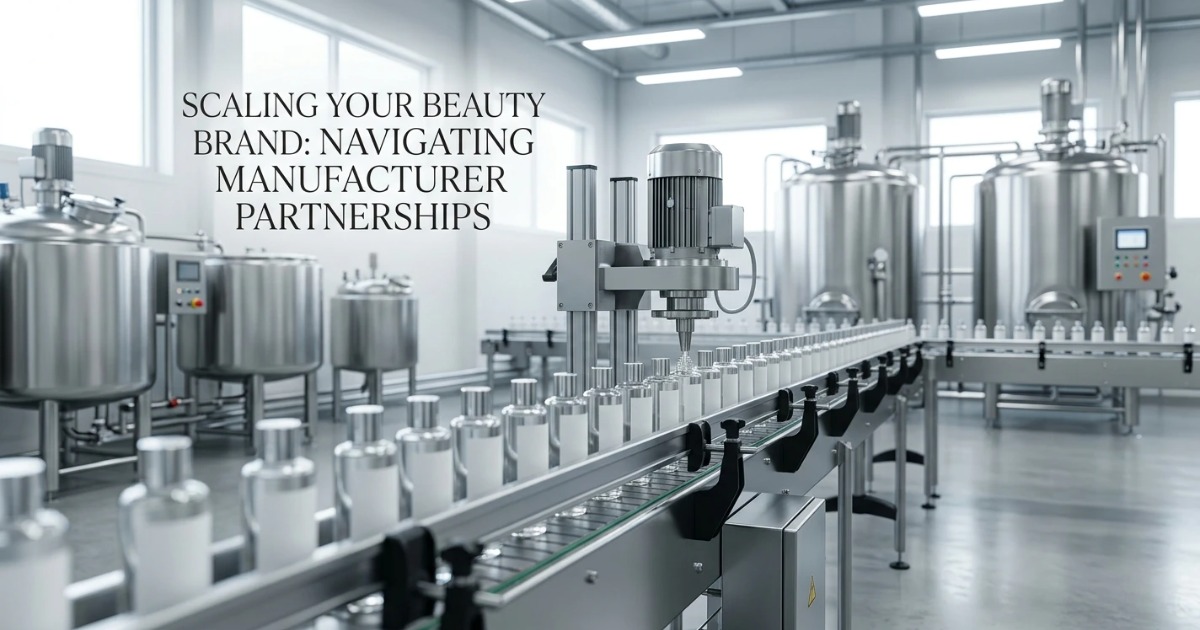
Understanding Scalability in Custom Skincare Manufacturing
Scalability is often confused with sheer output. In reality, it describes a manufacturer's ability to increase—or decrease—production volumes rapidly while preserving quality, cost efficiency, and delivery timelines.
For an emerging brand, this matters because demand is unpredictable. A single influencer campaign or a seasonal spike can multiply orders overnight. Without a scalable partner, that opportunity converts into stockouts, backorders, and eroded customer trust.
The Difference Between Capacity and Scalability
Raw private label skincare production capacity tells you how much a factory can produce at maximum load. Scalability tells you how gracefully it moves between volumes without disruption.
A facility with high theoretical capacity but rigid workflows may still fail you. True scalability blends three elements: speed of adjustment, flexibility across order sizes, and consistency of quality regardless of batch volume.
Capacity answers "how much?" Scalability answers "how fast, how flexibly, and how reliably?"
Why Scalability Fails Most Emerging Brands
Several recurring bottlenecks stall growth for younger brands. Understanding them early helps you avoid painful mid-scale surprises.
- MOQ rigidity: Fixed high minimums lock capital into inventory before demand is validated.
- Formulation lead times: Slow R&D turnaround delays new SKU launches and market responsiveness.
- Single-source dependency: Relying on one supplier or one ingredient source magnifies disruption risk.
Each of these can silently cap a brand's growth ceiling long before the market does.
Key Factors That Determine Manufacturing Scalability
Beyond marketing claims, scalability is engineered into a manufacturer's operations. These are the levers that separate scalable partners from limited suppliers.
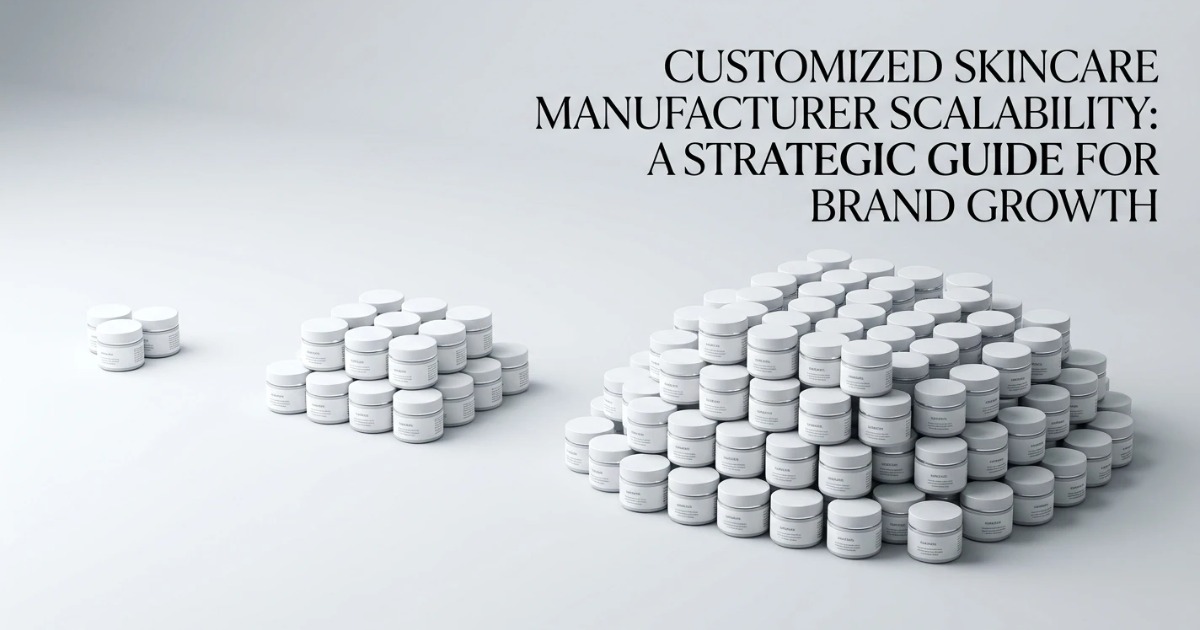
Production Line Flexibility and Batch Modularity
Modular equipment is the backbone of contract manufacturing scalability. Lines designed for quick changeovers can run a 500-unit pilot batch in the morning and a 20,000-unit bulk order the next week without lengthy retooling.
This modularity lets brands validate new formulas cheaply, then scale winning products aggressively—all within the same facility and quality system.
MOQ Flexibility and Its Impact on Growth
Cosmetic formulation MOQ flexibility is arguably the single most important enabler for growing brands. Low minimums let you test multiple SKUs, gather real sales data, and preserve cash flow before committing to volume.
The right partner offers tiered MOQs that align with where your business actually stands—not one-size-fits-all thresholds designed for legacy accounts.
MOQ Tiers vs. Business Stage
| Business Stage | Typical MOQ Range | Recommended Order Strategy | Risk Level |
|---|---|---|---|
| Startup / Testing | 500–1,000 units | Small-batch validation | Low |
| Growth | 1,000–5,000 units | Multi-SKU expansion | Medium |
| Established Brand | 5,000–50,000+ units | Bulk production, cost optimization | Managed |
Supply Chain Resilience and Raw Material Sourcing
Scaling production means scaling ingredient demand. A partner with multi-source procurement and buffer inventory of key actives protects your launch calendar from raw material shortages.
Resilient sourcing also stabilizes pricing—critical when a single volatile ingredient can otherwise wreck your margin math mid-campaign.
Evaluating Contract Manufacturing Scalability
Before committing, audit a prospective OEM/ODM partner against a structured framework. The goal is to confirm they can grow with you, not just serve your current order.
Certifications as a Baseline for Scalable Quality
Certifications are more than compliance checkboxes—they are proof that quality systems hold steady as volumes climb. FDA registration, MSDS documentation, GMPC, and ISO 22716 collectively ensure every batch meets identical standards, whether it's 500 units or 50,000.
A partner with a complete certification portfolio, such as Poleview Biotechnology Co., Ltd., gives international brands confidence that regulatory and quality requirements are covered across every market and every batch size.
Lead Time Benchmarks Across Order Volumes
Realistic timelines are a hallmark of an experienced manufacturer. Expect formulation and initial sampling to move faster than mass production, which requires bulk raw material procurement and full QC cycles.
The chart below outlines what a scalability-ready operation typically delivers versus a limited one.
Scalability Readiness Checklist
| Evaluation Criteria | Low Scalability | High Scalability |
|---|---|---|
| MOQ Flexibility | Fixed high minimums | Tiered, adaptable |
| Certification Coverage | Partial | Full (FDA, GMPC, ISO 22716) |
| R&D Turnaround | 8+ weeks | 2–4 weeks |
| Capacity Ceiling | Limited | Expandable |
Balancing MOQ Flexibility With Cost Efficiency
Every growing brand faces the same tension: low minimums enable agility, but higher volumes unlock discounts. The art of scaling lies in navigating this trade-off intelligently.
Custom Skincare Batch Production Volume Optimization
The most sustainable approach ties custom skincare batch production volume to actual sales velocity and inventory turnover. Overordering ties up cash and risks product aging; underordering causes stockouts and repeat setup costs.
Data-driven brands re-forecast every cycle, gradually increasing batch sizes as demand signals firm up—capturing volume savings without gambling on unproven SKUs.
White Label vs. Custom Formulation Scaling Paths
White label skincare fulfillment offers the fastest, lowest-risk entry: proven formulas, minimal development cost, and rapid go-to-market. It scales beautifully in the early stages.
Fully bespoke ODM development requires more upfront investment and longer lead times, but it builds defensible differentiation and long-term brand equity. Many successful brands begin white label, then transition their bestsellers into proprietary formulations as they mature.
The Role of OEM/ODM Partnerships in Scaling
Your manufacturing partner is not a vendor—it is an extension of your operations. The right relationship accelerates market entry and sustains expansion for years.
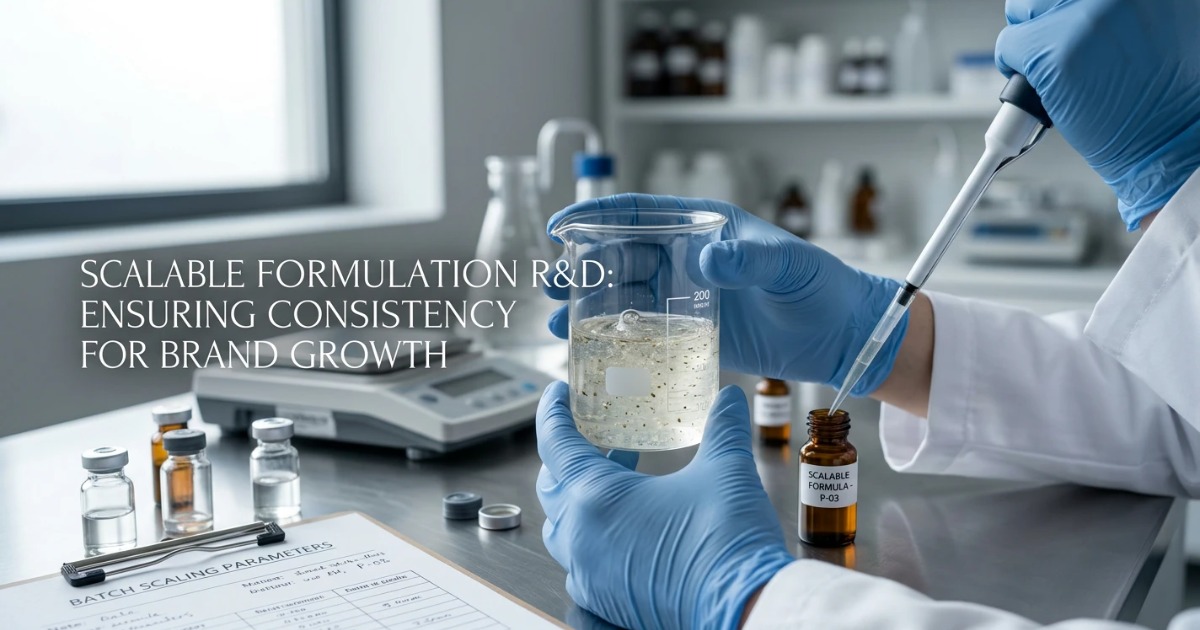
Choosing Between OEM and ODM Models
OEM (Original Equipment Manufacturing) lets you leverage a manufacturer's existing formulations under your own brand—ideal for speed and lower cost. ODM (Original Design Manufacturing) commissions proprietary development tailored to your specifications.
Choose OEM when time-to-market and validation matter most. Move toward ODM when you're ready to invest in unique, ownable products that competitors can't replicate.
Building a Long-Term Manufacturing Relationship
Scaling smoothly requires a partner who supports you from launch through maturity. Manufacturers like Poleview Biotechnology Co., Ltd.—combining competitive pricing, high product quality, and flexible MOQs—help brands progress across every growth stage without switching factories.
Consistency of partnership means your formulas, quality standards, and supply chain remain stable even as your order volumes multiply.
Global Market Context and Scaling Opportunities
Global demand for personal care and skincare continues its strong upward trajectory into 2026, driven by clean beauty preferences, e-commerce acceleration, and the rapid rise of indie and creator-led brands. This environment rewards manufacturers who can produce agile, small-batch launches and scale winners fast.
For brand owners, the strategic imperative is clear: partner with facilities built for both flexibility and volume, so you can convert fleeting demand surges into durable revenue.
Regional Sourcing Advantages
China-based manufacturers offer a compelling blend of cost competitiveness and internationally recognized quality standards. Mature supply chains, deep ingredient access, and full certification portfolios allow global brands to source affordably without compromising compliance.
This combination makes certified Chinese contract manufacturers a strategic choice for brands scaling across multiple international markets simultaneously.
Frequently Asked Questions (FAQ)
What MOQ should I expect from a scalable skincare manufacturer?
Expect tiered, flexible minimums rather than a single fixed threshold. Early-stage brands typically start around 500–1,000 units for validation, then scale to 5,000+ units as demand firms up. This structure supports both risk-managed testing and cost-efficient growth.
How do certifications affect scalability?
Certifications such as FDA, MSDS, GMPC, and ISO 22716 guarantee that quality systems remain consistent at any volume. As batch sizes grow, these frameworks ensure every unit meets identical safety and quality benchmarks—protecting your brand reputation as you scale.
Can a manufacturer handle both small and large orders?
Yes, provided the facility uses modular production lines and maintains expandable capacity. This modularity allows quick changeovers between small pilot runs and large bulk orders without costly retooling delays, giving you flexibility at every stage.
What is the typical lead time when scaling up production?
Formulation and sampling for a capable partner generally take 2–4 weeks, while mass production adds additional time for bulk material procurement and full quality control cycles. Larger volumes require longer lead times, so planning your reorder cadence in advance is essential.
How do I transition from white label to custom formulation?
Start by identifying your proven bestsellers using real sales data. Then work with your manufacturer's R&D team to develop proprietary ODM formulations for those SKUs—differentiating your top products while continuing white label fulfillment for newer, unvalidated lines.
Ready to Scale Your Skincare Brand?
Poleview Biotechnology Co., Ltd. is a China-based personal care and skincare product manufacturer specializing in OEM and ODM orders. With high product quality, competitive pricing, flexible MOQs, and complete certifications (FDA, MSDS, GMPC, ISO 22716), we are your ideal private label manufacturing partner.
Contact us today to discuss your project and build a scalable path to growth.