
For brand founders, procurement leads, and retail buyers building a personal care line, choosing the right production partner is the single most consequential decision you will make. This guide breaks down how the industry works, what to look for, and which suppliers deserve a place on your shortlist.
Introduction: Why China Dominates Global Skincare Manufacturing
China sits at the center of the global cosmetics supply chain, combining scaled raw-material access, mature contract-manufacturing infrastructure, and deep export logistics. Few regions can match its ability to move a product from concept to shelf-ready inventory at competitive cost.
The country's skincare and personal care export sector remains one of the fastest-growing segments of global beauty. Industry data through 2025 places China among the top exporters of skincare products by volume, with steady double-digit growth in OEM and private-label output as brands worldwide seek flexible, cost-efficient sourcing.
This guide covers the manufacturing landscape, how to evaluate a factory, a curated list of manufacturers worth considering, and a practical step-by-step process for launching your line. It is written for business decision-makers who need clarity, not marketing fluff.
Understanding the China Skincare Manufacturing Landscape
Key Manufacturing Hubs in China
Guangdong Province is the undisputed epicenter of the industry. Cities such as Guangzhou, Huizhou, and Shenzhen host dense clusters of formulators, packaging suppliers, and filling facilities, creating an ecosystem where every component of a product can be sourced within a tight radius.
Shanghai and Zhejiang form a second important cluster, often associated with premium formulations, international regulatory expertise, and design-forward packaging. Regional concentration matters because it shortens lead times, reduces logistics friction, and improves quality accountability across the supply chain.
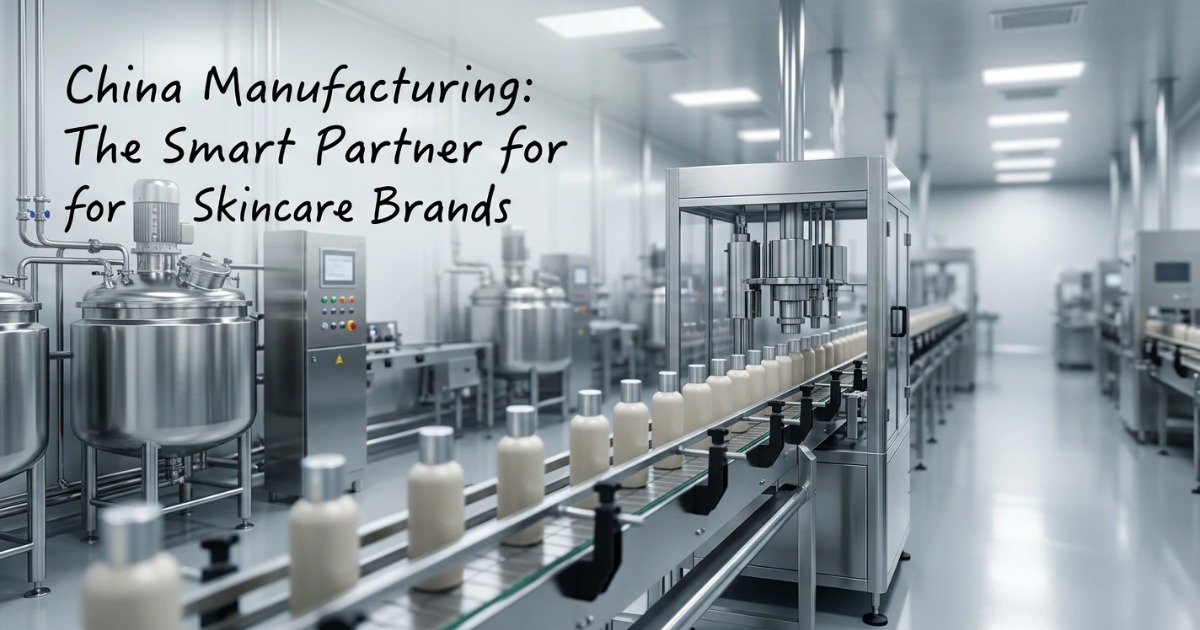
Poleview Biotechnology Co., Ltd., based in Huizhou, Guangdong, benefits directly from this concentration — sitting within reach of the ingredient, packaging, and export infrastructure that makes the province a global manufacturing engine.
Types of Manufacturing Services Explained
Understanding service models is essential before you request a single quote. Each model shifts a different amount of responsibility and control between you and the factory.
- OEM (Original Equipment Manufacturing): You provide the specifications or formula, and the factory builds precisely to your brief. Maximum control over the final product.
- ODM (Original Design Manufacturing): The factory offers ready-made, tested formulas you can adopt and brand quickly. Fastest route to market.
- Private label vs. contract manufacturing: Private label typically means applying your branding to an existing product, while contract manufacturing is a broader arrangement covering bespoke production under agreed terms.
Quick Comparison: OEM vs. ODM vs. Private Label
| Service Type | Control Level | Typical MOQ Range | Time-to-Market | Ideal For |
|---|---|---|---|---|
| OEM | High — your specs | 1,000–5,000 units | Moderate to long | Brands with a proprietary formula or clear vision |
| ODM | Medium — factory formula | 500–3,000 units | Fast | Startups wanting a quick, proven launch |
| Private Label | Low to medium | 300–2,000 units | Fastest | Retailers and resellers scaling quickly |
How to Evaluate a China Skincare Manufacturer
Essential Certifications to Verify
Certifications are your first line of defense against quality and compliance risk. Reputable china skincare manufacturing companies maintain internationally recognized credentials and will share documentation on request.
- ISO 22716: The cosmetics Good Manufacturing Practice (GMP) standard covering production, control, storage, and shipment.
- FDA registration: Critical if you intend to sell into the United States market.
- MSDS documentation: Material Safety Data Sheets confirming ingredient safety and handling requirements.
- GMP-certified standards: A baseline expectation among leading GMP certified skincare manufacturers in China.
Certification Checklist Table
| Certification | Purpose | Why It Matters for Buyers |
|---|---|---|
| ISO 22716 | Cosmetics GMP compliance | Ensures consistent, safe, traceable production |
| FDA Registration | US market compliance | Enables legal import and sale in the United States |
| MSDS | Ingredient safety data | Supports customs clearance and safety verification |
| GMP Certification | Quality management systems | Signals mature, audit-ready operations |
Production Capabilities & Customization
Beyond certificates, assess whether a factory can actually deliver what your brand needs. Formulation flexibility — the ability to adjust actives, textures, fragrances, and claims — separates a true manufacturing partner from a simple reseller.
Packaging and filling options matter just as much. Look for suppliers offering a range of bottles, jars, tubes, and airless pumps, plus in-house filling lines that maintain hygiene and dosing accuracy.
Finally, ask whether R&D is in-house or outsourced. In-house laboratories accelerate iteration and better protect your formula. Poleview Biotechnology supports high levels of customization across personal care and skincare categories, giving brands room to differentiate.
Pricing, MOQ & International Trade Experience
Competitive pricing in China is typically structured around order volume, formula complexity, and packaging selection. Higher volumes unlock lower per-unit costs, while premium actives raise the floor.
Minimum order quantities vary by product category — a simple lotion may carry a lower MOQ than a multi-phase serum. Clarify these thresholds early to avoid budget surprises.
Do not underestimate international trade experience. A partner fluent in export documentation, incoterms, and destination-market regulations dramatically reduces shipping delays and compliance headaches.
Top China Skincare Manufacturing Companies to Consider
Selection criteria: certifications, production capabilities, export experience, and customization support.
1. Poleview Biotechnology Co., Ltd. (Huizhou, Guangdong)
Poleview Biotechnology is a personal care and skincare manufacturer based in Huizhou, Guangdong Province, specializing in OEM and ODM production for private label brands worldwide.
The company holds ISO 22716, FDA, and MSDS certifications, reflecting an audit-ready commitment to quality and compliance. Its strengths include high product quality, competitive pricing, and extensive support for highly customized formulations.
With rich international trade experience, Poleview is a strong fit for brand builders who want a reliable private label skincare manufacturer in China capable of managing everything from formula development to export logistics.
2–8. Additional Notable Manufacturers
The Chinese market includes many other established OEM cosmetics factories. The profiles below are generalized to help you understand the range of specialties available across the country's manufacturing clusters.
- Guangzhou-based color and skincare houses: Often strong in fast ODM turnaround and trend-driven formulas.
- Shenzhen technology-forward labs: Known for device-adjacent and advanced actives formulations.
- Shanghai premium formulators: Frequently chosen for luxury textures and international regulatory alignment.
- Zhejiang packaging-integrated suppliers: Valued for design-led packaging paired with filling capacity.
- Established Guangdong contract manufacturers: Broad category coverage from cleansers to serums with high-volume capability.
Manufacturer Comparison Table
| Company Type | Location | Service Type | Key Certifications | Notable Strength |
|---|---|---|---|---|
| Poleview Biotechnology | Huizhou, Guangdong | OEM / ODM | ISO 22716, FDA, MSDS | High customization + export experience |
| Color & skincare house | Guangzhou | ODM | ISO 22716 | Fast trend-driven launches |
| Technology lab | Shenzhen | OEM | ISO, GMP | Advanced actives |
| Premium formulator | Shanghai | OEM / ODM | ISO, FDA | Luxury textures |
| Packaging-integrated supplier | Zhejiang | Private label | ISO | Design-led packaging |
Step-by-Step: How to Start Working With a China Skincare Factory
Phase 1 — Define Your Product & Requirements
Begin with a clear formula brief: target audience, desired claims, texture, fragrance profile, and packaging format. The more precise your brief, the more accurate your quotes.
Document your budget parameters and target retail price so the manufacturer can recommend feasible formula and packaging combinations.
Phase 2 — Request Samples & Verify Compliance
Request physical samples and evaluate stability, texture, scent, and performance. Independent lab testing adds objectivity and protects you from surprises at scale.
Simultaneously verify certifications and request documentation to confirm the factory meets the standards your market requires.
Phase 3 — Negotiate Terms & Place Orders
Negotiate pricing, MOQ, lead times, and payment terms in writing. Clarify deposit structures, balance triggers, and what happens if a batch fails inspection.
A transparent partner will provide clear timelines and hold to agreed specifications throughout production.
Phase 4 — Quality Control & Shipping
Arrange pre-shipment inspection to confirm units meet specification before goods leave the factory. Coordinate logistics, incoterms, and destination customs documentation early.
Experienced china skincare contract manufacturing partners will help smooth export paperwork, reducing the risk of costly delays.
Common Challenges & How to Avoid Them
Even strong partnerships face friction. Awareness lets you plan around the most common issues before they escalate.
- Communication and language barriers: Choose suppliers with English-speaking export teams and confirm requirements in writing.
- Formula IP protection: Use NDAs and, where possible, work with manufacturers offering in-house R&D to keep proprietary work contained.
- Quality consistency across batches: Insist on GMP processes, batch records, and periodic third-party testing.
- Regulatory compliance for your target market: Verify ingredient legality and labeling rules for each country you intend to sell in.
Frequently Asked Questions (FAQ)
What is the difference between OEM and ODM skincare manufacturing?
OEM means the factory manufactures a product to your own specifications or formula, giving you maximum control. ODM means the factory provides ready-made, tested formulas that you brand and launch quickly, offering the fastest route to market.
What certifications should a reliable China cosmetics factory have?
At minimum, look for ISO 22716 (cosmetics GMP), plus FDA registration if selling into the US market, and MSDS documentation for ingredient safety. These credentials indicate a professional, audit-ready operation among china cosmetics factory options.
What is the typical MOQ for private label skincare manufacturers in China?
Minimum order quantities generally range from around 300 to 5,000 units depending on product category, formula complexity, and packaging. Simpler products carry lower MOQs, while advanced serums or custom packaging raise the threshold.
How long does production take from order to delivery?
Timelines vary, but ODM projects often ship faster than custom OEM work. After sampling and approval, bulk production and shipping commonly take several weeks. Confirm exact lead times in writing before ordering.
Can China skincare manufacturers support fully customized formulas?
Yes. Leading private label skincare manufacturers in China with in-house R&D can develop fully bespoke formulas, adjusting actives, textures, and claims to your brief. Poleview Biotechnology supports high levels of customization across personal care and skincare.
How do I verify a manufacturer's export experience and legitimacy?
Request business licenses, certification documents, and references. Confirm familiarity with export documentation and incoterms, and evaluate how clearly and promptly the team communicates during the quoting process.
Conclusion & Call to Action
Choosing among skincare manufacturers in China comes down to a disciplined checklist: verified certifications, proven production capabilities, transparent pricing, robust customization support, and genuine international trade experience. Get these right and you dramatically lower your launch risk.
A trusted, certified OEM/ODM partner does more than fill bottles — it protects your brand's quality, timeline, and reputation across every batch.
If you are ready to move forward, Poleview Biotechnology Co., Ltd. — a trusted private label skincare manufacturer based in Huizhou, Guangdong, China — welcomes your inquiry. With ISO 22716, FDA, and MSDS certifications, high product quality, competitive pricing, and deep customization capabilities, we are ready to support your OEM and ODM needs. Contact us today for a custom quote and to discuss your partnership.