
Sourcing skincare production overseas is one of the highest-stakes decisions a beauty brand makes. The right manufacturer shapes your margins, your product quality, and how fast you reach the market. The wrong one costs you time, capital, and customer trust.
This guide is written for founders, sourcing leads, and executives who are evaluating private label skincare manufacturers china buyers rely on. It covers why China leads global contract production, how to vet a factory properly, and how to match a manufacturing model to your brand stage.
We keep the tone practical and evidence-driven. By the end, you should have a working framework to shortlist, audit, and select a partner with confidence.
Why China Dominates Global Private Label Skincare Manufacturing
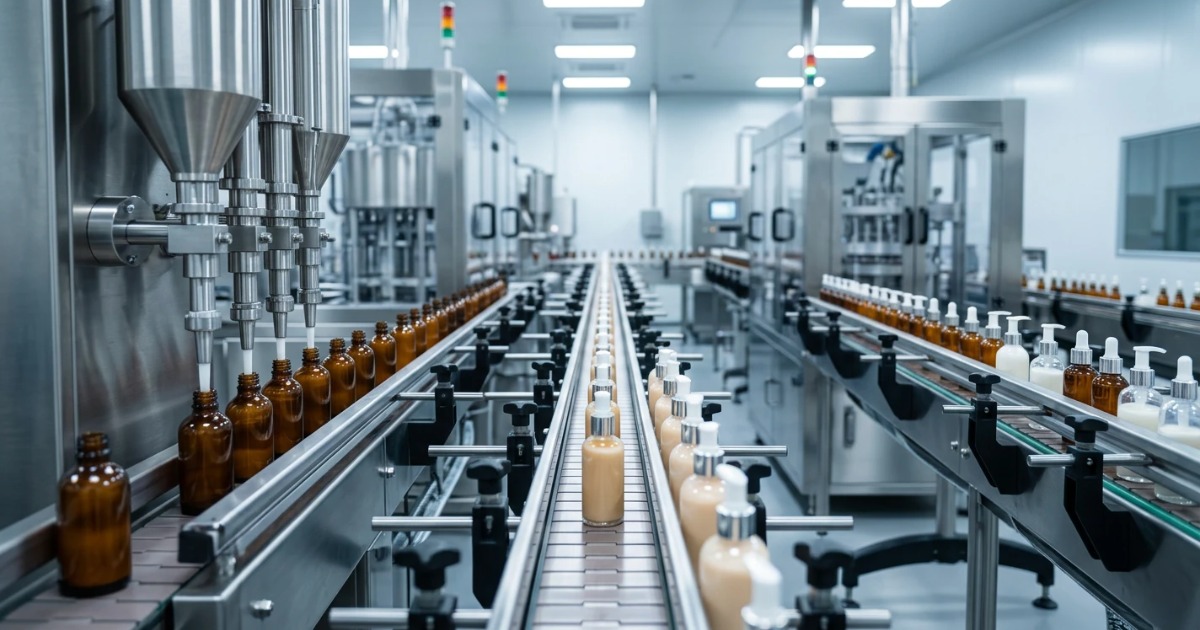
China accounts for a substantial share of the world's contract cosmetics output. For brands from North America, Europe, the Middle East, and Southeast Asia, sourcing here is less about cost alone and more about the mix of scale, speed, and formulation depth.
Decades of manufacturing investment have produced dense supplier clusters, mature raw-material supply chains, and factories that can move a product from concept to shelf in weeks rather than months.
The Scale of China's Cosmetics Manufacturing Sector
China is both a massive domestic consumer market and a leading export hub for beauty and personal care goods. The figures below reflect the most recent available industry data as of 2026 and show why the country remains central to global sourcing.
| Metric | Approximate Figure | Notes |
|---|---|---|
| Domestic cosmetics market value | USD 90+ billion | Second-largest single-country market globally |
| Registered cosmetics manufacturers | 5,000+ | Majority concentrated in coastal and southern provinces |
| Annual export growth (skincare segment) | High single to low double digits | Driven by cross-border e-commerce demand |
| Share based in Guangdong province | Roughly one-third to one-half | Largest regional cluster for skincare and personal care |
These numbers vary by source and reporting year, but the direction is consistent. Capacity, supplier density, and export momentum all favor buyers who source strategically.
Cost, Speed, and Capacity Advantages
The competitive edge of an oem skincare manufacturer china partner comes from three reinforcing factors. First, a localized raw-material and packaging ecosystem keeps input costs low and lead times short.
Second, flexible minimum order quantities let emerging brands test the market without overcommitting capital. Third, large-scale production lines allow the same factory to scale with you as demand grows.
That elasticity is hard to find elsewhere. A single facility can often handle a 1,000-unit pilot run and a 100,000-unit reorder without you switching suppliers.
Guangdong: The Heartland of Skincare Production
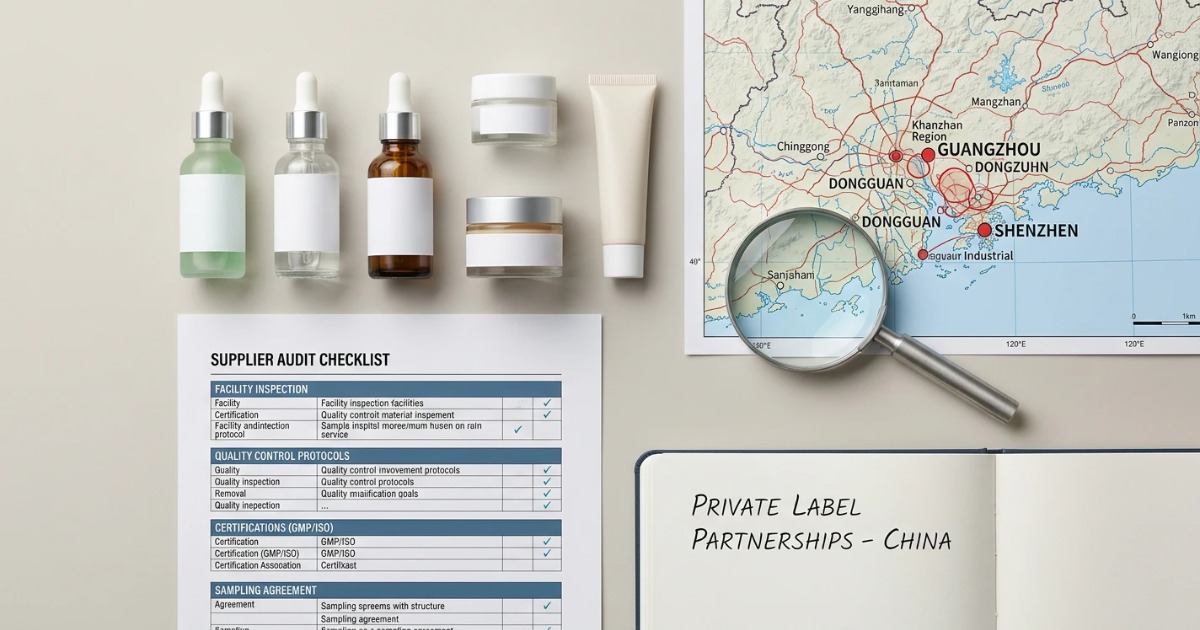
If China is the center of global skincare manufacturing, Guangdong province is the center of China. Cities like Guangzhou and Huizhou host tightly integrated supplier networks covering formulation, filling, packaging, printing, and testing within short distances.
This geographic concentration cuts logistics friction and shortens development cycles. A brand can develop a sample, source packaging, and run stability testing without materials crossing the country.
Proximity to major ports including Shenzhen, Guangzhou, and Hong Kong also simplifies export. For overseas buyers, that means faster ocean freight scheduling and fewer inland transport delays.
Understanding OEM, ODM, and Private Label Models
Before comparing factories, get clear on the sourcing model you actually need. The terms are often used loosely, and the differences directly affect cost, control, and time to market.
OEM vs ODM vs White Label: Key Differences
Each model represents a different balance of formulation ownership and speed. The table below breaks down what you control and what you trade off.
| Model | Formulation Control | Brand Ownership | Relative Cost | Speed to Market |
|---|---|---|---|---|
| OEM (Original Equipment Manufacturer) | You supply or co-develop the formula | Fully yours | Higher upfront (development) | Slower (custom work) |
| ODM (Original Design Manufacturer) | Factory offers ready or semi-custom formulas | Yours under your brand | Moderate | Faster |
| White Label | Fixed existing product, minimal changes | Shared formula, your label | Lowest | Fastest |
OEM suits brands with a proprietary vision or an existing formula. ODM fits those who want a distinctive product without building it from scratch. White label works for speed-focused launches where differentiation lives in branding and marketing.
Which Model Fits Your Brand Stage
Early-stage startups often begin with ODM or white label to validate demand quickly and preserve cash. It reduces development risk while you build distribution.
Growing brands typically shift toward ODM with meaningful customization, tweaking textures, actives, and fragrance to carve out a signature feel. This is where custom skincare private label work starts to pay off.
Established labels with proven demand invest in full OEM development. They own the formula, protect it contractually, and treat it as a defensible asset.
How to Evaluate Private Label Skincare Manufacturers in China
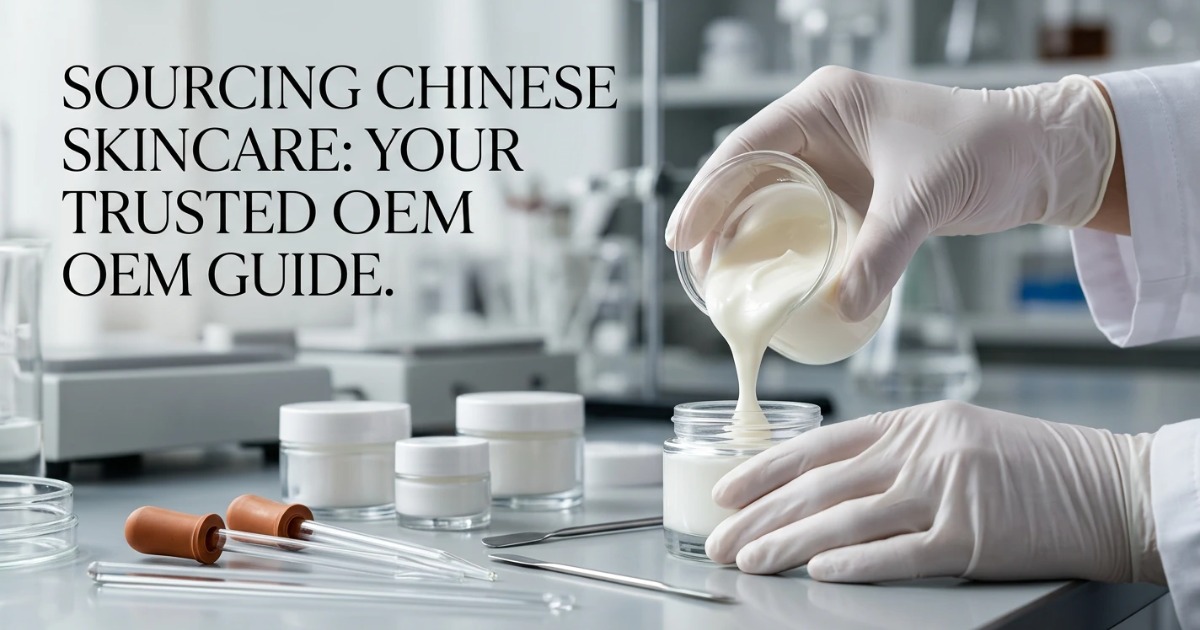
Vetting is where most sourcing decisions are won or lost. A disciplined audit protects you from quality failures, compliance gaps, and hidden costs. Use the framework below as a repeatable checklist.
Certifications and Regulatory Compliance
Certifications are your first filter. They signal that a factory operates to recognized standards and can support your sales in regulated markets.
| Certification / Requirement | What It Covers | Why It Matters |
|---|---|---|
| ISO 22716 (GMP for cosmetics) | Good manufacturing practice standards | Baseline for consistent, safe production |
| GMPC | Cosmetic-specific manufacturing practices | Widely expected by international buyers |
| FDA registration | Facility registration for the US market | Required for selling into the United States |
| ISO 9001 | Quality management systems | Shows process discipline beyond the shop floor |
| Cruelty-free / vegan credentials | Third-party ethical certifications | Supports positioning for conscious consumers |
Ask for current certificates, not expired scans. When a claim is central to your market positioning, verify the certificate numbers with the issuing body.
R&D and Custom Skincare Product Formulation Capability
A factory's formulation depth determines how far you can differentiate. Ask whether it keeps an in-house lab, how large its formulation library is, and how many chemists sit on the R&D team.
Request examples of bespoke projects the factory has developed. Genuine custom skincare product formulation capability shows up in the ability to reformulate around specific actives, textures, pH targets, and stability requirements.
A partner strong in R&D can also help you navigate ingredient sourcing and regulatory constraints across target markets. That guidance shortens your development timeline.
Production Capacity and Quality Control
Capacity determines whether a supplier can grow with you. Review the number and type of production lines, filling equipment, and cleanroom classifications.
Quality control matters just as much. Look for documented batch records, in-process checks, and finished-goods testing. Ask how the factory handles batch-to-batch consistency and what it does when a batch fails inspection.
A serious manufacturer will describe its QC workflow without hesitation. Vague answers here are a warning sign.
Minimum Order Quantities and Pricing Structure
MOQs and pricing shape your total landed cost more than the unit price suggests. Clarify MOQ per formula and per packaging component, since packaging often carries its own minimums.
Ask for tiered pricing so you can model margins at different volumes. Then probe for hidden costs: mold fees, testing charges, artwork setup, and sample fees all add up.
The lowest quoted unit price is rarely the lowest true cost. Build a full cost model before comparing suppliers.
Communication, Lead Times, and Logistics
Responsiveness during the inquiry stage predicts how the relationship will run. Note reply speed, clarity of answers, and whether you get a dedicated contact.
Confirm typical lead times for sampling, bulk production, and reorders. Then assess export experience: incoterms handling, documentation, and shipping reliability all matter for overseas buyers.
A factory that ships to your region regularly will already understand your labeling and customs requirements. That experience prevents costly delays at the border.
Private Label Skincare Manufacturers in China
China's supplier base ranges from boutique specialists to high-volume factories. The right fit depends on your product category, order size, and customization needs.
Comparison of Notable Manufacturers by Specialty
The table below illustrates how china skincare manufacturers tend to differentiate. It is a representative profile of the kinds of suppliers you will encounter, not an exhaustive ranking.
| Manufacturer Profile | Location | Product Focus | Typical MOQ | Certifications | Customization Level |
|---|---|---|---|---|---|
| Full-service OEM/ODM specialist | Huizhou, Guangdong | Facial and personal care | Flexible / low pilot runs | GMPC, ISO 22716 | High |
| High-volume mass producer | Guangzhou, Guangdong | Cleansers, body care | Higher | ISO 9001, GMPC | Moderate |
| Boutique clean-beauty lab | Shanghai region | Natural and functional actives | Moderate | Vegan, cruelty-free | High |
| Packaging-integrated supplier | Zhejiang | Sun care, masks | Moderate to high | ISO 22716 | Moderate |
Match the profile to your priorities. A brand chasing a distinctive serum needs a strong R&D lab; a brand scaling a proven cleanser needs volume and price stability.
Poleview Biotechnology Co., Ltd. — Guangdong-Based OEM & ODM Specialist
Among the full-service specialists, Poleview Biotechnology Co., Ltd. is a professional personal care and skincare products manufacturer with its factory in Huizhou, Guangdong province. Sitting in the heartland of Chinese skincare production, it has direct access to the region's mature supplier and logistics network.
Poleview brings deep production and R&D experience to both OEM and ODM orders. That depth lets brands develop a proprietary formula from scratch or refine an existing concept into a market-ready product.
The company runs advanced manufacturing processes and large production capacity, so everything from pilot runs to substantial reorders happens under one roof. Its focus on high customization means textures, actives, fragrances, and packaging can be tailored to a brand's positioning.
For decision makers weighing quality against budget, Poleview pairs high product quality with competitive pricing. As a self-owned brand contract manufacturer rather than a trading intermediary, it offers a direct-to-factory relationship that cuts cost layers and communication friction.
What Sets a Trustworthy Partner Apart
The clearest signal of a reliable partner is that you are dealing with the actual factory, not a broker adding a margin. Ask to see the production floor by video call or in person, and confirm the business license matches the manufacturing address.
Trustworthy suppliers are open about their capabilities and honest about their limits. They will tell you when a request is impractical instead of promising everything.
They also document their processes. Certificates, batch records, and clear contracts mark a partner that treats quality as a system, not a sales pitch.
Product Categories You Can Private Label in China
Chinese contract manufacturers cover the full spectrum of skincare and personal care. Understanding category-specific considerations helps you brief suppliers accurately.
Facial Care: Serums, Creams, and Masks
Facial care is the highest-value and most competitive segment. Serums built around actives like niacinamide, hyaluronic acid, peptides, and vitamin C are perennial sellers.
Creams and moisturizers offer wide latitude for texture customization, from lightweight gels to rich balms. Sheet masks and wash-off masks stay popular for their strong margins and gifting appeal.
Customization usually covers active concentration, fragrance, color, and packaging format. This is where working with private label skin care china specialists delivers real differentiation.
Cleansers, Toners, and Sun Care
Cleansers span foaming, cream, gel, and oil formats, each with distinct formulation and packaging needs. Toners and essences let brands build a coherent routine around a hero product.
Sun care carries additional regulatory weight. SPF claims require testing and market-specific compliance, so confirm your manufacturer can support the certifications your target country demands.
Packaging matters heavily in these categories. Airless pumps, tubes, and UV-stable bottles all influence both shelf appeal and product stability.
Body Care and Specialty Formulations
Body care includes lotions, scrubs, washes, and butters, often produced at higher volumes and lower unit costs. It is a strong entry point for brands testing private label without heavy development spend.
Specialty and trending lines are where innovation happens. Natural and functional actives, fermentation-based ingredients, and clean-beauty formulations keep drawing consumer interest through 2026.
If your positioning depends on a specific claim such as vegan, fragrance-free, or dermatologically tested, raise that requirement in the very first conversation. It affects both formulation and certification paths.
The Private Label Manufacturing Process Step by Step
Knowing the workflow sets realistic expectations and helps you spot delays early. Here is what a typical engagement looks like from first inquiry to delivered goods.
From Concept to Sample Development
It starts with a brief: your target product, positioning, key ingredients, budget, and volumes. The clearer the brief, the faster and more accurate the response.
The manufacturer then proposes a formulation, either adapted from its library or developed to spec. You review samples, give feedback, and iterate until the texture, scent, and performance meet your standard.
Sample rounds are normal. Budget for two or three iterations rather than expecting a perfect first draft.
Testing, Compliance, and Packaging Design
Once the formula is approved, it moves into stability and compatibility testing to confirm shelf life and packaging fit. Safety assessments and any market-specific documentation are prepared here.
Packaging design runs in parallel. You finalize primary packaging, artwork, and labeling that complies with your destination market's rules.
This phase protects you post-launch. Skipping proper testing to save time is a common and costly mistake.
Production, QC, and Shipment
With the formula, packaging, and compliance locked, the factory schedules bulk production. In-process and finished-goods QC checks confirm the batch matches your approved reference.
After final inspection, goods are packed and prepared for export, with documentation and freight coordination handled together. The table below shows typical durations, though timelines shift with product complexity and order size.
| Phase | Typical Duration |
|---|---|
| Brief and formulation proposal | 1–2 weeks |
| Sample development and revisions | 2–4 weeks |
| Stability testing and compliance | 4–8 weeks |
| Packaging finalization | 2–4 weeks (often parallel) |
| Bulk production | 3–6 weeks |
| QC and shipment prep | 1–2 weeks |
In practice, many phases overlap. A well-run project, from concept to delivered goods, commonly runs two to four months.
Common Risks and How to Mitigate Them
Overseas sourcing carries real risks, but each one is manageable with the right safeguards. Address them before you sign, not after a problem shows up.
Avoiding Quality and Consistency Issues
The single most effective control is a formal sample approval process. Approve a physical reference sample, then require every production batch to match it.
Establish a golden-batch reference and spell out acceptable tolerances in your contract. For larger orders, commission third-party inspection before shipment.
These steps turn quality from a hope into a contractual obligation. They also give you clear recourse if a batch drifts.
Protecting Formulas and Intellectual Property
If you invest in a custom formula, protect it. Sign a non-disclosure agreement early and define formula ownership explicitly in your manufacturing contract.
Clarify whether the formula is exclusive to you and whether the factory may sell it to others. For a proprietary product, exclusivity is worth negotiating firmly.
Written terms prevent the most common IP disputes. Verbal assurances are not enough.
Managing Communication and Cultural Gaps
Clear, structured communication prevents most misunderstandings. Put specifications in writing, use reference images, and confirm agreements in follow-up summaries.
Time-zone differences get easier to manage with a single dedicated contact and scheduled check-ins. Patience during sampling and respect for the factory's process go a long way.
Partners with strong export experience already understand these dynamics. That is one more reason to weigh a manufacturer's overseas track record heavily.
Frequently Asked Questions
What is the typical MOQ for private label skincare in China?
MOQs vary widely by product and packaging. Many factories start pilot runs in the range of 500 to 3,000 units per formula, and some specialists offer lower entry points for testing. Packaging components often carry their own minimums, so confirm both when you request a quote.
How long does OEM skincare production take from start to finish?
A full OEM project, from brief through delivered goods, typically takes two to four months. Custom formulation and stability testing account for most of that time, while reorders of an established product move much faster.
Can I create a fully custom formula, or only choose from existing ones?
Both options exist. OEM development lets you build a proprietary formula to your specifications, while ODM lets you adopt or lightly modify an existing formula for a faster launch. A manufacturer with strong in-house R&D, such as a full-service OEM and ODM specialist, can support either path.
What certifications should a China skincare manufacturer hold?
Look for ISO 22716 or GMPC as a baseline for good manufacturing practice. FDA facility registration matters if you sell into the United States, and ISO 9001 signals broader quality-management discipline. Ethical credentials like cruelty-free or vegan certification support specific brand positioning.
How do I verify a manufacturer is a real factory and not a middleman?
Request a video tour or an in-person visit, and confirm the business license matches the manufacturing address. Real factories can show production lines, QC areas, and batch documentation on demand. Working directly with a self-owned brand manufacturer also removes the extra margin that trading intermediaries add.
What are typical costs for custom skincare private label projects?
Costs depend on formula complexity, actives, packaging, order volume, and testing requirements. Beyond unit price, budget for sample fees, mold or tooling charges, testing, and artwork setup. Ask for tiered pricing so you can model your true landed cost at different volumes before committing.
Start Your Private Label Skincare Project
Choosing the right partner among contract skincare manufacturing suppliers is the foundation of a profitable beauty brand. With a clear brief, a disciplined vetting process, and the safeguards outlined here, you can source from China with confidence.
If you are ready to move from planning to production, Poleview Biotechnology Co., Ltd. is prepared to help. As a Guangdong-based OEM and ODM specialist with a factory in Huizhou, it combines rich production and R&D experience, advanced processes, and large capacity with high customization and competitive pricing.
Take the next step in one of three ways. Request a quote to see transparent, tiered pricing for your target volumes. Order samples and judge texture, performance, and quality firsthand. Or book a capability consultation to talk through custom formulation, certifications, and timelines for your specific product.
Bring your concept, your target market, and your volume expectations to the first conversation. The clearer your brief, the faster you move from idea to a shelf-ready product built to your standard.