
If you've ever looked into making your own product, you've probably run into two acronyms that keep showing up: OEM and MOQ. They sound technical. But the ideas behind them are simple once someone explains them plainly.
This guide walks you through both terms with real examples, comparison tables, and practical tactics. By the end, you'll know how to read a factory quote, negotiate smarter, and pick the right manufacturing model for your business.
What Is OEM? (Original Equipment Manufacturer)
So what is OEM? At its core, an OEM arrangement lets you sell products without owning a factory. Someone else does the making. You handle the branding and selling.
This matters because building a production facility costs a fortune. OEM gives small business owners access to manufacturing muscle they could never afford to build themselves.
The Simple Definition of OEM
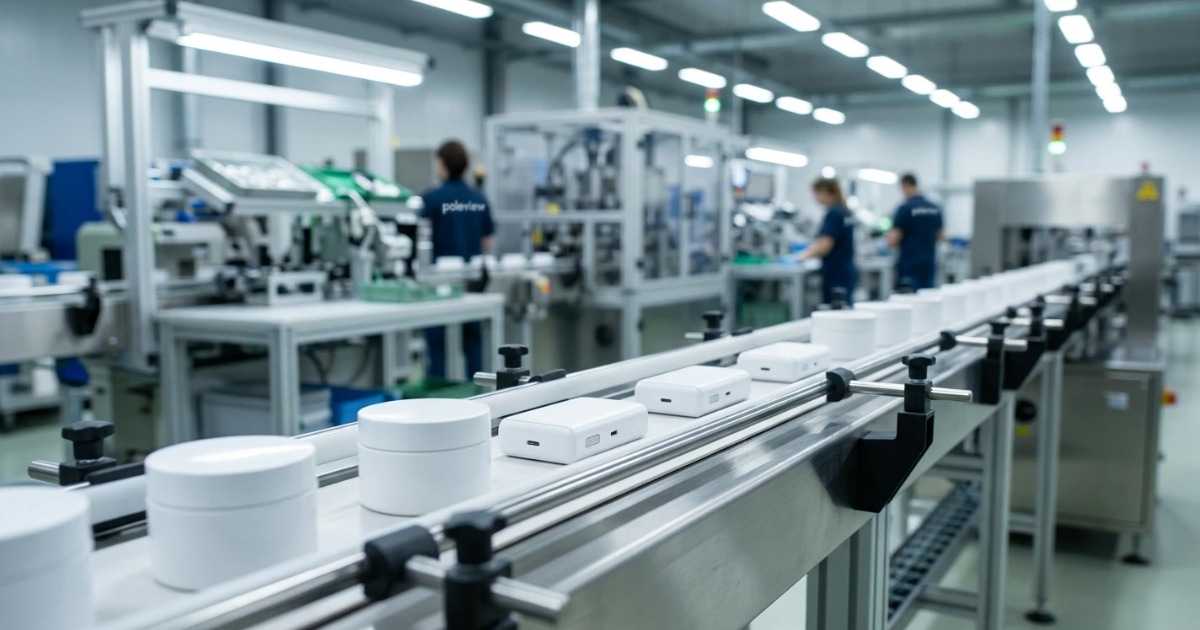
OEM stands for original equipment manufacturer. It's a company that produces goods based on your specifications, which you then sell under your own brand name.
Think about your favorite specialty coffee brand. There's a good chance the beans are roasted and bagged by a third-party facility, not the brand itself. The brand designs the blend and the packaging, and the factory produces it. That's the OEM meaning in everyday life.
You see this everywhere: supplements, cosmetics, electronics, even furniture. The name on the box rarely matches the name on the factory door.
How OEM Actually Works, Step by Step
The flow is more straightforward than most people expect. Here's how a typical OEM relationship unfolds:
- You provide the design or specs. This could be a formula, a technical drawing, or a detailed product brief.
- The factory reviews feasibility. They confirm they can make it and quote you a price.
- You approve a sample. The manufacturer produces a prototype for you to test and tweak.
- Production runs. Once you sign off, the factory manufactures your order at scale.
- You brand and sell. Products arrive with your labeling, ready for your customers.
The key detail: you keep control of the design and intellectual property. The factory is your production partner, not your product owner.
OEM vs Private Label Manufacturing
People often use these terms interchangeably, and the overlap is real. Both involve a factory making something you sell under your brand.
The difference sits in how much you customize. With true OEM, you bring your own design and specifications. With private label manufacturing, you usually pick from a factory's existing product and slap your brand on it, sometimes with minor tweaks like scent or color.
In practice, the line blurs and many suppliers offer both. Just know that "OEM" leans toward custom-built, while "private label" leans toward rebranding something that already exists.
What Is MOQ? (Minimum Order Quantity)
Now for the second term. What is MOQ, and why does it stop so many first-time sellers in their tracks?
MOQ is the reason you can't just order 10 units to test the waters. Factories set a floor, and understanding why helps you plan your budget realistically.
The Simple Definition of MOQ
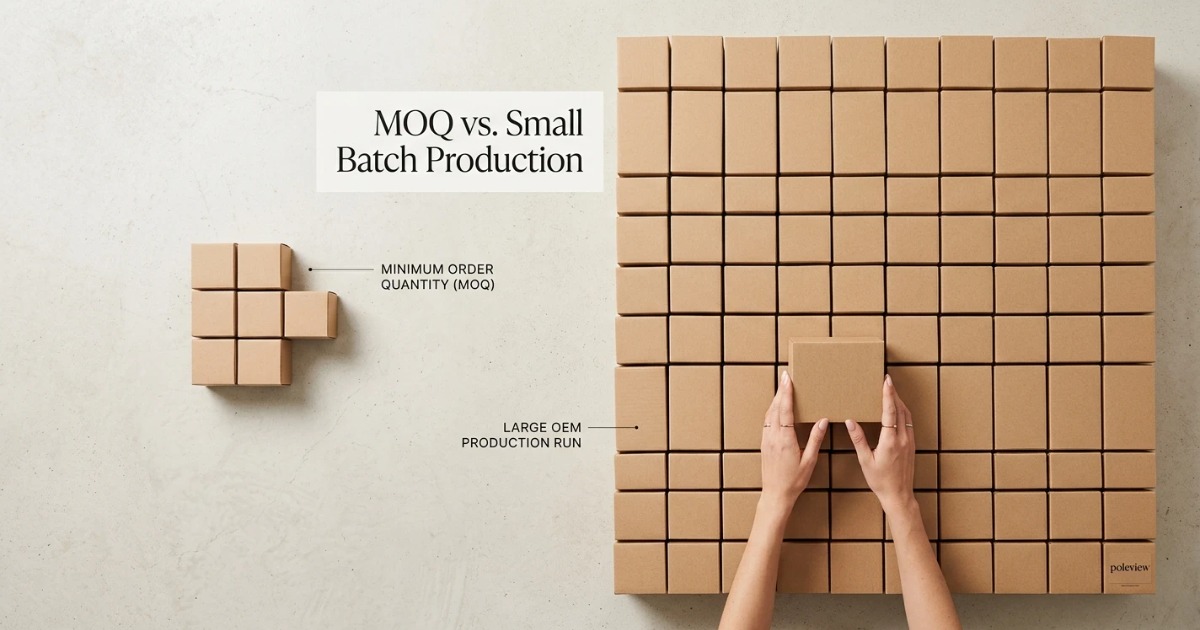
MOQ stands for minimum order quantity. It's the smallest number of units a supplier will agree to produce in a single order.
If a factory lists an MOQ of 500, that's your entry ticket. Want fewer? You'll usually need to negotiate or find a different supplier. That's the MOQ meaning in a nutshell: the number per order you're required to commit to.
Why Suppliers Require an MOQ
An MOQ isn't a factory being difficult. It's basic economics. Every production run carries fixed costs that don't shrink just because your order is small.
- Setup and machine time. Configuring equipment for your product takes hours whether you order 50 units or 5,000.
- Raw materials. Suppliers buy ingredients and components in bulk, so tiny orders create waste.
- Labor. Training staff on your specs costs the same regardless of run size.
Spread across a large order, these costs barely register per unit. Spread across a tiny order, they make the whole job unprofitable. That's why small runs rarely get a "yes."
Typical MOQ Ranges by Product Type
MOQs vary widely depending on what you're making. Here's a rough guide to set your expectations before you start reaching out to suppliers.
| Product Category | Typical MOQ Range | Notes |
|---|---|---|
| Cosmetics/skincare | 500–1,000 units | Often per shade/formula |
| Apparel | 100–300 pieces | Per color/size run |
| Electronics accessories | 500–5,000 units | Varies by component cost |
| Custom packaging | 1,000–10,000 units | High setup cost |
Treat these as ballpark figures. Actual numbers shift based on complexity, materials, and how busy the factory is.
OEM vs ODM: What's the Difference?
Here's where a lot of beginners get tangled up. OEM vs ODM is one of the most common sourcing questions, and picking the wrong model can cost you time and money.
The short version: OEM means you bring the design, ODM means the manufacturer already has one. Let's break down when each makes sense.
When to Choose OEM
OEM is your path if you already have a specific product in mind. Maybe you've developed a unique formula, engineered a gadget, or designed something no one else sells.
You'll invest more upfront and wait longer, but you get a genuinely original product that's hard for competitors to copy. If differentiation is your edge, OEM is worth it.
When to Choose ODM
ODM stands for original design manufacturer. Here, the factory has already designed a product, and you customize the surface details before selling it as your own.
This is the fast lane. Want to launch quickly, test a market, or keep costs low? An ODM product gets you to shelves in a fraction of the time. The tradeoff: a competitor could source a near-identical item from the same factory.
Side-by-Side Comparison Table
| Factor | OEM | ODM |
|---|---|---|
| Who owns the design | You | The manufacturer |
| Customization level | High | Limited |
| Speed to market | Slower | Faster |
| Upfront cost | Higher | Lower |
| Best for | Unique products | Fast launches |
Neither model is "better." It comes down to whether your advantage is a unique product or speed and low startup cost.
How OEM and MOQ Work Together
These two terms collide the moment you request your first quote. Understanding how they interact keeps you from budget surprises.
When you go the OEM route, you're committing to a custom production run, and that run comes with an MOQ attached. The more custom your product, the higher that floor tends to be.
Reading a Manufacturer's Quote
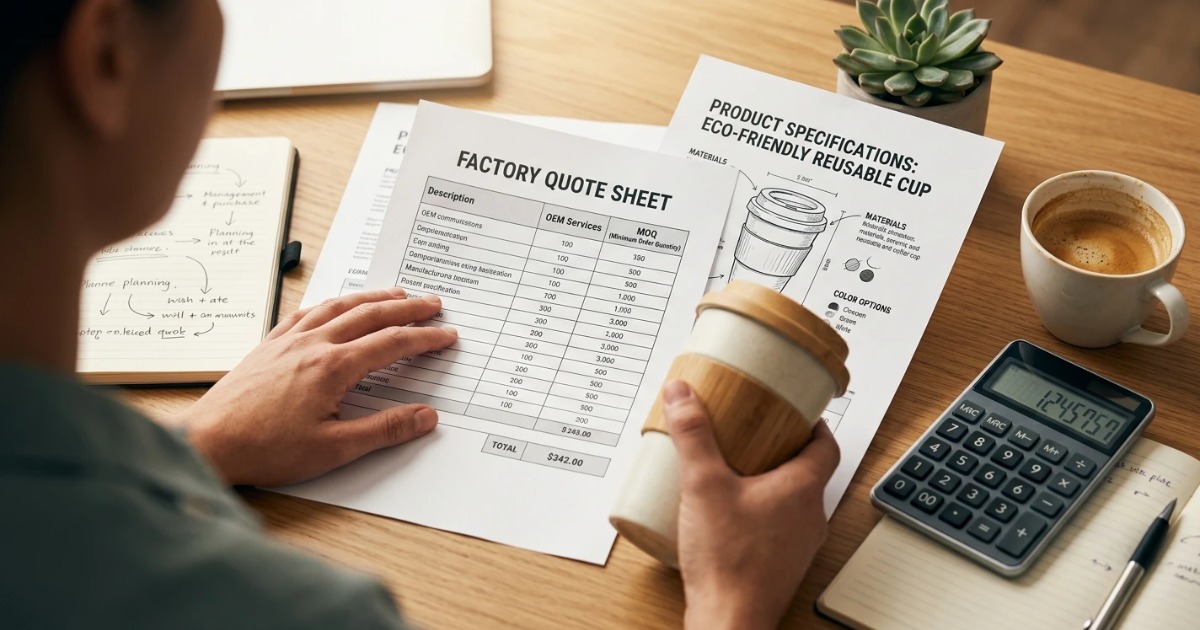
A factory quote can look intimidating, but most contain the same handful of line items. Here's what to look for:
- Unit price. The cost per piece, which usually drops as your order size grows.
- MOQ. The minimum you must order to get that price.
- Tooling or setup fees. One-time charges for molds, plates, or custom equipment.
- Lead time. How long production takes from approval to shipment.
Read every line before you react to the total. A low unit price paired with a high MOQ can still blow your budget.
How MOQ Affects Your Startup Budget
Let's do quick math. Say a supplier quotes $4 per unit with an MOQ of 1,000 units, plus a $500 tooling fee.
Your first order isn't $4. It's (1,000 × $4) + $500 = $4,500 before shipping. That's the real number you need in the bank.
This is why MOQ matters so much for small businesses. A tempting per-unit price can hide a much larger commitment. Always multiply the MOQ by the unit price and add fees to see your true upfront cost.
How to Negotiate a Lower MOQ
Good news: MOQs aren't always set in stone, especially with smaller factories eager for new clients. You just need something to offer in return.
Tactics That Actually Work
Negotiation is about trading value. Give the factory a reason to lower their floor:
- Offer a higher unit price. Paying a bit more per piece can offset the factory's setup costs on a smaller run.
- Commit to future orders. A written intent to reorder gives suppliers confidence to bend on the first batch.
- Accept longer lead times. Let them fit your small run between larger jobs, and they may say yes.
- Bundle SKUs. Combine several product variations into one order to hit their total volume requirement.
Be polite, be specific, and remember the factory is running a business too. A fair ask beats a demand every time.
Red Flags to Watch For in Wholesale Supplier Sourcing
Not every supplier deserves your trust. During wholesale supplier sourcing, watch for these warning signs:
- Refusal to send samples. A legitimate factory wants you to test their quality.
- Vague or shifting pricing. Numbers that change without explanation signal trouble ahead.
- No written contract manufacturing terms. Handshake deals leave you exposed if something goes wrong.
- Poor communication. Slow, unclear replies before you've paid tend to get worse afterward.
Trust your gut. If a deal feels off during the courtship, it rarely improves once money changes hands.
Finding the Right OEM Supplier
Sourcing the right partner takes legwork, but it's the difference between a smooth launch and a costly headache. Here's how to approach it.
Where to Search
You have more options than you might think:
- Sourcing platforms. Marketplaces like Alibaba, Global Sources, and Thomasnet list thousands of manufacturers by category.
- Trade shows. Industry expos let you meet factories face to face and inspect samples in person.
- Referrals. Ask other founders in your niche. A trusted recommendation is worth more than a hundred cold listings.
Cast a wide net at first, then narrow to a shortlist you can vet properly.
Vetting Checklist Before You Commit
Before you place a single order, run each candidate through this checklist:
- Samples. Always order and test before committing to a full run.
- Certifications. Confirm relevant quality and safety credentials for your product type and target market.
- Communication quality. Gauge responsiveness and clarity throughout your early conversations.
- Payment terms. Avoid paying 100% upfront. Split payments protect you if issues arise.
A little diligence now saves you from expensive mistakes later. Treat vetting as an investment, not a chore.
Frequently Asked Questions (FAQ)
What does OEM stand for?
OEM stands for original equipment manufacturer. It's a company that builds goods to your design or specifications, which you then sell under your own brand.
Is OEM the same as private label manufacturing?
They overlap, but they aren't identical. OEM usually means the factory builds a product from your custom design. Private label manufacturing usually means rebranding an existing product with light customization. Plenty of suppliers offer both, so always confirm exactly what's included.
Can I get a supplier to waive the MOQ?
Rarely all the way, but you can often bring it down. Offer a higher unit price, commit to future orders, or accept a longer lead time. First-time buyers should expect to negotiate the minimum order quantity, not erase it entirely.
What is a good MOQ for a first-time entrepreneur?
Start as small as your supplier and budget allow, ideally something you can sell through in a few months. Many beginners aim for the low end of their category's range so they can test demand before scaling up.
OEM vs ODM: which is cheaper to start?
ODM is usually cheaper and faster because you're using an existing design, which skips costly development and tooling. OEM costs more upfront, but it gives you a unique product that's harder for competitors to copy.
What questions should I ask before signing contract manufacturing terms?
Ask about total cost including tooling and shipping, lead times, payment schedule, quality standards, defect handling, and who owns the design and intellectual property. Clear, written answers to these questions protect your business if a dispute comes up later.
Bottom line: OEM decides who makes your product, and MOQ decides how much you must order. Master both, and you'll walk into supplier conversations with confidence instead of guesswork.