
The beauty industry has never been more open to entrepreneurs. With the global private label cosmetics market projected to surpass $50 billion by 2027, according to Allied Market Research, now is the time to launch your own brand — without building a laboratory from the ground up.
But here's the real challenge: choosing the right manufacturing partner can make or break your brand. The wrong factory means inconsistent quality, regulatory headaches, and wasted capital. The right one? It becomes your most valuable business asset.
This guide covers everything you need to know — from evaluating manufacturers to avoiding costly mistakes — and spotlights the top private label beauty products suppliers worth your consideration.
Why Private Label Cosmetics Is a Booming Opportunity for Entrepreneurs
The beauty and personal care industry generates over $580 billion globally, and private label brands are grabbing an ever-larger share. Why? Because today's consumers care about brand story, ingredient transparency, and niche targeting — not just legacy names on a label.
For entrepreneurs and small business owners, private label cosmetics offer an irresistible combination: low barrier to entry, high profit margins (often 60–80%), and speed to market. You skip years of R&D and millions in lab investment by partnering with established contract cosmetic manufacturing companies that already have the infrastructure, formulations, and regulatory know-how in place.
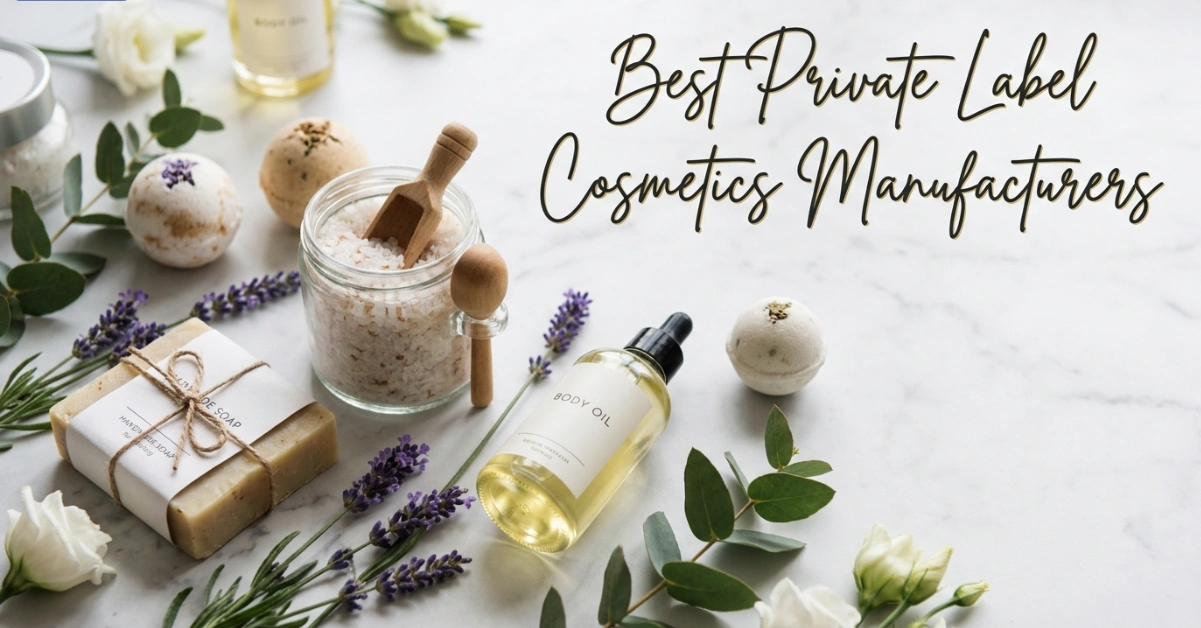
Whether you're building a DTC skincare brand, launching a body care line on Amazon, or creating products for your salon or spa, the private label model lets you focus on what actually drives revenue — branding, marketing, and customer experience.
Private Label vs. White Label vs. Custom Formulation — What's the Difference?
Before you start reaching out to manufacturers, understand the three primary business models. Each one carries distinct advantages depending on your budget, timeline, and brand differentiation goals.
| Feature | Private Label | White Label | Custom Formulation (ODM/OEM) |
|---|---|---|---|
| Formulation Control | Pre-made formulas, branded as yours | Generic products, minimal changes | Fully customized to your specifications |
| MOQ | Low to Medium | Very Low | Medium to High |
| Time to Market | Fast (4–6 weeks) | Fastest (2–4 weeks) | Moderate (8–12 weeks) |
| Brand Differentiation | Moderate | Low | High |
| Cost | $ | $ | $$ |
| Best For | Entrepreneurs testing the market | Resellers, quick launches | Brands seeking unique positioning |
White label skincare manufacturers provide off-the-shelf products that multiple brands can sell — fast and cheap, but zero uniqueness. Custom cosmetic formulation services (ODM/OEM) give you a proprietary product nobody else has. Private label sits in the sweet spot for most first-time founders.
The smartest entrepreneurs often start with private label to validate demand, then graduate to custom formulations as their brand scales. I've watched this pattern play out hundreds of times — it works.
What to Look for in a Private Label Cosmetics Manufacturer
Not all manufacturers are created equal. Before you sign a contract or wire a deposit, run every potential partner through this evaluation framework. Think of it as your due diligence checklist — one that can save you thousands of dollars and months of frustration.
Product Range and Specialization
Does the manufacturer cover skincare, body care, haircare, color cosmetics — or do they specialize? Specialists almost always deliver superior quality in their niche. A factory focused exclusively on body care will have deeper formulation expertise, better raw material sourcing, and more refined production processes than a generalist trying to do everything.
If you're launching a body care line, seek out dedicated bulk makeup production partners or body care OEM/ODM factories rather than a jack-of-all-trades facility. Specialization equals quality and efficiency. Full stop.
Certifications and Regulatory Compliance
This is non-negotiable. Your manufacturer must hold relevant certifications — and ideally, they should be able to assist you in obtaining market-specific certifications for the countries where you plan to sell.
- GMP (Good Manufacturing Practice) — The baseline standard for cosmetics manufacturing
- ISO 22716 — International standard specifically for cosmetics GMP
- FDA Registration — Required for selling in the United States
- EU CPNP/CPSR — Mandatory for the European market
- Halal Certification — Essential for Middle Eastern and Southeast Asian markets
- Cruelty-Free / Vegan Certifications — Increasingly important for brand positioning
A manufacturer with comprehensive certifications doesn't just signal quality — it saves you enormous time and legal risk, especially when selling cross-border. The best partners proactively guide you through regulatory requirements for your target markets. That kind of hand-holding is worth its weight in gold when you're entering a new region.
Minimum Order Quantities (MOQs) and Pricing Flexibility
For entrepreneurs and SMBs with limited capital, MOQ is often the deciding factor. Some factories require 10,000+ units per SKU — that's a non-starter for most startups. Look for manufacturers offering SMB-friendly MOQs (500–3,000 units) with competitive per-unit pricing that lets you test the market without overcommitting inventory.
Equally important: understand the pricing structure. Does it include packaging? Labeling? Shipping? Hidden costs kill profit margins fast. Ask upfront, get it in writing, and model your landed cost before you commit.
Custom Formulation and R&D Capabilities
If your long-term goal is brand differentiation, you need a partner with genuine in-house R&D capabilities — not just someone slapping your label on stock formulas. Dig into the details. Ask about their formulation team, where they source ingredients, how they run stability testing, and whether they can build exclusive formulas around your brand vision.
The strongest contract cosmetic manufacturers keep cosmetic chemists on staff who track ingredient trends closely and know how to turn your creative brief into a finished, market-ready product.
Packaging, Labeling, and Full-Service Support
A true one-stop-service manufacturer handles it all — formulation, filling, packaging design, labeling compliance, logistics coordination. That kind of vertical integration simplifies your supply chain dramatically and cuts the number of vendors you're juggling.
Ask specifically about label compliance for your target markets. FDA labeling requirements and EU regulations are two different animals, and getting it wrong can mean customs seizures or fines.
Communication, Lead Time, and Sample Policy
Never underestimate communication. Can you get a response within 24 hours? Do they have English-speaking project managers you can actually reach? What's their realistic production timeline — not the optimistic number on their website?
And this one's critical: do they offer samples before you commit to production? Any reputable manufacturer will let you test their products before you commit to an order. If a factory won't send samples, walk away.
Top Private Label Cosmetics Manufacturers Worth Considering
The manufacturers below represent a diverse mix of regions, specializations, and price points. Each was selected based on reputation, capabilities, and fit for entrepreneurs and growing brands.
1. Apollo Health and Beauty Care — USA-Based Full-Service Brand Incubator
Based in Florida, Apollo ranks among the largest private label beauty products suppliers in North America. They specialize in color cosmetics, skincare, and personal care — with a particular focus on helping startups and mid-size brands move from concept to shelf. MOQs are moderate. They offer full-service support including packaging design and regulatory guidance.
Best for: US-based entrepreneurs launching color cosmetics or skincare lines who want domestic production and fast shipping.
2. Cosmopak — European White Label Skincare Specialist
Cosmopak operates across Europe, offering extensive white label skincare manufacturing alongside custom formulation services. They hold ISO 22716 and GMP certifications and specialize in premium skincare textures and advanced active ingredients. Their deep EU regulatory expertise is a real advantage for brands targeting the European market.
Best for: Brands selling in the EU that need CPNP compliance and premium positioning.
3. Cosmax — South Korea K-Beauty OEM/ODM Leader
Cosmax is a global powerhouse in K-Beauty innovation, producing for some of the world's most recognizable beauty brands. Their R&D investment is massive — hundreds of cosmetic chemists developing trend-forward formulations like cushion compacts, serum foundations, and advanced sheet masks. MOQs run higher, but the innovation pipeline is unmatched.
Best for: Brands seeking cutting-edge K-Beauty formulations and willing to invest in higher MOQs for differentiated products.
4. Lucent Cosmetics — Canada-Based Natural/Organic Focus
Located in Toronto, Lucent specializes in clean beauty — natural, organic, and sustainable formulations. They hold multiple certifications: EcoCert, USDA Organic, and cruelty-free. Their custom cosmetic formulation services are built for the clean beauty movement.
Best for: Entrepreneurs building natural or organic beauty brands for the North American market.
5. Arihant Innochem — India-Based High-Volume Production
India's cosmetics manufacturing sector delivers an exceptional combination of scale and cost efficiency. Arihant Innochem specializes in Ayurvedic and herbal formulations alongside conventional cosmetics, with pricing that's hard to beat at volume. They serve as bulk makeup production partners for brands targeting price-conscious markets.
Best for: Brands seeking herbal or Ayurvedic formulations, or those needing high-volume production at aggressive price points.
6. Australian Private Label — Australia-Based Premium Personal Care
This Melbourne-based manufacturer specializes in premium-grade skincare and body care featuring Australian-sourced botanicals. Low MOQs, TGA compliance, and export-ready packaging make them ideal for entrepreneurs targeting the Australian, New Zealand, and Asia-Pacific markets.
7. Turkuaz Kimya — Turkey-Based Body Care and Soap Specialist
Located in Istanbul, Turkuaz has carved out a solid niche in body care, soap bars, and liquid soaps with strong export capabilities to the Middle East, Africa, and Europe. Competitive pricing, Halal certification, and fast lead times — those are the differentiators.
8. Thai Manufacturers Cluster (Pattana Interchem, Oriental Aromatics) — Thailand-Based Natural Beauty
Thailand's cosmetics manufacturing ecosystem has expanded quickly, with a growing number of factories offering natural and spa-inspired product lines. Thai manufacturers are particularly strong in body scrubs, aromatherapy products, and coconut-based formulations. Competitive MOQs and well-established export infrastructure round out the package.
Why China Has Become a Powerhouse for Private Label Cosmetics Manufacturing
Over the past decade, China has quietly moved past its "cheap factory" reputation and become one of the most capable, quality-driven cosmetics manufacturing hubs on the planet. If you're serious about finding the right production partner for your brand, understanding this shift matters.
China's cosmetics export value exceeded $6.4 billion in 2025, with year-over-year growth that shows no signs of slowing. The country now produces for some of the world's most prestigious beauty brands — a fact that still catches first-time entrepreneurs off guard.
Advanced Manufacturing Infrastructure and Scale
China's supply chain ecosystem is virtually unmatched. Raw material suppliers, packaging manufacturers, formulation labs, testing facilities, and logistics providers all sit within tight geographic proximity — especially in Guangdong Province, which has become a global epicenter for contract cosmetic manufacturing.
The Pearl River Delta region alone hosts thousands of GMP-certified cosmetics factories. That concentration creates a competitive ecosystem that pushes continuous improvement in technology, quality control, and efficiency. The practical result? Faster turnaround times, lower logistics costs, and access to the latest production technologies.
Competitive Pricing Without Sacrificing Quality
Let's address the elephant in the room: the "cheap = low quality" myth is outdated and inaccurate when it comes to leading Chinese manufacturers. Modern Chinese OEM/ODM factories invest heavily in imported European and Japanese production equipment, automated filling lines, and ISO-certified clean rooms.
The pricing advantage isn't about cutting corners — it's about economies of scale, integrated supply chains, and lower operating costs. A body lotion that costs $4–6 per unit from a US manufacturer might run $1.50–3 from a top-tier Chinese factory at comparable or superior quality. For startups, that margin difference separates profitability from failure.
Comprehensive Certification Support for Global Markets
Leading Chinese manufacturers now hold ISO 22716, GMP, GMPC, and a growing list of international certifications. The best ones go further. proactively assist clients in obtaining market-specific certifications — FDA registration for the US, CPNP notification for the EU, Halal certification for the Middle East, BSCI for ethical trade compliance, and more.
This certification support is a huge advantage for entrepreneurs targeting multiple countries. Instead of hiring separate regulatory consultants in each market, your manufacturing partner handles it — saving you time, money, and compliance headaches.
Spotlight — Poleview Biotech Co., Ltd.: A Premier Body Care OEM/ODM Partner from China
Within Guangdong's thriving manufacturing ecosystem, one company has built a particularly strong reputation among international entrepreneurs looking for high-quality body care products at competitive prices: Poleview Biotech Co., Ltd.
Company Overview
Poleview Biotech Co., Ltd. is a professional body care OEM/ODM manufacturer based in Huizhou, Guangdong Province, China. They specialize in contract manufacturing across a comprehensive range of personal care categories — body washes, lotions, scrubs, body butters, hand creams, and related body care products.
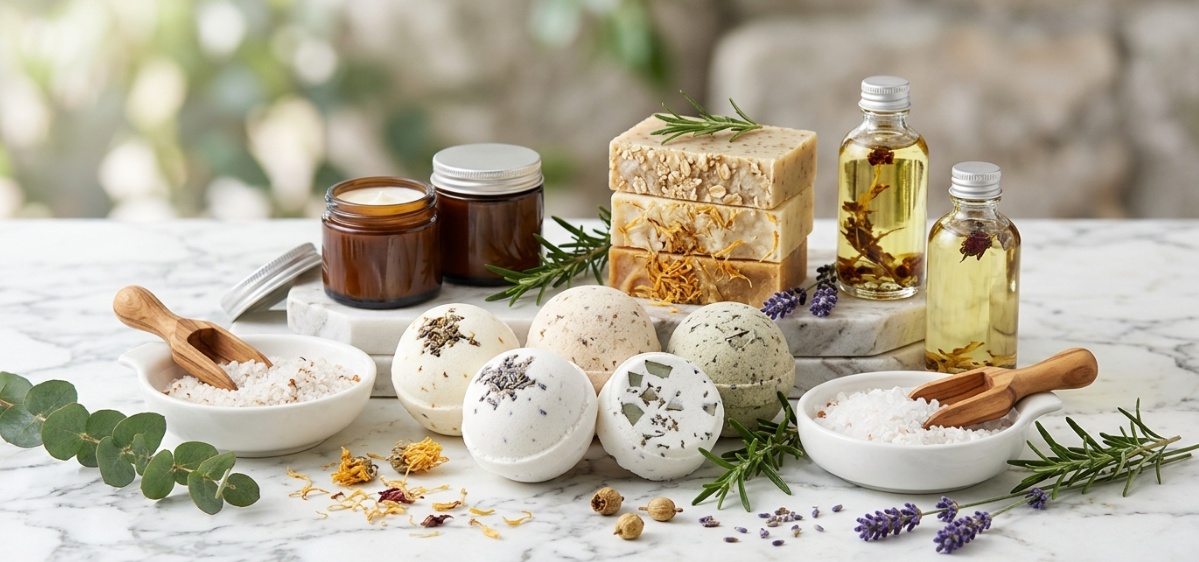
What sets Poleview apart from generic factories is their dual-model flexibility: they accept OEM orders (where clients provide their own formulations for production) and ODM orders (where Poleview's in-house R&D team develops custom formulations based on the client's brief). Whether you already have a formula or need expert guidance in product development, they can work with you either way.
Key Strengths for Entrepreneurs and SMBs
| Attribute | Details |
|---|---|
| Location | Huizhou, Guangdong Province, China |
| Specialization | Body care products (OEM & ODM) |
| Key Products | Body wash, lotion, scrub, body butter, hand cream, and more |
| Certifications | Full suite — GMP, ISO 22716, and additional credentials |
| Certification Assistance | Helps clients apply for FDA, CPNP, Halal, and other market certifications |
| MOQ | Competitive, SMB-friendly minimums |
| Pricing | Highly competitive with premium quality output |
| Sample Policy | Free samples available for qualified inquiries |
| R&D Capability | In-house formulation team for custom product development |
Why Poleview Stands Out Among Private Label Beauty Products Suppliers
There are thousands of cosmetics factories in China. So why does Poleview Biotech deserve your attention? A few key differentiators stand out:
- Uncompromising Product Quality: Every product batch goes through rigorous quality control protocols backed by their full suite of GMP and ISO 22716 certifications. The quality speaks for itself once you test their samples.
- Competitive Pricing Designed for Startups: Poleview understands that entrepreneurs need healthy margins to grow. Their pricing structure is built to support brands at every stage — from first launch to scaled production.
- Certification Assistance for Global Selling: Planning to sell in the US? The EU? The Middle East? Poleview doesn't just manufacture your products — they actively help you apply for the certifications your target markets require. That alone can save entrepreneurs months of research and thousands in consulting fees.
- Dedicated ODM Capabilities: If you don't have your own formula, Poleview's R&D team builds one for you. They take your brand vision and target customer profile and turn it into a market-ready formulation — complete with stability testing and safety assessments.
- Sample-First Approach: Poleview invites prospective clients to request free samples before making any production commitment. It's a low-risk entry point. You get to evaluate texture, fragrance, stability, and overall quality firsthand before spending a dime on production.
How to Get Started with Poleview Biotech
Getting started is straightforward. Reach out to Poleview Biotech's team with your project details — target product category, desired formulation type (OEM or ODM), estimated order volume, and target market. Their English-speaking project managers walk you through every step, from initial consultation to sample delivery.
No obligation. No pressure. Poleview's philosophy is simple: let the product quality convince you. Test the samples, compare them against competitors, and make your decision based on what you see, feel, and smell.