
Why Hair Oils Work for Growth and Thickness
Hair oils do far more than add shine — they penetrate the hair shaft, nourish follicles at the root level, and create a protective barrier that reduces protein loss. Dermatological research published in the Journal of Cosmetic Science confirms that certain natural oils for hair possess a molecular structure small enough to bypass the cuticle layer and reach the cortex, where real strengthening occurs.
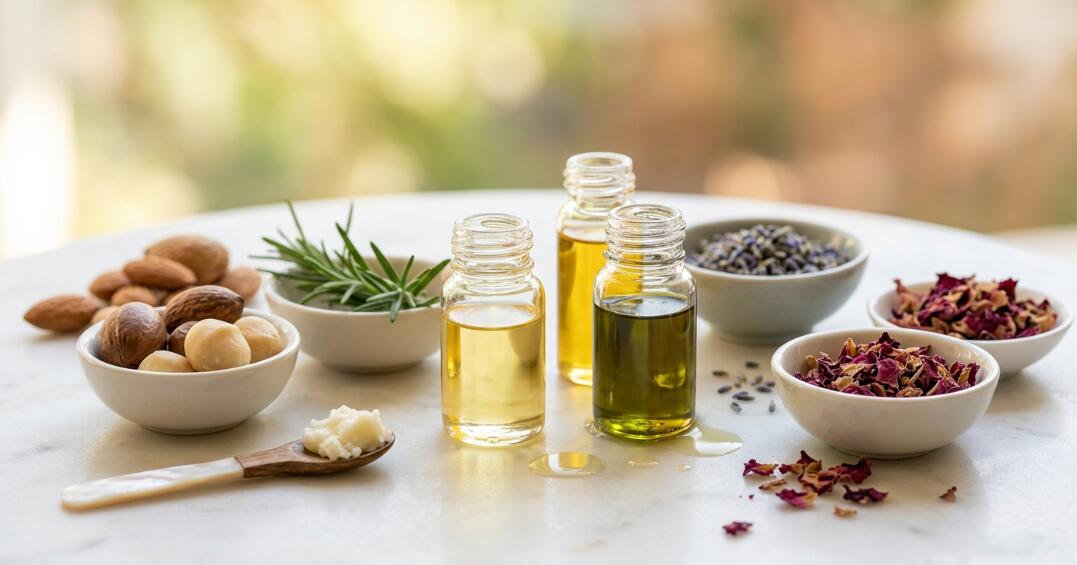
Lipid penetration is the key mechanism. When oils rich in monounsaturated fatty acids are applied to the scalp, they reinforce the lipid bilayer surrounding each follicle, reducing inflammation and oxidative damage that contribute to hair thinning.
Essential oils for hair loss work differently — they stimulate blood flow to the dermal papilla, extending the anagen (growth) phase. Combined with carrier oils, they form a synergistic system that addresses both scalp health and strand integrity simultaneously.
Top 7 Oils Proven to Promote Hair Growth
Castor Oil — The Follicle Stimulator
Castor oil contains approximately 90% ricinoleic acid, a unique omega-7 fatty acid that boosts prostaglandin E2 receptors in the scalp. This action increases microcirculation around dormant follicles, encouraging thicker regrowth in areas of thinning.
The castor oil hair benefits extend beyond stimulation — its high viscosity coats each strand, reducing mechanical breakage. It is particularly effective for those experiencing diffuse thinning or receding hairlines when massaged into the scalp consistently over 8–12 weeks.
Coconut Oil — The Protein Protector
Coconut oil for hair growth is backed by one of the strongest bodies of research among carrier oils. A landmark study in the Journal of Cosmetic Science (2003) demonstrated that lauric acid — coconut oil's primary fatty acid — penetrates deep into the hair cortex, reducing protein loss by up to 39% during washing.
This penetration ability also combats hygral fatigue, the repeated swelling and contraction of the hair shaft caused by water absorption. For damaged or color-treated hair, coconut oil acts as a pre-wash shield that preserves structural integrity.
Rosemary Essential Oil — The Clinical Performer
The 2015 Skinmed randomized trial compared rosemary oil to 2% minoxidil over six months and found statistically equivalent hair count increases in both groups — with fewer side effects in the rosemary group. Follow-up trials through 2024–2025 have reinforced these findings, with one Iranian study reporting a 22% increase in hair density after 12 weeks of topical rosemary application.
The active compound 1,8-cineole improves scalp circulation and inhibits 5-alpha reductase, the enzyme linked to androgenetic alopecia. This makes rosemary one of the best hair growth oils for pattern hair loss.
Argan Oil — The Scalp Conditioner
Native to Morocco, argan oil delivers a concentrated dose of vitamin E (tocopherols) and oleic acid directly to the scalp. These antioxidants neutralize free radicals generated by UV exposure and pollution — two environmental factors that accelerate follicle miniaturization.
Its medium-weight texture makes it ideal for frizzy or brittle hair that needs moisture without heaviness. Regular use reduces scalp flaking and creates an optimal environment for new growth.
Peppermint Oil — The Growth-Phase Activator
A 2014 study published in Toxicology Research found that 3% peppermint oil solution increased dermal thickness, follicle number, and follicle depth significantly more than minoxidil in animal models. The menthol component triggers a vasodilatory response, flooding follicles with oxygen and nutrients during the anagen phase.
Users often report a tingling sensation upon application — this is the increased blood flow at work. Peppermint oil is best suited for those with slow-growing hair who want to accelerate their growth cycle.
Jojoba Oil — The Sebum Balancer
Jojoba oil is technically a liquid wax ester with a molecular structure nearly identical to human sebum. When applied to the scalp, it signals sebaceous glands to reduce overproduction, effectively unclogging follicles blocked by excess oil.
For those with oily scalps experiencing hair fall, jojoba dissolves sebum plugs without stripping moisture. It also creates a non-comedogenic protective layer that keeps follicles clear and breathing.
Black Seed (Nigella Sativa) Oil — The Anti-Inflammatory
Thymoquinone, the primary bioactive in black seed oil, exhibits potent anti-inflammatory and antioxidant properties. Research in the Journal of Dermatology & Dermatologic Surgery shows it reduces scalp inflammation markers associated with telogen effluvium and alopecia areata.
Emerging clinical evidence suggests black seed oil may also inhibit the TGF-β pathway responsible for premature follicle regression. It is an excellent choice for inflamed, irritated scalps where chronic inflammation is driving hair loss.
Hair Oil Comparison Table — Effectiveness, Hair Type & Use
| Oil | Key Active Compound | Best For | Penetration Level | Evidence Strength |
|---|---|---|---|---|
| Castor Oil | Ricinoleic acid | Thinning hair | Medium | Moderate |
| Coconut Oil | Lauric acid | Damaged/dry hair | High (reaches cortex) | Strong |
| Rosemary Oil | 1,8-Cineole | General hair loss | Low (essential oil) | Strong (clinical trials) |
| Argan Oil | Oleic acid, Vitamin E | Frizzy/brittle hair | Medium | Moderate |
| Peppermint Oil | Menthol | Slow-growing hair | Low (essential oil) | Moderate |
| Jojoba Oil | Wax esters | Oily scalp | Medium | Moderate |
| Black Seed Oil | Thymoquinone | Inflamed scalp | Medium | Emerging |
How to Choose the Right Oil for Your Hair Type
Fine or Thinning Hair
Best choices: Rosemary oil (diluted) + jojoba oil as carrier. This combination stimulates follicles without weighing down fine strands. Castor oil can be used on the scalp only — avoid pulling it through lengths, as its viscosity can flatten fine hair.
Thick, Coarse, or Curly Hair
Best choices: Coconut oil + argan oil. Thick hair craves deep penetration and intense moisture. Coconut oil's cortex-level absorption paired with argan's smoothing properties tames frizz while strengthening from within.
Oily Scalp with Hair Fall
Best choices: Jojoba oil + peppermint oil. Jojoba regulates sebum production while peppermint stimulates circulation. Apply only to the scalp, not lengths, and wash out after 30–60 minutes to prevent buildup.
Dry, Damaged, or Chemically Treated Hair
Best choices: Coconut oil as a pre-wash treatment + black seed oil for scalp recovery. The protein-protective qualities of coconut oil are critical for chemically compromised hair, while black seed oil calms any irritation from processing chemicals.
How to Apply Hair Oil for Maximum Growth Results
Pre-Wash Oil Treatment Method
Apply your chosen carrier oil generously to dry hair 30–60 minutes before shampooing. Focus on the scalp and mid-lengths. This method prevents hygral fatigue by filling gaps in the cuticle before water exposure.
For best results, warm the oil slightly between your palms before application. Section hair into four quadrants and work systematically from roots to ends. Cover with a shower cap to trap body heat and enhance absorption.
Overnight Scalp Massage Technique
Use 1–2 tablespoons of carrier oil and massage into the scalp using circular motions for 5 minutes. This mechanical stimulation alone has been shown to increase hair thickness by stretching dermal papilla cells. Leave overnight on a silk pillowcase or towel-wrapped pillow.
Perform this technique 2–3 times per week for consistent results. Avoid nightly application, as over-oiling can lead to follicle congestion over time.
Blending Carrier Oils with Essential Oils (Ratios & Safety)
The safe dilution ratio for scalp application is 2–3 drops of essential oil per tablespoon (15 ml) of carrier oil. This equates to roughly a 1–2% concentration — effective yet gentle enough to avoid irritation.
A proven growth-boosting blend: 2 tablespoons jojoba oil + 3 drops rosemary oil + 2 drops peppermint oil. Always perform a patch test on the inner forearm 24 hours before scalp application, especially with peppermint or rosemary.
Common Mistakes That Reduce Hair Oil Effectiveness
Over-application: More oil does not equal more growth. Excess oil clogs follicles, traps dead skin cells, and creates a breeding ground for Malassezia yeast — the fungus behind dandruff. One to two tablespoons is sufficient for most hair lengths.
Using comedogenic oils on acne-prone scalps: Oils like wheat germ and flaxseed rank high on the comedogenic scale. If you experience scalp acne or folliculitis, stick to non-comedogenic options like jojoba or argan.
Skipping patch tests with essential oils: Undiluted essential oils can cause contact dermatitis, chemical burns, and allergic reactions. Never apply rosemary, peppermint, or tea tree oil directly to the scalp without proper dilution.
Applying heat immediately after oiling: Using flat irons or blow dryers on oiled hair essentially fries the strand. Oil conducts heat more intensely than water, raising the internal temperature of the cortex beyond its damage threshold. Always wash out oil before heat styling.
Custom Hair Oil Formulation — From Concept to Branded Product
Understanding which oils work is only half the equation. For entrepreneurs, salon owners, and beauty brands, the real opportunity lies in creating proprietary blends that serve specific customer needs — and bringing them to market under your own label.
Why Private Label Hair Oils Are Booming in 2026
According to Allied Market Research, the global hair oil market is projected to exceed $6.8 billion by 2027, driven by consumer demand for natural, paraben-free formulations. The clean beauty movement has made transparency in ingredients a purchasing priority, with 68% of consumers actively seeking products free from synthetic chemicals.
Private label brands are capturing significant market share because they can respond to niche demands — vegan formulas, specific scent profiles, culturally relevant ingredients — faster than legacy corporations. Working with an experienced hair oil manufacturer eliminates the R&D burden while maintaining full brand ownership.
What to Look for in a Hair Oil OEM/ODM Partner
Not all manufacturers are equal. When evaluating a body care manufacturer for hair oil production, prioritize these non-negotiable criteria:
- Certifications: GMPc, FDA registration, ISO 22716 compliance — these ensure consistent quality and regulatory acceptance across global markets.
- Custom formulation capabilities: Full ODM services including efficacy testing, ingredient sourcing, scent development, and stability testing.
- Flexible MOQ: Low minimum order quantities allow you to test market response before committing to large production runs.
- Clean-label compliance: Verified Natural Formula, Parabens Free, Cruelty Free, No GMO, and Not Tested on Animals certifications.
- Documentation: MSDS, COA, and Stability Reports for every batch — essential for retail partnerships and marketplace listings.
Poleview Biotechnology — Your Trusted Hair Oil Manufacturing Partner
Poleview Group, a leading personal care products manufacturer in China, operates through its subsidiaries Boymay Cosmetics Co., Ltd. and Poleview Biotechnology Co., Ltd. They offer comprehensive OEM & ODM services for body & hair oil, along with bath bombs, shower steamers, handmade soap, hair soap bars, bath salts, cleaning tablets, scented candles, face & body cream, face & body wash, and more.
All Poleview products comply with Natural Formula standards — Parabens Free, Cruelty Free, No GMO, No Chemicals, Not Tested on Animals — and hold globally verified certifications including GMPc, FDA, ISO 22716, Audit Report, MSDS, COA, and Stability Report.
Their dust-free workshops and automated production lines (stamping, filling, labeling, and packing) ensure consistent quality at scale. Poleview provides full customization for product efficacy, ingredients, color, scent, packaging, and label printing. With flexible minimum order quantities and free samples available for testing, they make it easy for brands of any size to launch professional-grade hair oil products.
Frequently Asked Questions (FAQ)
Which single oil is best for hair growth?
Rosemary essential oil has the strongest clinical evidence for promoting hair growth, with trials showing results comparable to 2% minoxidil. However, it must be diluted in a carrier oil like jojoba or coconut before application. For a single carrier oil, coconut oil offers the best combination of penetration depth and protein protection.
Can I mix multiple oils together?
Yes — blending oils is actually recommended. Combining a carrier oil (coconut, jojoba, or argan) with 1–2 essential oils (rosemary, peppermint) creates a synergistic formula that addresses multiple growth factors simultaneously. Maintain a 1–2% essential oil concentration for safety.
How often should I oil my hair for growth?
Two to three times per week is optimal for most hair types. Daily oiling can lead to product buildup and follicle congestion. Fine hair may benefit from once-weekly treatments, while thick or coarse hair can tolerate more frequent application without heaviness.
Do essential oils alone regrow hair?
Essential oils like rosemary and peppermint stimulate follicle activity, but they cannot be applied undiluted and work best as part of a comprehensive approach. They enhance growth when combined with carrier oils, scalp massage, and proper nutrition. They are not a standalone cure for advanced hair loss conditions.
Is coconut oil or castor oil better for hair growth?
They serve different purposes. Coconut oil excels at penetrating the cortex and preventing protein loss — ideal for strengthening existing hair. Castor oil stimulates blood flow to follicles — better for encouraging new growth in thinning areas. Using both in rotation provides comprehensive benefits.
How long before I see results from hair oiling?
Most clinical studies show measurable results after 8–12 weeks of consistent use. Hair grows approximately 1.25 cm per month, so visible length changes require patience. Reduced shedding and improved texture are typically noticed within 4–6 weeks as early indicators of progress.
Can I create my own branded hair oil product?
Absolutely. Private label manufacturing through an OEM/ODM partner like Poleview Biotechnology allows you to develop a custom formula, choose your scent and packaging, and launch under your own brand — without investing in production facilities. Free samples are available to test formulations before committing to a full order.
Ready to Launch Your Own Hair Oil Brand?
Whether you are a salon owner, e-commerce entrepreneur, or distributor seeking a reliable manufacturing partner, Poleview Biotechnology offers end-to-end OEM & ODM services — from custom formulation and scent selection to packaging design and label printing. Their globally certified facilities, dust-free workshops, and flexible minimum order quantities make it easy to bring a professional hair oil product to market at any scale.
Contact Poleview today to request free samples and turn your hair oil vision into a market-ready brand. Your custom formulation journey starts with a single message.