
You've just discovered a forgotten stash of bath bombs tucked away in a closet. They look a little faded, maybe slightly crumbly, and you're wondering: are these still good? Can they hurt me? Will they even fizz?
While bath bombs don't expire in the same way food does, they absolutely degrade over time. Their effectiveness, scent, and even safety can diminish significantly depending on ingredients, storage conditions, and age. This guide covers everything you need to know about bath bomb shelf life, how to spot degradation, and when it's time to toss them.
What Happens to Bath Bombs Over Time
Bath bombs are inherently unstable products. Their magic relies on a chemical reaction that's essentially waiting to happen — and time, moisture, and air slowly chip away at their potency from the moment they're made.
While they won't become dangerous overnight, bath fizzy ingredients degradation is a real and measurable process that affects everything from fizzing power to skin-feel quality.
The Core Chemistry Behind Bath Bomb Degradation
Every bath bomb relies on the same fundamental reaction: baking soda (sodium bicarbonate) reacts with citric acid in the presence of water to produce carbon dioxide gas — those satisfying bubbles and fizz. This reaction is what makes a bath bomb a bath bomb.
The problem? Moisture is everywhere. Even ambient humidity in the air slowly triggers this reaction at a microscopic level. Over weeks and months, the baking soda and citric acid gradually neutralize each other without ever touching bathwater.
This means that even a perfectly stored bath bomb is slowly losing its potency. The baking soda citric acid potency diminishes incrementally, which is why older bath bombs produce weaker fizz — the reactive ingredients have partially spent themselves before you ever drop them in the tub.
Do Bath Bombs Have an Expiration Date?
Most bath bombs don't carry a printed expiration date. This isn't because they last forever — it's because they're classified as cosmetics, not food or pharmaceuticals, and expiration dating isn't required in most markets.
There's an important distinction between terms here. An expiration date implies the product becomes unsafe after that point. A best-by date suggests optimal quality. Bath bombs fall into the "best-by" category — they become less effective rather than dangerous in most cases.
The general industry consensus places bath bomb freshness at its peak within the first six months, with most products remaining usable for 12 to 18 months under proper storage conditions. After that, you're rolling the dice on performance.
Bath Bomb Shelf Life by Type
Not all bath bombs are created equal when it comes to longevity. The ingredients in a bath bomb dramatically affect how quickly it degrades, and understanding these differences helps you set realistic expectations for your collection.
Standard Bath Bombs (Baking Soda & Citric Acid Base)
Simple bath bombs with minimal additives — just the base ingredients, perhaps some fragrance oil and color — tend to last the longest. With fewer organic or volatile components, there's less to go wrong. These can maintain acceptable performance for 12 to 18 months when stored properly.
Bath Bombs with Essential Oils & Botanicals
Essential oils are volatile compounds that evaporate and oxidize over time. Lavender, citrus, and eucalyptus oils are particularly prone to degradation. Botanical additions like dried flower petals, herbs, or tea leaves introduce organic matter that can decompose, attract moisture, and even develop mold.
Expect these to maintain peak quality for only 6 to 12 months, with botanical-heavy varieties declining even faster.
Bath Bombs with Butters, Milks & Moisturizing Agents
Cocoa butter, shea butter, coconut oil, and powdered milks add luxurious skin-softening properties — but they also introduce fats that can turn rancid. Rancidity doesn't always produce an obvious smell immediately, but it changes the product's safety profile and skin compatibility over time.
These formulations typically last 6 to 12 months, with the clock ticking faster in warm storage environments.
Bath Bombs with Glitter, Colors & Synthetic Fragrances
Synthetic fragrances and cosmetic-grade colorants tend to be more chemically stable than their natural counterparts. Mica-based colors and polyester glitter don't degrade meaningfully over time. This gives these bath bombs a longer effective shelf life — often 12 to 24 months.
Shelf Life Comparison Table
| Bath Bomb Type | Average Shelf Life | Key Degradation Factor |
|---|---|---|
| Basic/unfragranced | 12–18 months | Moisture absorption |
| Essential oil-infused | 6–12 months | Oil oxidation & evaporation |
| Botanical/flower petal | 6–9 months | Organic matter decomposition |
| Butter/milk-based | 6–12 months | Rancidity of fats |
| Synthetic fragrance & color | 12–24 months | Chemical stability varies |
| Homemade (no preservatives) | 3–6 months | No stabilizers present |
Signs Your Bath Bomb Has Gone Bad
Knowing how to identify a degraded bath bomb saves you from a disappointing bath — or worse, a skin reaction. Here are the telltale signs that your bath bomb is past its prime.
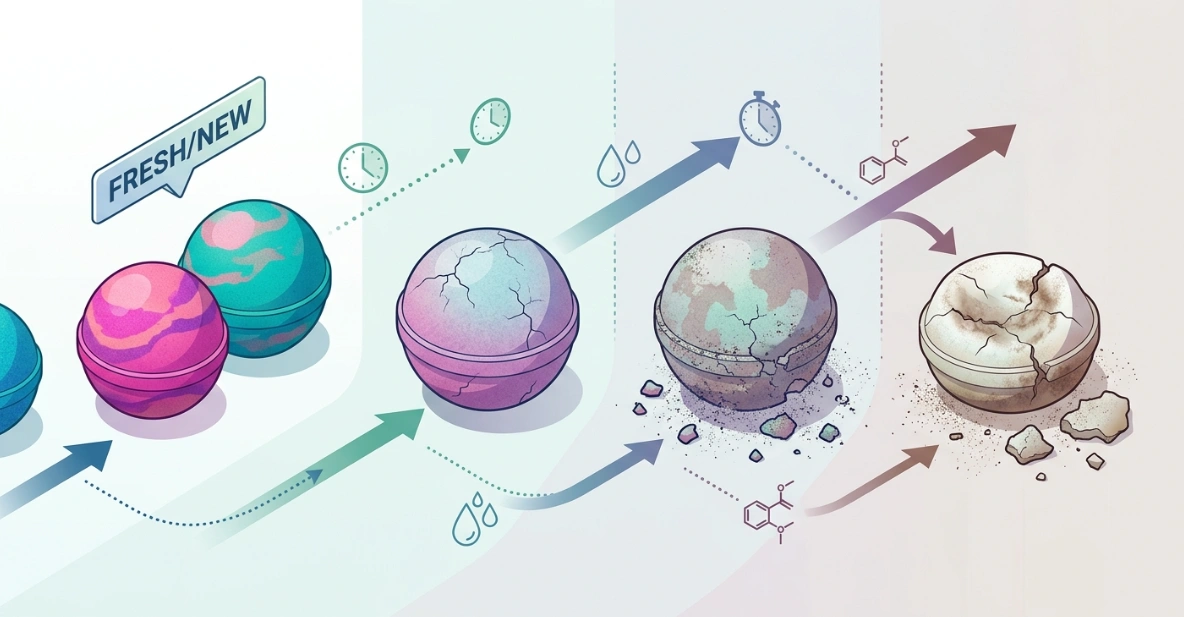
Visual Indicators
Color fading or discoloration is often the first visible sign. Vibrant pinks may turn to pale salmon; bright blues may appear washed out or develop yellowish patches. This indicates UV degradation or chemical changes in the colorants.
Crumbling or cracking suggests the structural integrity has been compromised by moisture cycles — the bomb absorbed humidity, partially reacted, then dried again. Visible mold is most common on bath bombs containing dried flowers, oatmeal, or milk powders, and is an immediate discard signal.
Texture & Structural Changes
A bath bomb that feels soft, spongy, or has expanded in size has absorbed significant moisture. The fizzing reaction has already begun internally, and much of the potency is gone.
Conversely, some degraded bath bombs harden into dense, rock-like masses that won't dissolve properly in water. Surface powdering — a chalky white residue on the outside — indicates the outermost layer of baking soda has reacted and lost its effectiveness.
Scent Changes
A complete loss of fragrance is common in older bath bombs and isn't necessarily a safety concern — it just means the scent compounds have evaporated. However, a rancid, musty, or sour smell indicates oil degradation or microbial activity and warrants immediate disposal.
Essential oils that have oxidized may smell sharp, medicinal, or nothing like their original profile. This isn't just an aesthetic issue — oxidized oils can become skin sensitizers.
Performance Decline
The most obvious sign of an expired bath product is weak or absent fizzing. If your bath bomb sinks to the bottom and just sits there, or produces only a few sad bubbles, the reactive ingredients have already neutralized.
You may also notice incomplete dissolution (chunks remaining after 10+ minutes), reduced color payoff in the water, or diminished skin-softening effects from degraded moisturizing agents.
Can Expired Bath Bombs Hurt You?
This is the question that matters most. In the majority of cases, an old bath bomb is simply disappointing rather than dangerous. But there are real scenarios where degraded bath bombs can cause problems.
Skin Irritation Risks from Degraded Ingredients
Oxidized essential oils are among the most common culprits for bath-related skin reactions. When oils like lavender, tea tree, or citrus oxidize, they form compounds that act as skin sensitizers — potentially triggering contact dermatitis even in people who previously tolerated the fresh product without issue.
Rancid butters and oils can also irritate skin, causing redness, itching, or bumps. Additionally, as citric acid degrades unevenly, the pH balance of the bath bomb may shift, potentially creating a more alkaline product that disrupts skin's natural acid mantle.
Mold & Bacterial Growth Concerns
Bath bombs are anhydrous (water-free) products, which naturally inhibits microbial growth. However, once moisture penetrates — through humid storage or damaged packaging — bacteria and mold can establish themselves, particularly on organic ingredients like flower petals, oatmeal, or milk powders.
For most healthy adults, brief exposure to minor microbial contamination during a bath is unlikely to cause serious harm. However, individuals with sensitive skin, open wounds, compromised immune systems, or those prone to vaginal infections should exercise greater caution with any bath product showing signs of age or contamination.
When It's Absolutely Time to Throw Them Out
Some situations are non-negotiable. Discard any bath bomb immediately if you observe:
- Visible mold growth of any color
- A rancid, sour, or putrid smell
- Significant discoloration with a slimy or wet texture
- Any bath bomb that has been submerged in water and re-dried
- Products stored in consistently humid environments for over a year
The risk-reward calculation is simple: a bath bomb costs a few dollars. A dermatologist visit or allergic reaction costs far more in discomfort and expense.
How to Store Bath Bombs to Maximize Freshness
Proper storage is the single most impactful thing you can do to extend bath bomb shelf life. The difference between good and poor storage can mean months — even a year — of additional usability.
Ideal Storage Conditions
| Factor | Ideal Condition | What to Avoid |
|---|---|---|
| Humidity | Below 50% relative humidity | Bathroom storage, open containers |
| Temperature | 60–72°F (15–22°C) | Heat sources, direct sunlight |
| Light exposure | Dark or opaque container | Windowsills, open shelving |
| Air contact | Airtight wrapping or container | Unwrapped display |
| Proximity to water | Separate from shower/tub area | Bathtub ledges, sink counters |
Best Packaging & Wrapping Methods
Shrink wrap is the gold standard for bath bomb preservation. It creates a tight, moisture-proof seal with minimal trapped air. This is why commercially packaged bath bombs in shrink wrap consistently outlast those sold loose or in paper wrapping.
Airtight containers with silica gel packets are excellent for bulk storage. Place each bath bomb in an individual zip-lock bag, squeeze out excess air, then store multiple bags in a sealed container with one or two silica gel packets to absorb any residual moisture.
Avoid storing multiple unwrapped bath bombs together — their fragrances will mingle, and if one begins to degrade, the moisture it releases can accelerate degradation in its neighbors.
The Bathroom Paradox: Why the Worst Place to Store Them Is Where You Use Them
It seems logical to keep bath bombs in the bathroom — that's where you'll use them. But bathrooms are the absolute worst storage environment. The repeated cycles of steam from showers, fluctuating temperatures, and consistently elevated humidity create a perfect storm for premature degradation.
Instead, store your bath bomb collection in a bedroom closet, linen cabinet, or any cool, dry space away from water sources. Bring individual bombs to the bathroom only when you're ready to use them. This simple habit can double or even triple their effective lifespan.
How to Tell If a Bath Bomb Will Still Fizz
Before committing to a full bath with a questionable bath bomb, you can perform a quick test to gauge its remaining potency.
The Small Fragment Water Test
Break off a small piece — roughly the size of a marble or pea — from your bath bomb. Drop it into a cup or bowl of warm water and observe the reaction for 30 seconds.
- Fill a glass with warm (not hot) water
- Break a small fragment from the bath bomb
- Drop the fragment into the water
- Observe the speed, vigor, and duration of fizzing
Vigorous, rapid fizzing with visible bubbles streaming upward indicates the bomb still has plenty of reactive power. Slow, lazy bubbling that peters out quickly suggests diminished potency — the bomb will work, but the experience will be underwhelming. No fizzing or just gentle dissolution means the baking soda and citric acid have largely neutralized, and you're left with essentially an expensive bath salt.
Potency Expectations by Age
| Age of Bath Bomb | Expected Fizz Level | Experience Quality |
|---|---|---|
| 0–3 months | Full vigorous fizz | Optimal |
| 3–6 months | Strong fizz | Near-optimal |
| 6–12 months | Moderate fizz | Acceptable |
| 12–18 months | Weak fizz | Diminished |
| 18+ months | Minimal to none | Poor |
These timelines assume average storage conditions. Well-stored bath bombs in airtight packaging may outperform these estimates, while poorly stored ones may decline much faster.
Can You Revive or Repurpose Old Bath Bombs?
If your bath bombs have lost their fizz but show no signs of mold, rancidity, or contamination, you don't necessarily need to throw them away. There are several creative ways to get value from expired bath products that are past their fizzing prime.
Repurposing as Bath Salts or Soaks
Crush your old bath bombs into powder and use the resulting mixture as a bath soak. You won't get the fizzing spectacle, but the baking soda, colors, fragrances, and moisturizing ingredients can still soften water and provide a pleasant bathing experience. Mix the crushed powder with Epsom salts for added muscle-relaxing benefits.
Crushing into Shower Steamers
Place crushed bath bomb fragments on the floor of your shower, away from the direct water stream but close enough to get splashed. The slow moisture exposure will release whatever fragrance remains, creating a spa-like aromatherapy experience without needing a full fizz reaction.
Using as Drawer Sachets or Closet Fresheners
Bath bombs that still carry fragrance — even faintly — make excellent drawer sachets. Place them in a breathable fabric bag or wrap them in tissue paper and tuck them among clothing, linens, or in closets. They'll release scent gradually over weeks.
When Repurposing Isn't Worth It
Don't repurpose bath bombs that smell rancid, show mold, or have been stored in contaminated environments. If the product has degraded to the point of smelling unpleasant or looking discolored in concerning ways, no amount of creativity justifies keeping it. When in doubt, compost the ingredients (they're largely biodegradable) and move on.
Bath Bomb Shelf Life by Brand (Quick Reference)
Different manufacturers use different formulations, preservatives, and packaging standards. Here's a summary of publicly available shelf life guidance from popular bath bomb brands.
| Brand/Source | Stated Shelf Life | Storage Notes |
|---|---|---|
| Lush | ~14 months (best within 6) | Recommends cool, dry storage |
| Dr Teal's | Up to 24 months | Sealed packaging extends life |
| LifeAround2Angels | 12–18 months | Keep wrapped until use |
| Homemade/artisan | 3–6 months typical | Varies widely by recipe |
| Da Bomb | 18–24 months | Store away from humidity |
Note: Always check individual product packaging for manufacturer-specific guidance. These figures represent general recommendations and may vary by specific product line within each brand.
Frequently Asked Questions
Can I use a bath bomb that's 2 years old?
You can, but you probably won't enjoy it much. A two-year-old bath bomb will likely produce little to no fizz, and its fragrance will be significantly diminished. Safety-wise, if it was stored in a cool, dry place and shows no signs of mold or rancidity, it's unlikely to harm you — but check for off-smells before use, especially if it contains natural oils or butters.
Do bath bombs expire if they're still wrapped in plastic?
Plastic wrapping significantly slows degradation by limiting moisture and air exposure, but it doesn't stop it entirely. The citric acid and baking soda still interact at a molecular level over time, and essential oils continue to evaporate into whatever air space exists within the packaging. A wrapped bath bomb lasts considerably longer than an unwrapped one, but it's not preserved indefinitely.
Why did my bath bomb stop fizzing even though it looks fine?
This is one of the most common frustrations with older bath bombs. The fizzing reaction between baking soda and citric acid can be triggered by ambient moisture — even humidity in the air that you can't see or feel. Over months, these micro-reactions slowly neutralize the reactive ingredients from the outside in. The bomb may look perfectly intact while its chemical potency has quietly been spent.
Can expired bath bombs cause a yeast infection or UTI?
There's no direct evidence that aged bath bombs specifically cause yeast infections or UTIs. However, degraded ingredients can alter vaginal pH, and any bath product — fresh or old — can potentially irritate sensitive genital tissue. If you're prone to these infections, use fresh bath bombs, limit soak time to 20 minutes, and rinse with clean water afterward. Avoid using bath bombs with visible mold or rancid ingredients entirely.
How long do Lush bath bombs last?
Lush recommends using their bath bombs within 14 months of the manufacture date, though they note optimal freshness within the first six months. Lush products are made with fresh, natural ingredients and minimal preservatives, which means they tend to degrade faster than mass-market alternatives. Check the black label on the bottom for the manufacture date.
Is it safe to use a bath bomb that smells different than when I bought it?
It depends on how the smell has changed. A faded or weakened version of the original scent is normal and simply indicates evaporation of fragrance compounds — this is generally safe to use. However, if the scent has shifted to something rancid, sour, musty, or chemically sharp, that indicates ingredient degradation. Oxidized essential oils in particular can become skin sensitizers. When in doubt, trust your nose — if it smells unpleasant or "off," discard it.
Do bath bombs last longer in the fridge or freezer?
This might seem logical, but refrigeration and freezing are generally not recommended for bath bomb storage. The primary concern is condensation — when you remove a cold bath bomb from the fridge or freezer, moisture from the warmer ambient air condenses on its surface, triggering the fizzing reaction prematurely. Additionally, refrigerators have higher humidity levels than most people realize. A cool, dry closet at room temperature with airtight wrapping outperforms refrigeration in nearly every scenario.
Can I extend bath bomb shelf life with preservatives?
This is a common question among DIY bath bomb makers, but the answer is nuanced. Traditional cosmetic preservatives (like phenoxyethanol or potassium sorbate) are designed to prevent microbial growth in water-containing products. Since bath bombs are anhydrous, these preservatives offer limited benefit for the primary degradation mechanisms — moisture absorption and chemical neutralization. However, adding antioxidants like Vitamin E (tocopherol) to oil-containing bath bombs can slow rancidity in butters and carrier oils. The most effective "preservative" strategy remains proper packaging and storage rather than chemical additives.