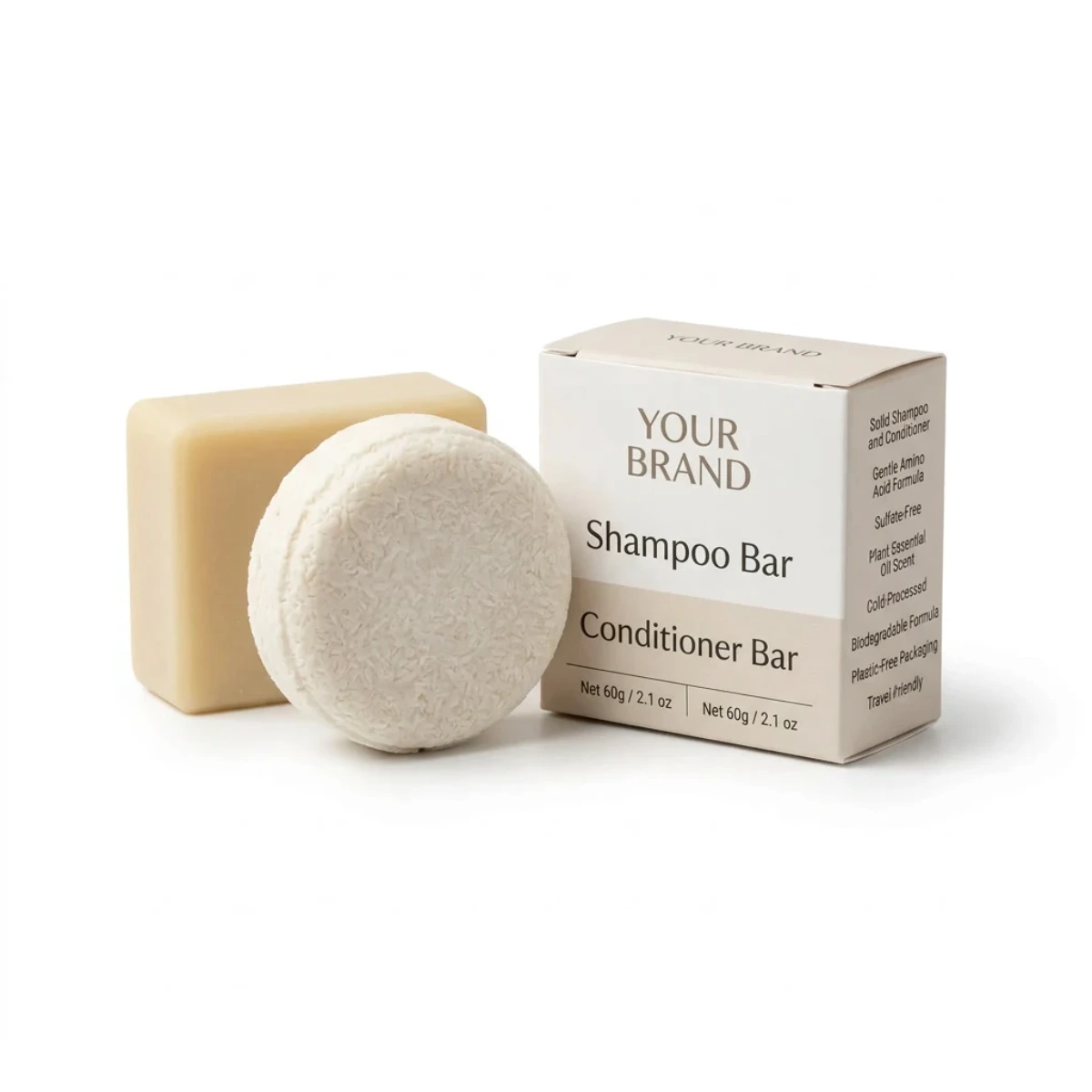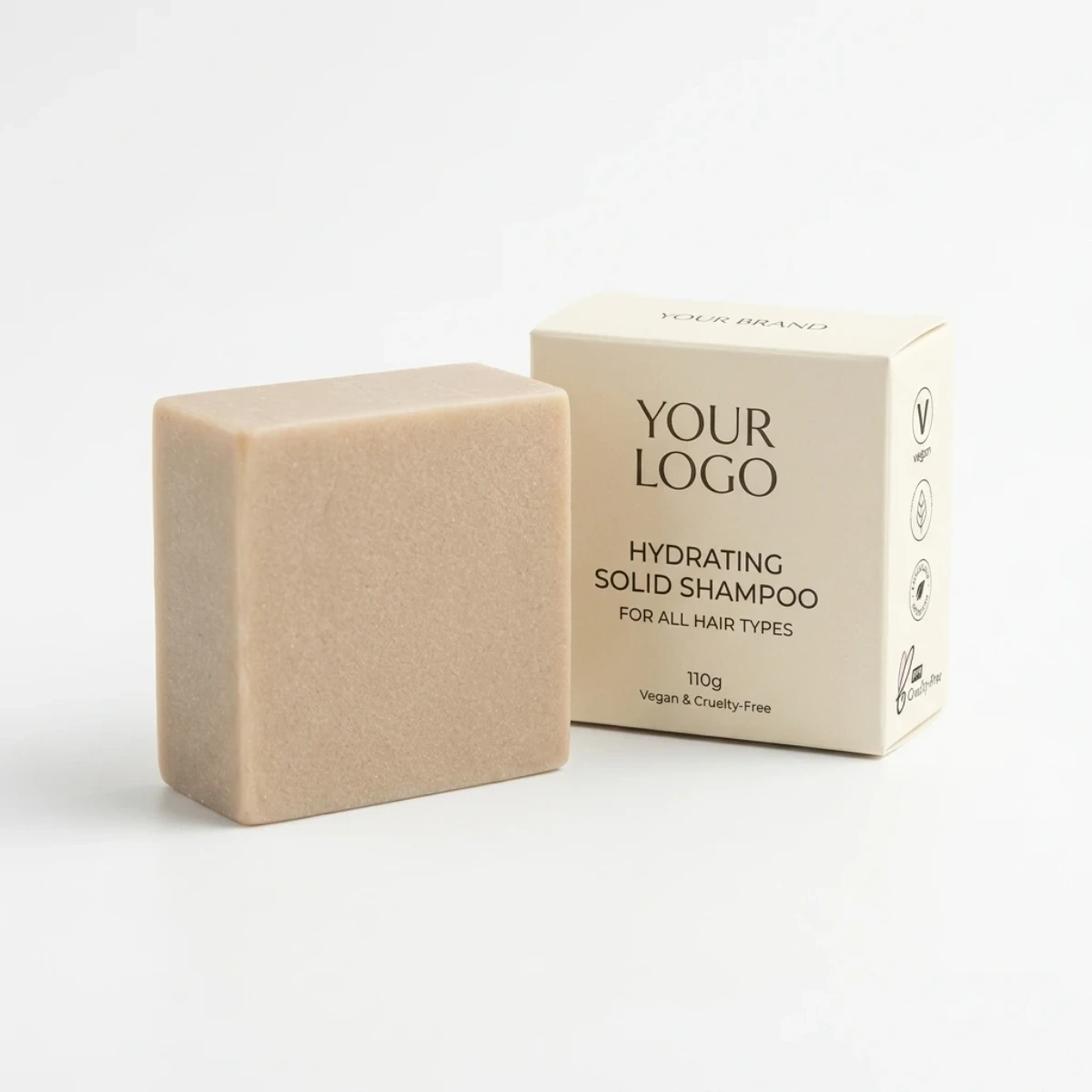

Kitsch has sold its purple toning shampoo bar and conditioner bar set for years to a customer base that most formulators once said wouldn't exist: people willing to give up bottled purple shampoo for a stamped solid. The format works, and the reason is simpler than the marketing suggests — color correction never needed water to function. It needed pigment.
- Purple toning bars correct yellow cast using the same violet-pigment principle as liquid toners; neutralization depends on pigment load and contact time, not on whether the base is solid or poured.
- The combo design is deliberate: the shampoo bar strips residue and deposits violet, while the conditioner bar seals and adds a softer tint — using only one half is the most common usage error.
- Solid format removes most of the water and the associated preservative load, which reshapes both the INCI deck and the packaging cost structure.
- The genuine barrier to entering the category is manufacturing, not chemistry — few facilities hold pigment dispersion and high-pressure bar stamping under one roof.
- Toning bars are cosmetic products. They cannot repair bleach damage, and patch-testing guidance applies to any new pigment contact.
Why the "Liquid-Only" Assumption About Toning Shampoo Collapsed
Color correction is a pigment function, not a delivery-format function: violet pigment neutralizes yellow in blonde, gray, and highlighted hair whether it arrives from a bottle or a stamped bar. The one qualification that matters is pigment concentration and how long the product stays on the hair — a bar with a weak pigment load left on for one minute will underperform a stronger formula left on for five.
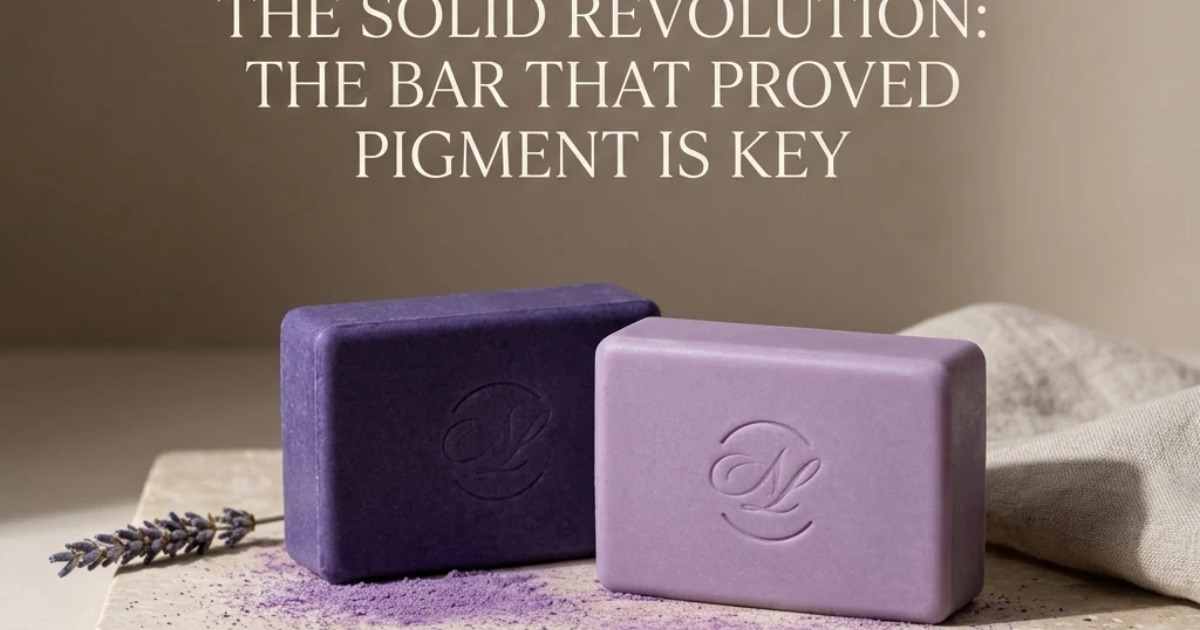
The color-wheel mechanic, stated plainly
Violet sits directly opposite yellow on the color wheel, so a violet-pigmented wash reduces yellow cast on bleached or graying hair. It does nothing useful for orange or red tones — those require blue or green correction, a distinction that explains most of the disappointing results people report from the category.
What actually changed in formulation
Removing water from the base forced reformulation of the surfactant system into solid form and required suspending pigment in a matrix that holds distribution evenly through the bar. The concept never needed rescuing; the manufacturing did.
Where the bars fit — and where they don't
Solid toning suits travel, plastic-reduction goals, and frequent low-intensity maintenance between salon visits. Someone expecting a single wash to deliver salon-grade lift will be disappointed, and that limitation should be stated plainly in any product copy rather than softened.
How Does the Purple Shampoo Bar and Conditioner Bar Combo Differ From Bottled Toners?
A toning conditioner bar combo splits toning and conditioning into two physically separate products with different pigment loads and different jobs. The shampoo bar strips residue while depositing violet pigment; the conditioner bar seals the cuticle and adds a lighter tint. Skipping either step produces uneven results, which is why the set is sold as a pair rather than as optional components.
| Attribute | Bar combo | Liquid shampoo + liquid conditioner | Practical impact |
|---|---|---|---|
| Water content | Low, typically under 10% by formulation design | Often 70–85% | Higher concentration per gram in bar format |
| Preservative system | Minimal — low water activity limits microbial growth | Broad-spectrum preservative required | Shorter, cleaner INCI deck |
| Packaging weight | Paper or molded-pulp wrap possible | Rigid plastic bottle plus cap and pump | Lower shipping mass per unit |
| Air travel | No liquid restriction | 100 ml / 3.4 oz carry-on limit, per IATA guidance | Clear advantage for travel sets |
| Cost metric | Higher unit price, more applications per unit | Lower unit price, fewer applications | Compare cost per wash, not shelf price |
The takeaway: the bar format's advantage is concentration and packaging economics, not a superior color-correction mechanism.
Ingredient deck differences you can read on a label (INCI)
Look for the pigment listed mid-deck, a sulfate-free surfactant system for color-treated hair, and conditioning agents such as shea butter or plant oils. Where the pigment sits in the ordering tells you whether toning or cleansing is the dominant function.
Usage protocol and patch-testing
Leave-on time drives toning intensity — most brands specify one to five minutes — and any new pigment product warrants a patch test 24 to 48 hours before full application, particularly on scalp-adjacent skin.
Who Is Actually Manufacturing Purple Toning Bars — and What Does It Take?
Producing a stable, evenly pigmented toning bar requires two manufacturing disciplines that rarely coexist in one facility: cosmetic pigment dispersion and high-pressure soap stamping. That combination — not formulation know-how — is why relatively few plants can run the category at volume, and why lead times on custom toning bars are typically longer than on standard bars.
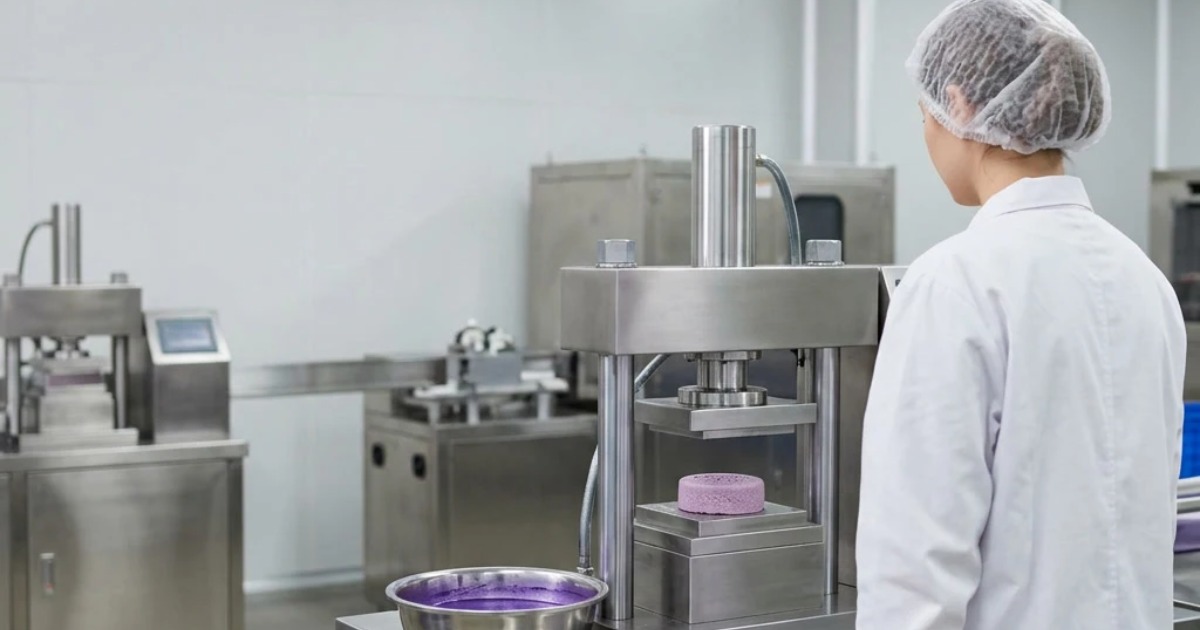
The equipment list behind a bar that doesn't streak
Stamping, filling, labeling, and packing machinery, run under dust-free workshop conditions, determines whether pigment distributes evenly from bar to bar. A single mis-set press temperature or an under-mixed pigment batch shows up as visible streaking in the finished unit.
Why private label is the realistic entry route
Brands launching a purple shampoo bar private label line usually buy formulation, scent, color, and packaging as a bundle rather than building pigment-handling capability from scratch. The capital cost of stamping lines and the formulation time required to stabilize pigment make in-house development impractical for most first entrants.
Certifications and documents to request before signing
Ask for GMPc, FDA, and ISO 22716 status, plus audit report, MSDS, COA, and stability report. The stability report is the one that predicts whether pigment and formula hold through shelf life — request it before committing to a production run, not after.
| What to request | Why it matters | Evidence document |
|---|---|---|
| GMPc status | Confirms cosmetic good-manufacturing compliance | GMPc certificate |
| FDA registration | Supports US market entry documentation | FDA registration record |
| ISO 22716 | Cosmetics GMP guideline alignment | ISO 22716 certificate |
| Facility audit | Verifies hygiene, workflow, and equipment claims | Third-party audit report |
| Safety and material data | Documents handling and composition | MSDS and COA |
| Formula durability | Predicts pigment and formula stability over shelf life | Stability report |
What Bar-Format Toning Means for Brand Economics and Shelf Position
Concentrated solid formats change cost structure upstream — less water to ship, lighter packaging, and longer shelf stability without a heavy preservative system — while shifting merchandising toward travel, gifting, and sustainability-facing shelf sets. The trade-off is real: bar production runs are typically smaller and slower than liquid filling lines, so minimum order quantities and unit economics favor brands with a clear positioning rather than a broad catalog.
Cost-per-wash vs. cost-per-unit
Unit price comparisons mislead here. Bar formats often carry a higher shelf price with more washes per unit, so the honest metric for buyers and for brand P&L models is cost per application.
Claims discipline under YMYL scrutiny
"Parabens free," "cruelty free," "not tested on animals," and "no GMO" are verifiable labeling positions a manufacturer can evidence. "Repairs damage" and "restores hair" are not, and marketing copy for a sulfate free toning shampoo bar should stay firmly on the cosmetic side of that line. A toning bar changes tone. It does not rebuild a broken disulfide bond.
Frequently Asked Questions
Does a purple toning shampoo bar work as well as liquid purple shampoo?
Yes, on the same pigment-neutralization principle. Results depend on pigment concentration and leave-on time, not on whether the base is solid or liquid.
Can I use the conditioner bar without the shampoo bar?
Yes, but toning will be lighter and less even. The pair is designed so one strip-and-deposit cycle finishes what the other starts.
Are solid toning bars sulfate-free?
No, not automatically. Sulfate-free is a formulation choice, so verify it on the INCI list rather than assuming it from the format.
Do purple toning bars work on brunette or orange-toned hair?
No. Violet neutralizes yellow, so brunette and orange-toned hair need a different corrective shade entirely.
What to Watch Next in Toning Bar Manufacturing
Expect continued migration of color-correcting formats from liquid to solid, with the competitive edge landing on facilities that hold both pigment handling and automated bar stamping — and on brands that can substantiate claims with documentation rather than adjectives. The category is past the novelty stage. What separates winners now is manufacturing consistency and paperwork.
If you are developing a purple toning shampoo bar or a full solid hair care line, Poleview Group runs OEM and ODM programs covering efficacy, ingredients, color, scent, packaging, and label printing — with GMPc, FDA, ISO 22716, audit report, MSDS, COA, and stability documentation available on request. Request a sample set and formulation brief to test pigment load and bar stability against your target shade.