
Most people drop the tablet into the detergent drawer and hope for the best. That's the number one mistake—the drawer flushes it out too early, and the cleaner never fully circulates through the drum where the grime actually lives. The fix is simple, and the payoff is a washer that stops leaving that musty gym-towel smell on freshly laundered clothes.
You know the warning signs: a faint sour odor when you open the door, a grey film clinging to dark shirts, or black speckles hiding in the rubber seal. A single tablet and one hot cycle can reverse most of it in about five minutes of hands-on effort.
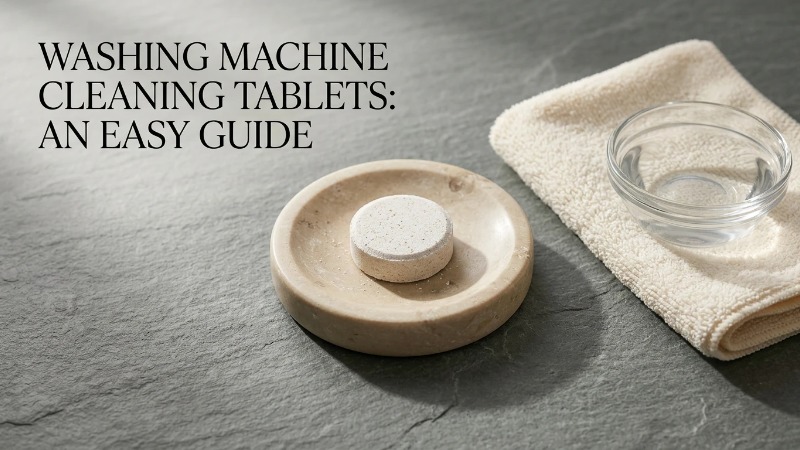
Quick answer: To use a washing machine cleaning tablet, place one tablet directly in the empty drum, run the hottest and longest cycle, then wipe the door seal and detergent drawer.
Key Takeaways
- Drum, not drawer: Always place the tablet directly in the empty drum for full dissolution.
- Go hot: Run the hottest or longest cycle (60–90°C) or a dedicated tub-clean setting.
- Wipe the seal: The rubber gasket traps the most mold—clean it every time.
- Dry it out: Leave the door ajar afterward to prevent moisture buildup.
- Stay on schedule: Clean roughly monthly and store tablets sealed, dry, and away from kids and pets.
What Washing Machine Cleaning Tablets Actually Do
Before the how, it helps to understand the why. These tablets aren't laundry detergent—they exist to strip away the invisible layers your regular wash leaves behind.
The Buildup They Target
Hard water leaves limescale on the heating element and drum. Every wash also deposits detergent scum, softener residue, and body oils that regular cycles can't reach.
Over time these combine into biofilm—a slick microbial layer that clings to the rubber gasket and hidden crevices. That biofilm is the real source of the smell and the black mold spots around the door.
How the Active Ingredients Work
Most quality cleaning tablets rely on a few common actives: oxygen-based bleach (often sodium percarbonate), surfactants, and chelating agents that bind mineral deposits.
When the tablet hits hot water it fizzes. That effervescence isn't just for show—it carries the cleaning agents into folds and channels a wipe-down would miss. This is a general formulation overview, not a performance claim for any single product.
Before You Start: Prerequisites and What You'll Need
Gather everything first so you can finish in one sitting. The whole job takes one cycle plus a few minutes of wiping.
Tools & Materials
| Item | Purpose | Notes |
|---|---|---|
| 1 cleaning tablet | Main cleaner | Check pack for dose per load |
| Microfiber cloth | Wipe seal and drawer | Reusable |
| Old toothbrush | Detail the gasket folds | Optional |
| Rubber gloves | Skin protection | Recommended |
| White vinegar | Spot residue | Optional—avoid mixing with bleach-based tablets |
Quick Safety & Storage Caveats
Keep tablets sealed, dry, and out of reach of children and pets. Don't handle them with wet hands, and follow the label's GHS handling guidance.
Never combine cleaning products—chlorine-based cleaners mixed with acids like vinegar can release harmful gas. When in doubt, use one product at a time.
Step-by-Step: How To Clean Your Washing Machine With Tablets
These steps work for both front-load and top-load machines. Follow them in order for the best result.
Step 1 — Empty the Drum Completely
No clothes, no detergent, no stray socks. Confirm the drum is empty and reasonably dry before you begin.
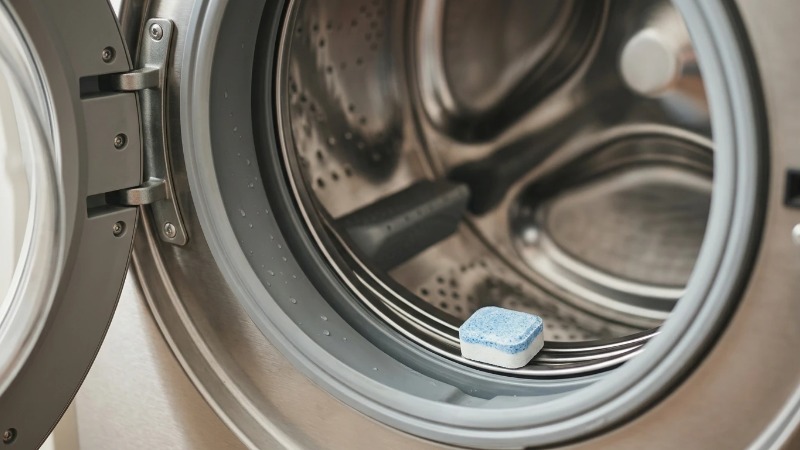
Step 2 — Place the Tablet in the Drum (Not the Drawer)
Drop one tablet straight to the bottom of the drum. Direct placement lets it dissolve fully and circulate, whereas the dispenser flushes it out during the first fill. [Screenshot placeholder: tablet resting at bottom of drum]
Step 3 — Select the Right Cycle
Choose the hottest wash available (60–90°C) or a dedicated "tub clean" or "drum clean" setting if your machine has one. Double-check the temperature on the display before starting.
Step 4 — Run the Full Cycle
Let the cycle finish without interruption. The effervescent action needs the entire run to break down scale and biofilm and carry it out with the wash water.
Step 5 — Wipe the Seal, Drawer, and Glass
Pull back the rubber gasket and wipe inside the folds where mold hides—an old toothbrush helps here. Remove the detergent drawer, rinse it under the tap, and wipe the door glass. [Screenshot placeholder: wiping the rubber gasket]
Step 6 — Leave the Door Ajar to Dry
Prop the door and drawer open so the interior can air out. Success looks like this: no residue, a fresh neutral smell, and a clean gasket.
Dosage and Frequency: Getting It Right
The most common question is how often to do this. It depends on how hard your machine works.
How Often Should You Clean?
| Usage Level | Recommended Frequency |
|---|---|
| Light (1–2 loads/week) | Every 1–2 months |
| Average (3–5 loads/week) | Monthly |
| Heavy / hard water / pets | Every 2–3 weeks |
Front-Load vs. Top-Load Dosage Notes
Front-loaders usually need cleaning more often. Their sealed door traps moisture against the gasket, creating a perfect home for mold between washes.
Always read the per-load dosage on the label rather than guessing. Most tablets are dosed as one per cleaning cycle, but concentrated formulas and larger drums can vary.
Pros and Cons of Cleaning Tablets vs. Other Methods
| Method | Pros | Cons |
|---|---|---|
| Cleaning tablets | Pre-measured, mess-free, targets limescale and odor | Cost per use higher than DIY |
| Vinegar + baking soda | Cheap, usually on hand | Inconsistent dosing, weaker on biofilm |
| Liquid machine cleaner | Fast-dissolving | Can spill, harder to store |
Troubleshooting Common Problems
Tablet Didn't Fully Dissolve
Usually the water was too cold or the cycle too short. Re-run on a hotter, longer setting and confirm the temperature actually climbed on the display.
Smell Returns Quickly
Trapped moisture is the usual culprit—leaving the door shut between washes lets odor rebuild fast. It can also signal an overdue drain or filter cleaning, so check the pump filter at the base of front-loaders.
Residue or Film After Cleaning
Run an extra rinse cycle to flush loosened deposits. If film keeps appearing on clothes, you may be overdosing detergent in regular washes—scale back to the recommended amount.
Choosing a Quality Cleaning Tablet
Not every tablet is created equal. A quick label check tells you more than the front-of-pack marketing.
What to Look For on the Label
Look for clearly listed active ingredients, biodegradable or eco claims backed by detail, and a stated dosage per cycle. Reputable manufacturers can also provide certifications and documentation—ISO standards, REACH/GHS compliance, and available MSDS and COA on request.
A Note for Brands and Bulk Buyers
If you're sourcing rather than shopping, cleaning tablets are widely available as OEM and ODM private-label products. Formulation, scent, dosage, and eco-friendly packaging can all be adjusted to fit a brand's spec sheet and target market.
Frequently Asked Questions
Can I use a cleaning tablet with clothes in the machine?
No. Run it on a completely empty drum—the tablet is a strong descaler and sanitizer, not a detergent, and it can affect fabrics.
Are washing machine cleaning tablets safe for septic systems?
Many oxygen-based, biodegradable formulations are designed to break down safely, but formulas differ. Always check the label for septic-safe wording before use.
Can I use these tablets in both front-load and top-load washers?
Yes. The method is the same—tablet in the empty drum, hottest cycle. Front-loaders generally benefit from more frequent cleaning because the sealed door traps moisture.
What's the difference between a cleaning tablet and regular detergent?
Detergent cleans your clothes; a cleaning tablet cleans the machine. Tablets focus on descaling, removing biofilm, and sanitizing the drum and hidden parts laundry cycles never reach.
Do the tablets damage rubber seals or hoses?
Used as directed, they don't—they're formulated for the materials inside modern washers. Cleaning far more often than needed offers no extra benefit, so stick to the recommended frequency.