
Most buyers assume the hardest part of sourcing toilet bowl cleaner tablets from China is squeezing down the per-unit price. The buyers who actually scale learn something different: formulation stability, compliance paperwork, and dosage consistency quietly control more of their long-term cost and brand risk than the sticker price ever will. A tablet that dissolves unevenly, fails a customs SDS check, or degrades in the container before it reaches the shelf can erase a full year of margin savings in a single shipment.
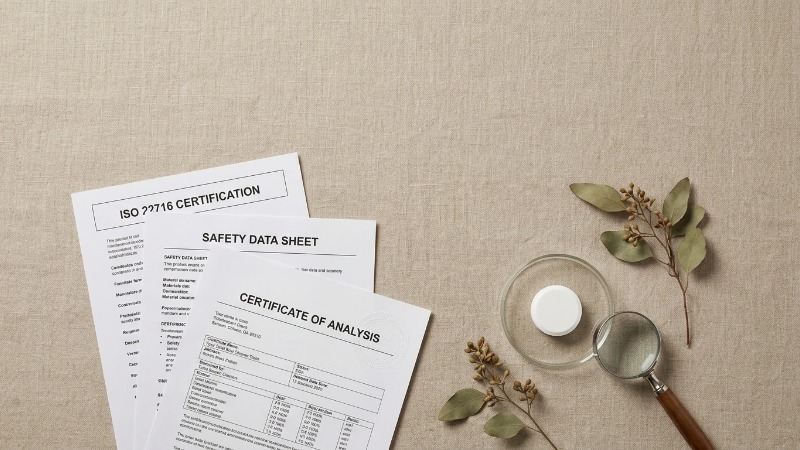
By the end of this guide, a decision-maker will know how to separate a real manufacturer from a middleman, which documents to demand before wiring a deposit, and how to structure a private-label program that survives customs, shelf life, and end-user scrutiny.
- Manufacturer vs. trading company matters most: a real factory issues its own SDS, shows audit reports, and lets you verify production lines — trading companies cannot.
- Compliance documents are non-negotiable: demand GHS-format SDS, per-batch COA, ISO 22716/GMPc certification, REACH registration for EU sales, and a stability report before committing to volume.
- Dosage and dissolution consistency signal process control: uneven tablets are the clearest early warning of a supplier that cannot hold specification at scale.
- Formulation type is a strategic choice: chlorine-based (sodium dichloroisocyanurate) delivers strong stain and germ performance; oxygen and natural/enzyme systems trade some power for gentler, eco-positioned claims.
- MOQ and lead times scale with customization: stock formula with custom labeling starts low and ships fast; bespoke formula plus custom packaging pushes both MOQ and timeline up.
What Actually Defines a Reliable Toilet Bowl Cleaner Tablets Manufacturer
A toilet bowl cleaner tablet is a compressed or molded solid dose that releases cleaning actives on contact with water — either continuously in the cistern, on demand in the bowl, or through an automatic dispensing mechanism. The category looks simple, which is exactly why buyers underestimate it. The engineering lives in the binder system, the effervescence rate, and the batch-to-batch repeatability.
Set your evaluation frame here: you are not buying a tablet, you are buying a repeatable process that produces the same tablet ten thousand times. That distinction shapes every question below.
Manufacturer vs. Trading Company vs. Sourcing Agent
A manufacturer owns the production lines, holds the certifications in its own name, and can put you on a live video walk of the tablet press and packaging floor. A trading company resells other factories' output and often cannot issue an SDS under its own entity. A sourcing agent coordinates on your behalf but adds a layer between you and quality control.
Three questions expose the difference fast: Can you send us your own factory audit report? Can we see the stamping and filling lines on a live call? Will the SDS and COA be issued under the same company name on the invoice? A middleman stumbles on at least one of these.
Core Tablet Formulation Types and Active Ingredients
There are three dominant chemistries, each with honest tradeoffs. Chlorine-based tablets typically use sodium dichloroisocyanurate (NaDCC) for strong stain removal and disinfecting action — powerful, but they demand careful storage away from acids and moisture, and they carry a distinct odor. Oxygen-based effervescent tablets rely on percarbonate or peroxide systems for a gentler clean and lower odor profile. Natural and enzyme-based systems use surfactants derived from plant sources and biological actives, positioned for eco-conscious lines.
Match the chemistry to your market rather than defaulting to the cheapest. Always confirm handling and storage requirements with the manufacturer's SDS, and store tablets in a cool, dry, sealed environment regardless of type — moisture is the enemy of every effervescent formula.
In-Tank vs. In-Bowl vs. Automatic Dissolving Tablets
In-tank tablets sit in the cistern and release actives over multiple flushes, so dosage logic is about controlled slow release. In-bowl tablets act on immediate contact and dissolve faster. Automatic dissolving tablets pair with a dispensing device and require tighter tolerance on dissolution rate. Format drives everything downstream: packaging barrier requirements, individual wrapping, and the end-user instructions printed on your label.
The Compliance and Certification Checklist That Protects Your Brand
Treat compliance as risk management for your market of sale, not a formality. Customs holds, marketplace delistings, and retailer chargebacks almost always trace back to a missing or mismatched document — problems that are cheap to prevent and expensive to fix after the container ships.
Documents to Request Before Any Order
| Document | What It Verifies | When You Need It |
|---|---|---|
| SDS/MSDS (GHS format) | Hazard classification and handling guidance | All shipments; required at customs |
| COA (Certificate of Analysis) | Batch active-ingredient consistency | Per production batch |
| ISO 22716 / GMPc | Manufacturing quality management system | Ongoing supplier vetting |
| REACH (EU) | Chemical registration compliance | EU-bound sales |
| Stability Report | Shelf life under defined storage conditions | Formulation validation before scale-up |
Region-Specific Regulatory Notes
For the EU, cleaning products fall under REACH and CLP labeling rules, and detergent-specific regulations govern surfactant biodegradability and ingredient disclosure. The exact classification thresholds depend on your formula's actives, so validate them against your finished specification rather than assuming.
In the US, household cleaners are subject to federal labeling and hazard communication requirements, with additional ingredient-disclosure expectations in certain states. Globally, GHS-aligned labeling — pictograms, signal words, hazard statements — is the common denominator. Where a precise limit varies by jurisdiction, confirm it with a regulatory specialist rather than relying on a supplier's verbal assurance.
Eco and Biodegradable Claims — What Holds Up
Biodegradable, phosphate-free, and greywater-safe are claims that regulators and marketplaces increasingly audit. To substantiate them, request the specific test standard the claim is based on (for example, recognized biodegradability test methods) and the supporting lab data. Phosphate-free is verifiable directly from the formula and COA.
The safest path is to only carry claims your documentation can defend. A vague "eco-friendly" sticker with no backing is a greenwashing exposure waiting to be challenged — insist that every green claim maps to a document.
How to Evaluate Cleaning Performance and Product Consistency
Marketing adjectives tell you nothing. Testable specifics tell you whether the factory controls its process. Push past the brochure and into measurable behavior.
Dissolution Time, Dosage, and Foam Control
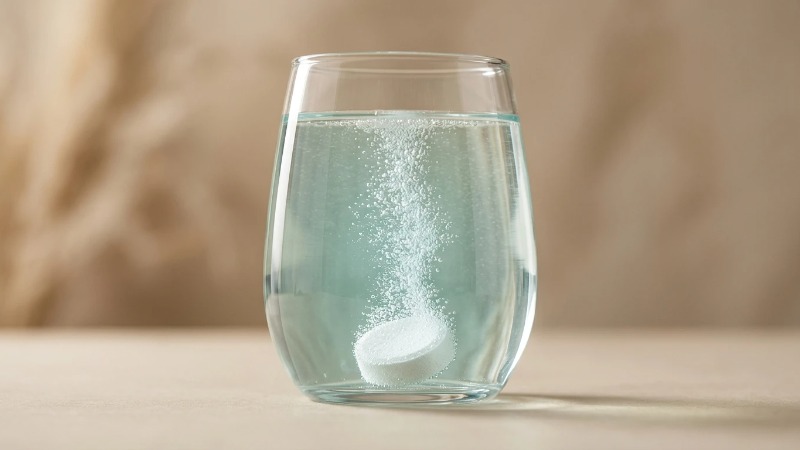
Consistent dissolution time across a sample set is the single clearest signal of process control. If ten tablets from the same batch dissolve at meaningfully different rates, the pressing or blending step is out of tolerance — and that variance will only widen at production volume. Check tablet weight consistency, active-ingredient dosage against the COA, and foam behavior, since excessive foam frustrates end users and thin foam reads as weak.
Sample Testing Protocol Before Committing to Volume
- Request retained samples from an actual production batch, not a hand-made prototype.
- Run a hard-water test — many end users have hard water, and performance can shift under high mineral load.
- Perform a staining and limescale test on a representative surface over repeated cycles.
- Assess packaging integrity: moisture barrier, seal strength, and how tablets hold up after simulated transit.
- Commission third-party lab verification of active concentration against the COA before releasing a large deposit.
Private Label and OEM/ODM Programs: What's Actually Customizable
For buyers ready to build a line, this is where a private label toilet bowl cleaner program either scales cleanly or stalls. Knowing which levers you control — and what each one costs in money and time — keeps expectations grounded.
OEM vs. ODM — Choosing Your Level of Involvement
Choose OEM when you bring your own proven formula and want the factory to manufacture to your specification. Choose ODM when you adopt a factory's validated formulation and adapt the scent, color, dosage, and packaging around it. ODM gets you to market faster and lowers formulation risk; OEM gives you differentiation and formula ownership. Many buyers start ODM to launch, then migrate to OEM once volume justifies the investment.
Customization Levers: Formula, Scent, Color, Dosage, Packaging, Label
Each lever carries a different cost and lead-time weight. Label printing and scent selection from an existing library are low-friction and fast. Custom color and dosage adjustments are moderate. A bespoke formula or fully custom packaging tooling is the heaviest — it adds development cycles, stability testing, and higher minimums. Sequence your customization so the highest-impact, lowest-cost changes come first.
MOQ, Pricing Tiers, and Lead Times — Realistic Expectations
The ranges below are directional guidance for planning, not fixed quotes. Actual figures depend on formula complexity, packaging, and current factory loading.
| Customization Depth | Typical MOQ Direction | Lead Time Direction |
|---|---|---|
| Stock formula + custom label | Lowest entry point | Shortest turnaround |
| Stock formula + custom scent/color/packaging | Moderate | Moderate, with sample approval cycle |
| Custom formula (OEM) + custom packaging | Highest | Longest, includes development and stability testing |
Pros and Cons of Sourcing Toilet Cleaner Tablets from China
An honest, caveated comparison so you can plan mitigations rather than discover surprises.
| Advantages | Trade-offs and Mitigations |
|---|---|
| Manufacturing scale drives competitive unit and tooling costs. | Ocean lead times are longer — plan inventory buffers and forecast early. |
| Integrated OEM/ODM capability under one roof. | Time-zone and language gaps — set a single point of contact and written specs. |
| Packaging co-location cuts handoffs and shortens the supply chain. | QC oversight at distance — use retained samples and third-party inspection. |
| Deep formulation libraries speed time to market for ODM lines. | Formula/IP protection concerns — use NDAs and split-supplier strategies for proprietary formulas. |
Common Sourcing Mistakes and Best Practices
The costliest mistakes are almost always the ones that felt like harmless shortcuts at the time.
Mistakes That Cost Buyers the Most
- Skipping factory verification and trusting a polished website.
- Ignoring the stability report, then discovering shelf-life failure after tablets are already on retail shelves.
- Under-specifying packaging, so tablets absorb moisture in transit or storage.
- Ordering volume without retained samples to arbitrate a quality dispute.
- Accepting verbal compliance claims instead of documents issued under the manufacturer's name.
A Repeatable Supplier Vetting Workflow
- Confirm the entity is a manufacturer: audit report, live line video, self-issued SDS.
- Collect the full document set — SDS, COA, ISO 22716/GMPc, region-specific registrations, stability report.
- Order and test retained production samples against your protocol.
- Verify active concentration through a third-party lab.
- Run a small first production order before scaling, and inspect before shipment.
Frequently Asked Questions
What is the typical MOQ for private label toilet bowl cleaner tablets?
It depends on customization depth. A stock formula with a custom label sits at the lowest entry point, while a custom formula with bespoke packaging carries the highest minimum. Ask each supplier for MOQ tied to your exact specification rather than a generic figure.
How long does an OEM cleaning tablet order usually take?
A stock-formula order with custom labeling turns around fastest. A full OEM program with a custom formula runs longest because it includes formulation development, stability testing, and packaging tooling. Build a sample-approval cycle into your timeline before production begins.
Are natural formula toilet cleaner tablets as effective as chlorine-based ones?
They perform differently. Chlorine-based tablets using sodium dichloroisocyanurate deliver strong stain removal and disinfecting action, while natural and oxygen-based systems trade some of that intensity for lower odor and eco-positioning. The right choice depends on your target market and claims — validate performance through your own hard-water and staining tests rather than assuming equivalence.
What certifications should a toilet cleaner tablet manufacturer hold?
At minimum, look for ISO 22716 or GMPc for the quality system, a GHS-format SDS, a per-batch COA, and a stability report. For EU sales, REACH registration is essential. Confirm each document is issued under the manufacturing entity's own name.
How do I verify a supplier is a real manufacturer, not a middleman?
Ask for a factory audit report, request a live video walk of the tablet press and packaging lines, and check that the SDS and COA are issued under the same company on your invoice. A trading company typically cannot satisfy all three.
Making Your Sourcing Decision — and the Next Step
The decision framework is straightforward once you invert the usual instinct: lead with compliance, verify with samples, and match format to market before you negotiate price. A supplier that clears document verification, holds specification across a sample batch, and produces the tablet format your channel needs is worth more than one offering a slightly lower quote with gaps in any of those areas.
Why Poleview Group Fits Vetted-Buyer Requirements
Poleview Group manufactures cleaning tablets through OEM and ODM programs in dust-free workshops with automated stamping, filling, labeling, and packing lines — the kind of process control that produces consistent dosage and dissolution at volume. The certification set aligns with the checklist above: GMPc, FDA, ISO 22716, SDS, COA, and stability reporting, with formulations built around natural, parabens-free, and cruelty-free positioning.
If you're ready to move from evaluation to action, request production samples and book a private-label consultation with Poleview. Bring your target market, preferred format, and any claims you need to defend — and let the documents and samples do the deciding.