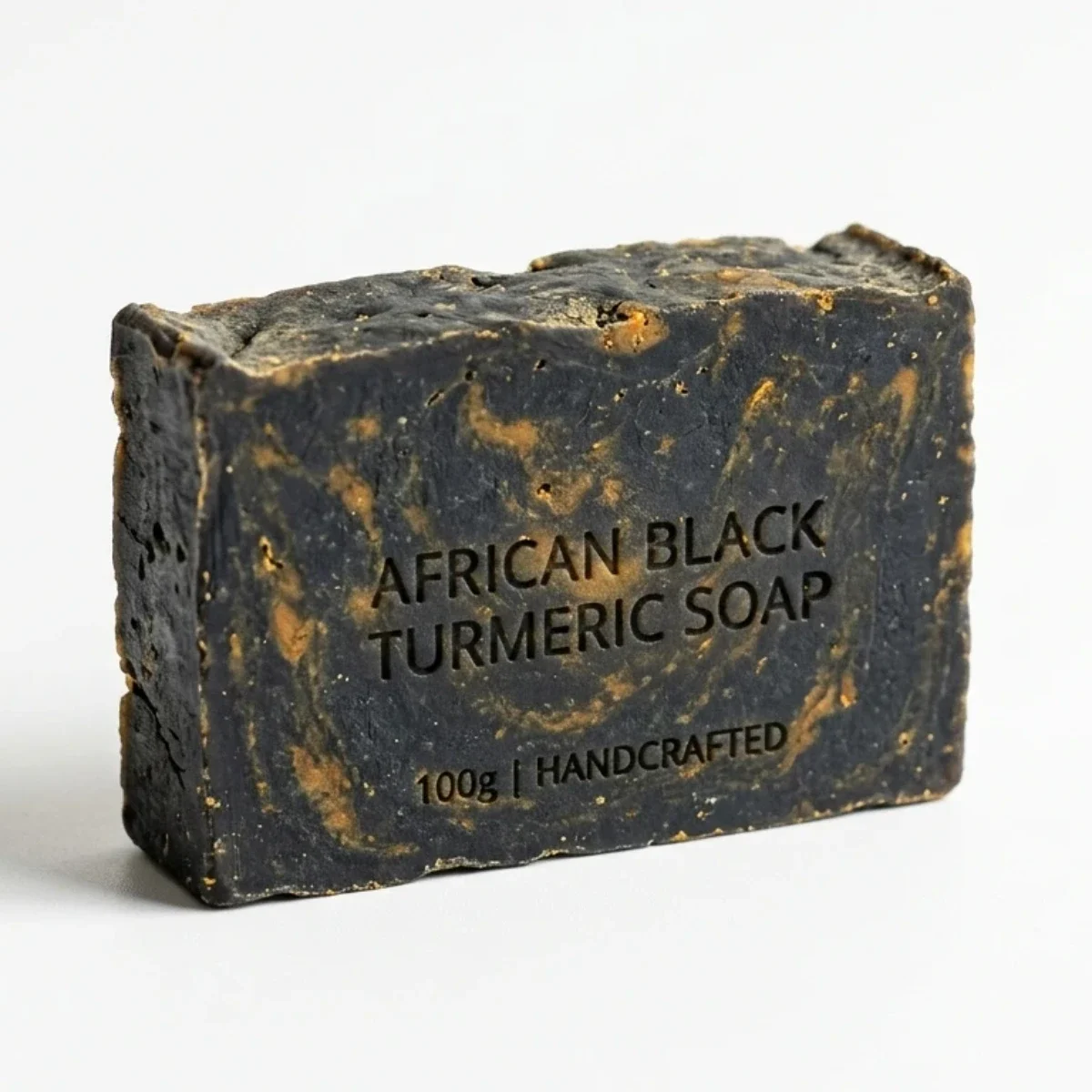

Most adults spread six to twelve personal care products across their skin before lunch — cleanser, serum, moisturizer, sunscreen, lip balm, and more — and skin is the largest organ your body has. Choose wrong, and the price isn't just a shelf full of half-used jars: it's stinging, breakouts, and a damaged skin barrier that can take three to six weeks of careful repair to calm down.
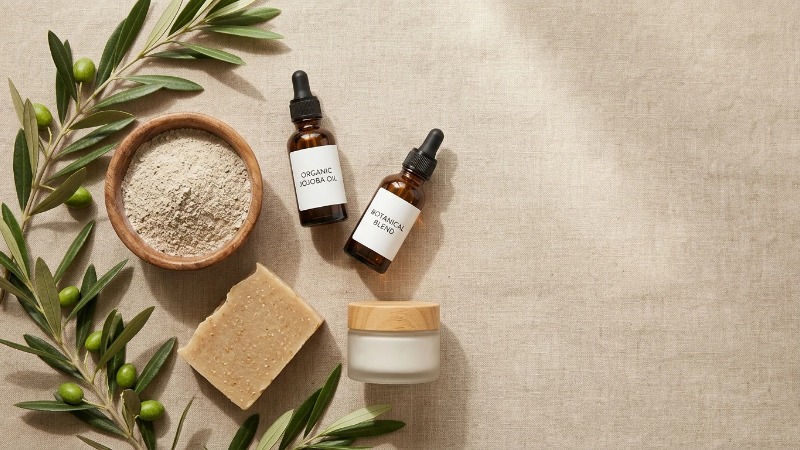
This guide fixes that. By the time you finish, you'll be able to read an ingredient label with confidence, match natural products to your actual skin type, and spot the greenwashed marketing traps that drain your wallet without doing your face any favors.
- Read the INCI list, not the front label — ingredients are listed by concentration, so the first five tell you the most.
- "Natural" is largely unregulated — certifications and ingredient literacy matter more than buzzwords.
- Always patch test new products for 24–48 hours before applying to your whole face.
- Match to your skin type — a great ingredient for oily skin can wreck dry or reactive skin.
- Expect trade-offs — shorter shelf life and higher cost are the honest downsides.
- Never skip sunscreen, even if you're chasing an all-natural routine.
What "Natural Skin Care" Really Means (Beyond the Buzzword)
Natural skin care generally refers to products built primarily from plant-, mineral-, or other nature-derived ingredients, with minimal reliance on harsh synthetics. The catch: there's no single legal definition, so the word means slightly different things on every bottle you pick up.
That gap between what shoppers assume and what brands legally have to prove is where most confusion — and overspending — happens. Understanding the vocabulary is your first line of defense.
Natural vs. Organic vs. Clean vs. Naturally-Derived
These four words get used interchangeably, but they aren't the same thing. Natural loosely implies ingredients from nature. Organic refers to how plant ingredients were farmed — without most synthetic pesticides — and is sometimes tied to certification bodies.
Clean beauty is a marketing framework, not a regulated category; it usually signals a brand's chosen "no" list. Naturally-derived means an ingredient started from a natural source but was processed in a lab — squalane from olives is a good example. None of these labels alone guarantees safety or efficacy.
Why "Chemical-Free" Is a Myth (and What Marketers Really Mean)
Water is a chemical. So is vitamin C, glycerin, and every plant oil you love. "Chemical-free" is scientifically impossible, and any label using it is leaning on fear rather than fact.
What shoppers actually want is fewer harsh, irritating, or controversial ingredients — not the absence of chemistry itself. Reframing your goal this way keeps you from being manipulated by a phrase that means nothing.
The Regulatory Reality: Why There's No Universal "Natural" Standard
In most markets, including the US and much of Asia, "natural" on a beauty label isn't defined or policed. A product can be 1% botanical extract and 99% conventional base and still claim the word.
This is exactly why front-of-pack promises carry so little weight. Third-party certifications and your own ability to read the ingredient list are far more reliable signals than a leaf icon and green packaging.
Learning to Read an Ingredient Label (Your Most Important Skill)
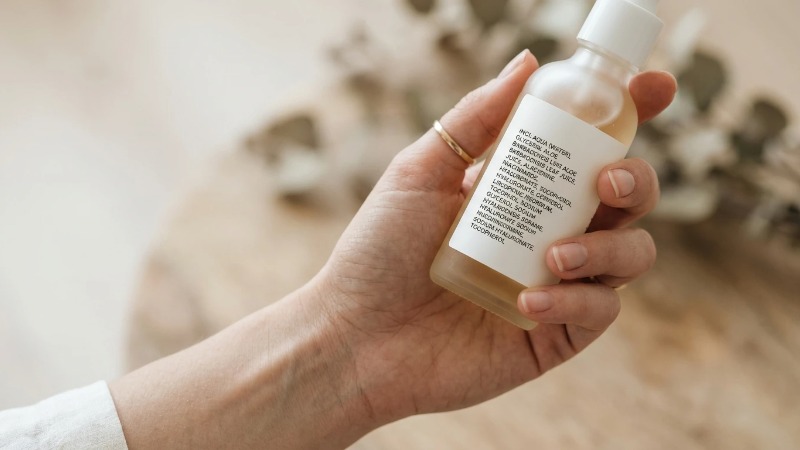
If you take one skill away from this guide, make it this. Reading labels turns you from a passive buyer into someone who can judge any product on the shelf, regardless of the hype around it.
How to Decode an INCI List
INCI stands for the International Nomenclature of Cosmetic Ingredients, a standardized naming system used worldwide. Ingredients are listed in descending order by concentration — so whatever appears first makes up the largest share of the formula.
Botanical ingredients often show a Latin name (like Butyrospermum Parkii for shea butter) sometimes followed by the common name. Ingredients under 1% can be listed in any order at the end, which is why an active you care about may sit near the bottom and still be present at a meaningful dose. When the first three to five ingredients are water, oils, and humectants, you're looking at a moisturizing base.
Ingredients Worth Seeking Out
Some plant-based and naturally-derived ingredients have solid, well-documented reputations for supporting skin. Here are a few to recognize:
- Plant oils and butters — jojoba (structurally similar to skin's own sebum), shea butter, and squalane derived from olives help soften and support the skin barrier.
- Humectants — glycerin, hyaluronic acid, and aloe draw water into the skin and help it feel hydrated.
- Botanical antioxidants — stable vitamin C forms, green tea extract, and niacinamide are associated with a brighter, more even-looking complexion.
A fair caveat: these ingredients support general skin health and appearance. They are not medical treatments, and individual results vary with concentration, formulation, and your own skin.
Ingredients Many Shoppers Choose to Avoid
Plenty of people prefer to skip certain additives, and it helps to know the actual reasoning rather than the panic. Parabens are preservatives that some shoppers avoid over debated hormonal concerns, though many regulatory bodies still consider commonly used ones safe at approved levels.
Sulfates (like SLS) are effective cleansers that can feel stripping on dry or sensitive skin. Synthetic fragrance is one of the most common triggers for contact irritation, which is why fragrance-sensitive users often seek it out on labels. Avoiding these is a valid personal preference — just know that "avoided by some" is not the same as "proven harmful for everyone."
Certifications That Add Credibility
Because "natural" is unregulated, third-party certifications and documentation do a lot of the trust-building work. Here's what several credible signals actually verify:
- GMPc / ISO 22716 — Good Manufacturing Practice standards confirming a facility follows consistent, hygienic, documented production processes.
- Cruelty-free programs (Leaping Bunny-style) — independent verification that no animal testing occurred along the supply chain.
- MSDS (Material Safety Data Sheet) — safety information on handling and hazards of ingredients.
- COA (Certificate of Analysis) — batch-level confirmation that a product meets its stated specifications.
- Stability report — evidence a formula stays safe and effective over its intended shelf life.
These don't tell you whether a product will suit your skin, but they do tell you the maker takes quality and safety seriously.
Matching Natural Products to Your Skin Type
This is where knowledge becomes decisions. The same "clean" moisturizer that saves dry skin can leave oily skin congested — matching matters more than marketing.
Quick Self-Assessment: Identifying Your Skin Type
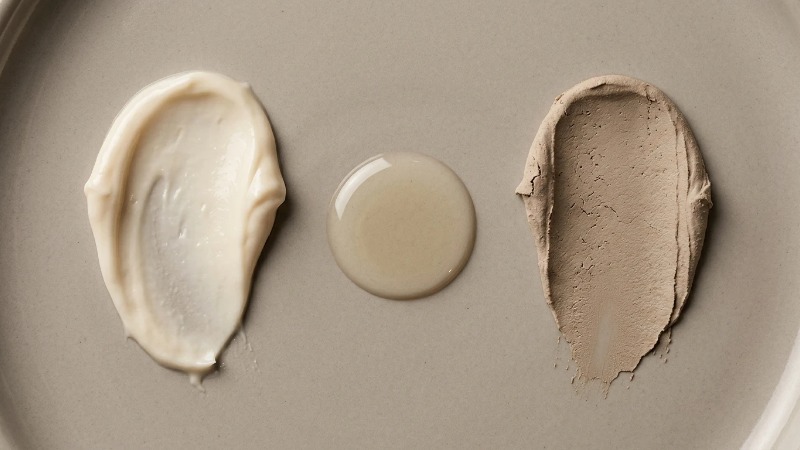
Wash your face, wait an hour without applying anything, then check how it feels. Tight and flaky suggests dry; shiny all over suggests oily; shine on the T-zone with normal cheeks means combination.
Skin that stings, reddens, or reacts easily is sensitive (and can overlap with any of the above). Comfortable, balanced, and rarely reactive is normal. Your skin type can shift with season, hormones, and age, so reassess a few times a year.
Best Natural Choices by Skin Type
| Skin Type | Look For | Approach With Caution |
|---|---|---|
| Dry | Shea butter, squalane, glycerin, jojoba oil | High-foam cleansers, alcohol-heavy toners |
| Oily | Niacinamide, aloe, lightweight gel textures | Rich butters, heavy occlusive oils |
| Combination | Balanced humectants, gel-cream hybrids | One-size heavy creams over the whole face |
| Sensitive | Fragrance-free formulas, oat, aloe, simple ingredient lists | Essential oils, strong botanicals, high-percentage actives |
| Normal | Most well-formulated products; antioxidants for maintenance | Over-layering and unnecessary actives |
Special Considerations: Reactive, Acne-Prone, and Mature Skin
Reactive skin does best with short ingredient lists and fewer botanicals, since even natural extracts can trigger flare-ups. Acne-prone skin often prefers lighter, non-comedogenic textures, but "natural" oils are not automatically pore-clogging or safe — it depends on the individual.
Mature skin benefits from consistent hydration and antioxidants, though no cream reverses aging. For persistent acne, rashes, or any condition that won't settle, see a dermatologist — a guide is no substitute for a professional exam.
Building a Simple Natural Routine: A Step-by-Step Framework
More products rarely means better skin. A short, consistent routine outperforms a ten-step regimen you abandon in a week.
The Core Four: Cleanse, Treat, Moisturize, Protect
The minimal effective routine has four steps in this order: cleanse to remove dirt and oil, treat with a targeted serum if you want one, moisturize to hydrate and seal, and protect with sunscreen during the day. Apply thinnest to thickest — watery textures before creams.
Morning vs. Evening Routines
Mornings prioritize protection: gentle cleanse, antioxidant serum if you use one, moisturizer, and sunscreen. Evenings prioritize repair: cleanse away the day, apply any treatment product, and moisturize. Skip sunscreen at night — it's a daytime step only.
The Patch Test: The 5-Minute Step Most People Skip
This is the single most valuable safety habit in skincare, and almost everyone skips it. Here's how:
- Apply a small amount of the new product to a discreet spot — inner forearm or behind the ear.
- Leave it undisturbed and don't wash the area for as long as practical.
- Watch for 24–48 hours for redness, itching, swelling, or bumps.
- If nothing happens, it's reasonably safe to try on your face; if it reacts, stop using it.
Natural ingredients can and do cause allergic reactions, so this step matters just as much for botanical products as synthetic ones.
How to Transition Without Overwhelming Your Skin
Introduce one new product at a time and give it one to two weeks before adding the next. If your skin reacts, you'll know exactly which product caused it — impossible to isolate if you swap five things at once.
Natural Skin Care: Honest Pros and Cons
Natural doesn't mean flawless. Going in with clear expectations is what separates satisfied users from disappointed ones.
| Advantages | Limitations |
|---|---|
| Often gentler, simpler formulations | Shorter shelf life without strong synthetic preservatives |
| Transparency-friendly brands and clearer labeling | Botanical ingredients can trigger allergies in some users |
| Aligns with cruelty-free and vegan values | Frequently costs more than conventional equivalents |
| Often uses biodegradable, eco-conscious ingredients | Results can be slower and more variable |
Neither column makes natural products universally better or worse — it's about which trade-offs fit your priorities and skin.
Common Natural Skincare Mistakes (and How to Avoid Them)
Most skincare regret comes from a handful of predictable errors. Here they are, each with a quick fix:
- Assuming "natural" means gentle or hypoallergenic. Fix: patch test everything, plant-based or not.
- Using undiluted essential oils on skin. Fix: always dilute in a carrier oil, or skip them if your skin is reactive.
- Over-exfoliating with DIY scrubs. Fix: exfoliate gently at most one to two times a week; abrasive sugar and salt scrubs can cause micro-tears.
- Falling for greenwashing and vague front-label claims. Fix: ignore the leaf icons and read the INCI list.
- Skipping sunscreen because it "isn't natural enough." Fix: use a well-formulated sunscreen daily — UV damage is one of the biggest drivers of premature aging.
Where Your Natural Products Come From: Why Manufacturing Matters
A brilliant formula means little if it's made in inconsistent, uncontrolled conditions. How and where a product is manufactured directly affects its safety, purity, and batch-to-batch reliability.
Formulation, Sourcing, and Quality Control
Dust-free workshops reduce contamination risk, while automated filling and labeling improve consistency and reduce human error. Stability testing confirms a product will stay safe and effective across its shelf life, and documents like COA and MSDS provide traceable proof of quality. These behind-the-scenes systems are what turn a good recipe into a dependable product.
Private Label and Custom Formulation (For Brands and Entrepreneurs)
If you're building your own natural beauty line, manufacturing partners handle far more than mixing. OEM and ODM services can cover formula development, ingredient sourcing, scent, color, packaging, and label printing across categories like bath bombs, shower steamers, handmade soap, body wash, and scented candles.
A certified manufacturer such as Poleview Group — which operates Boymay Cosmetics Co., Ltd. and Poleview Biotechnology Co., Ltd. and holds GMPc, FDA, and ISO 22716 credentials — can support compliance and quality control while you focus on brand and customers.
Key Takeaways
- Read INCI lists — concentration order tells you what a product really is.
- Verify certifications (GMPc, ISO 22716, cruelty-free) instead of trusting front-label buzzwords.
- Patch test every new product for 24–48 hours before full-face use.
- Match products to your skin type, not to trends.
- Expect trade-offs like shorter shelf life and higher cost.
- Reject "chemical-free" claims — they're scientifically meaningless.
- Keep wearing sunscreen, no matter how natural your routine gets.
Frequently Asked Questions
Is natural skin care actually better for your skin?
Not automatically. A well-formulated natural product can be excellent, but "natural" alone doesn't guarantee it suits your skin. What matters most is the specific ingredients, the concentrations, and how your individual skin responds — which is why label-reading and patch testing beat any blanket claim.
Are natural and organic skincare products safe for sensitive skin?
They can be, but sensitive skin often reacts to botanicals and essential oils just as it does to synthetics. Look for short, fragrance-free ingredient lists with soothing components like aloe or oat. Always patch test, and consult a dermatologist if your skin is highly reactive.
Do natural products expire faster?
Often, yes. Products using milder or fewer preservatives can have shorter shelf lives, especially those rich in plant oils that can oxidize. Check the period-after-opening symbol, store products cool and sealed, and discard anything that changes color, smell, or texture.
What does "cruelty-free" and "not tested on animals" really guarantee?
At its strongest, it means neither the finished product nor its ingredients were tested on animals, ideally verified by an independent program. Because the terms aren't uniformly regulated everywhere, third-party certification is the most reliable confirmation. It's an ethical assurance, not a measure of how effective or safe a product is for your skin.
Can I make effective natural skincare at home?
Simple items like a basic oil blend can work, but DIY skincare carries real risks: contamination, incorrect essential-oil dilution, and unstable formulas without preservatives. Homemade products also lack stability and safety testing. For anything left on the skin long-term, professionally formulated products are generally safer and more reliable.
How long before I see results from a natural routine?
Hydration and comfort can improve within days, but visible changes in tone or texture typically take four to twelve weeks, since skin renews on a roughly month-long cycle. Consistency matters more than any single product. If you see no improvement after a couple of months, reassess your routine or consult a professional.
Your Next Step Toward Healthier, Cleaner Skin
You now have what most shoppers don't: the ability to read a label, match ingredients to your skin, and see past marketing that trades on fear and vague promises. That's the difference between a routine that quietly repairs your skin barrier and a bathroom shelf of expensive mistakes.
Start small this week — make one thoughtful swap and patch test it before it touches your face. And if you're a brand or entrepreneur ready to launch or expand a natural product line, explore OEM/ODM and private-label services with a certified manufacturer like Poleview Group (GMPc, FDA, ISO 22716) for custom formulas, packaging, and compliance support that stand up to scrutiny.