
A skincare founder in London wired a 40% deposit — roughly $8,400 — to a factory she found on a B2B marketplace, then received 5,000 bottles of shampoo with visibly separating emulsion, a pH reading of 8.9 (well outside the safe scalp range), and not a single valid safety document. The product never reached a shelf; the entire batch was destroyed before launch, and the deposit was gone.
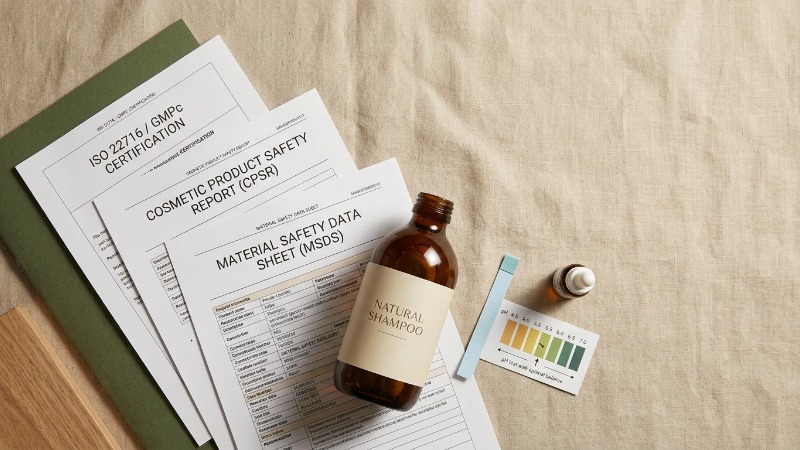
That outcome is avoidable. This guide gives entrepreneurs and small brand owners a repeatable framework to source, qualify, contract, and de-risk a compliant manufacturing partner — including the exact documents to request, realistic cost and MOQ ranges, and the red flags that separate a real factory from a middleman.
- Vet in five stages: business legitimacy → lab capability → samples → compliance docs → contract terms. Skip none.
- Demand cosmetic GMP: ISO 22716 / GMPC certification is your baseline, not a bonus.
- Budget realistically: custom formulas typically start at 3,000–5,000 units MOQ; stock formulas can start lower.
- Compliance is YOUR responsibility: the brand of record — not the factory — owns market compliance (EU CPNP, US MoCRA).
- Never skip the golden sample or independent third-party lab testing before full production.
Why Sourcing the Wrong Shampoo Supplier Costs More Than It Saves
The sticker price of a per-unit quote is the smallest number in the equation. The costs that sink first-time brands live in failed tests, held containers, and recalls that erase a launch window you can't get back.
The Real Price of a Bad Batch
A cheap quote that fails quality control converts directly into losses across several lines at once. Here's how the hidden costs stack up:
| Failure Mode | What Goes Wrong | Typical Consequence |
|---|---|---|
| Stability failure | Emulsion separates, color shifts, or scent turns within weeks | Entire batch unsellable; reorder from scratch |
| Out-of-spec pH | pH outside the roughly 4.5–6.5 scalp-friendly range | Consumer irritation risk; possible recall |
| Missing safety docs | No CPSR, MSDS, or allergen declaration | Customs hold or blocked market entry |
| MOQ overcommitment | Ordered 10,000 units of an untested formula | Warehousing dead stock, cash frozen |
| Recall / brand damage | Product reaches customers, then gets pulled | Refunds, reviews, retailer delisting |
A recall before launch is expensive; a recall after retail placement can end a young brand. The discipline in this guide is designed to keep you in the first category — or, better, out of both.
What This Guide Delivers
The dominant intent here is commercial and transactional: you're preparing to buy. So this isn't theory. You'll get a five-step vetting framework, realistic cost and timeline tables, a region-by-region compliance checklist, and the specific red flags that expose an unreliable partner before your money leaves the bank.
Private Label vs. OEM vs. White Label: What You're Actually Buying
Private label means a manufacturer produces a product you sell under your own brand. OEM (original equipment manufacturer) production adds custom formulation developed to your brief. White label means you put your label on an existing stock formula the factory already sells to many buyers.
The distinction matters because it determines your formula ownership, cost, and how easily a competitor can buy the identical product.
Quick Definitions Table
| Attribute | White Label | Private Label | OEM (Custom Formula) |
|---|---|---|---|
| Formula ownership | Factory-owned, shared | Factory-owned, may be semi-exclusive | Can be brand-owned (negotiate) |
| Customization | Label only | Label, packaging, minor tweaks | Full: actives, scent, texture, claims |
| Typical MOQ | Lowest (often 500–1,000) | Low–moderate (1,000–3,000) | Higher (3,000–5,000+) |
| Lead time | Fastest | Moderate | Longest (adds R&D) |
| Per-unit cost | Lowest | Moderate | Highest, scales with volume |
| IP control | None | Limited | Strongest (with contract) |
Which Model Fits Your Stage
Launching your first SKU with limited capital? A white or entry private label formula lets you validate demand before investing in R&D. Scaling a brand with a distinct positioning — a sulfate-free, fragrance-free scalp line, say — justifies OEM development and the exclusivity clauses that protect it.
Many founders start white label, learn what customers actually want, then graduate to custom formulation once they have data.
The China Supply Landscape for Custom Hair Care Manufacturers
China remains a dominant hub for cosmetic contract manufacturing because of clustered supply chains: formulation labs, bottle and pump suppliers, cap and carton printers, and freight forwarders often sit within the same region, compressing lead times and cost.
Key Manufacturing Clusters
According to industry trade-association reporting and export data, production concentrates in a few regions, each with a different strength:
- Guangdong (Guangzhou / Baiyun district): the densest cluster for hair and personal care, strong in formulation labs, packaging ecosystems, and export experience.
- Zhejiang: competitive on packaging components and mid-volume runs.
- Shanghai region: often stronger on R&D sophistication, documentation rigor, and international-brand experience — sometimes at a higher price point.
None of this guarantees quality on its own. A GMPC-certified factory in Guangzhou can outperform an uncertified one anywhere, and vice versa. Location narrows the search; vetting closes it.
Factory Types: Trading Company vs. Direct OEM Cosmetic Factory China
A trading company resells another factory's output. It can add value through language support and coordination, but it also adds a margin layer and a layer of distance between you and the people who actually control quality.
Buying from a direct OEM cosmetic factory in China usually means better pricing, direct technical dialogue with chemists, and clearer accountability. The trade-off: some direct factories have weaker English and export documentation. If you use an intermediary, know it — and verify who physically manufactures your product.
How to Vet Private Label Shampoo Manufacturers (Step-by-Step)
This is the core of the process. Run every candidate through all five steps in order. A supplier that fails an early step doesn't advance, regardless of how attractive the quote looks.
Step 1 — Verify Business Legitimacy
Ask for and cross-check the following before discussing product:
- Business license (verify the registered scope includes cosmetic manufacturing).
- Export licensing and history — can they legally ship to your market?
- ISO 22716 / GMPC cosmetic Good Manufacturing Practice certification.
- Years in operation and audit reports (SGS, Intertek, or Bureau Veritas audits are strong signals).
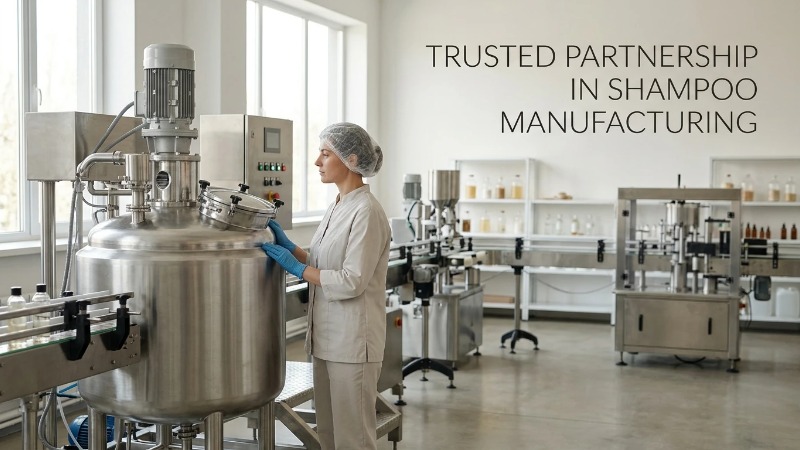
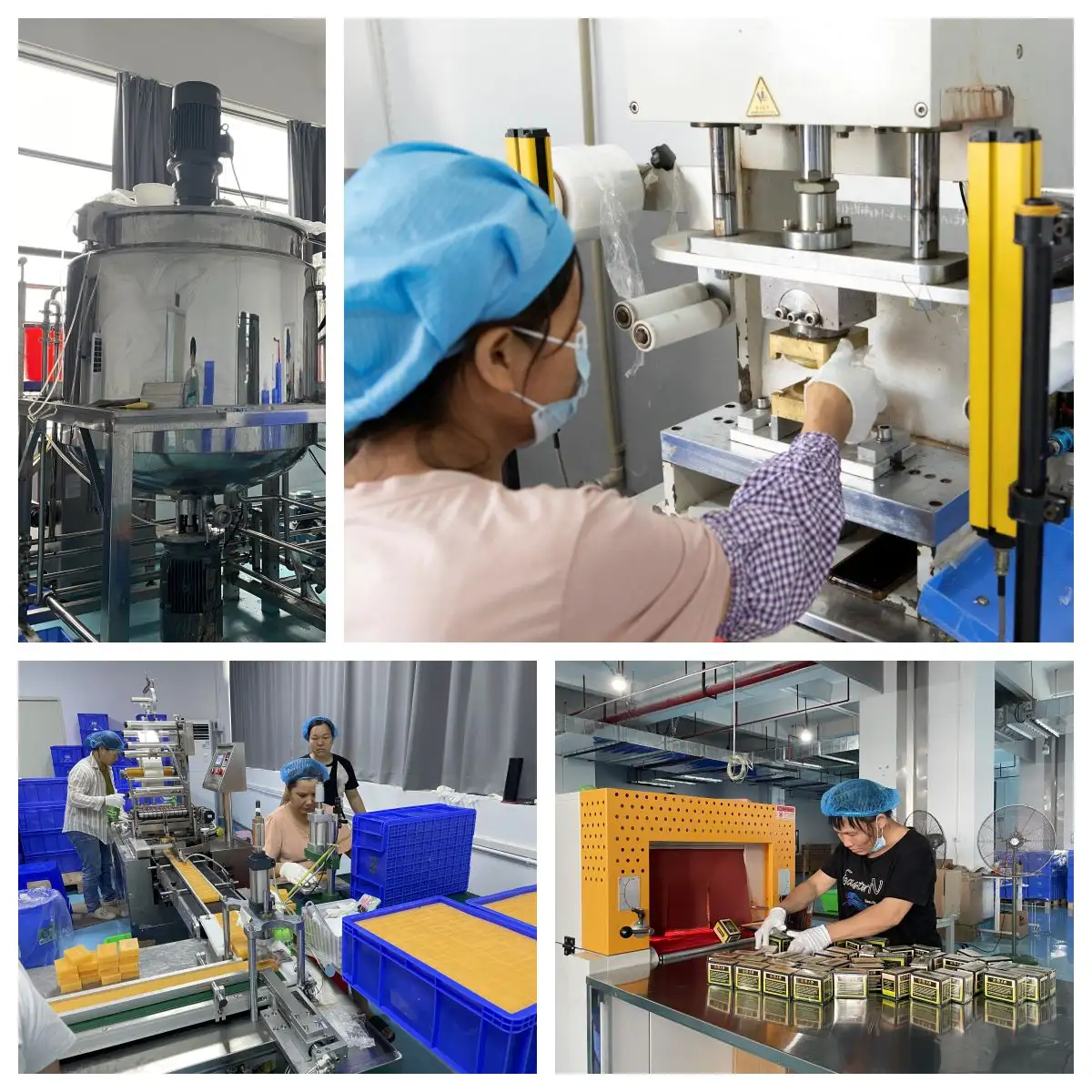
Request a live video walkthrough of the production floor and filling line. A real factory will show it; a middleman will hesitate or share stock footage.
Step 2 — Assess Formulation & Lab Capability
You're evaluating whether they can build — and repeat — the product you need. Probe for:
- In-house chemists and a functioning R&D lab, not just a blending station.
- INCI transparency — will they disclose the full ingredient list by International Nomenclature of Cosmetic Ingredients naming?
- Genuine capability with sulfate-free and organic-leaning formulations, if that's your positioning.
- Documented stability testing and preservative challenge (efficacy) testing protocols.
Vague answers about ingredients are a red flag. A capable partner talks fluently about surfactant systems, preservative choices, and pH targets.
Step 3 — Request and Evaluate Samples
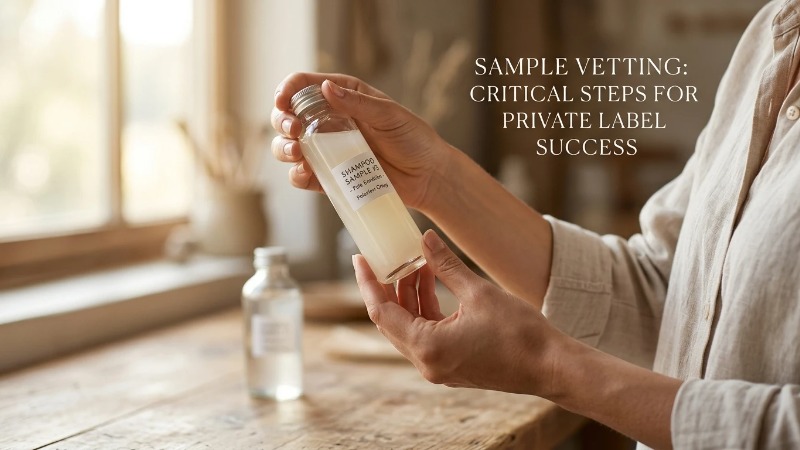
Establish a golden sample: an approved reference unit that every production batch must match. During sampling, check pH, viscosity, scent stability, and foam performance, and compare across at least two sample rounds to gauge batch-to-batch consistency.
Ask the supplier for patch-test guidance you can pass to end consumers — a sign they think about real-world skin safety, not just factory output.
Step 4 — Audit Compliance & Documentation
Confirm they can produce the paperwork your destination market legally requires:
- CPSR (Cosmetic Product Safety Report) or equivalent safety assessment for your target region.
- MSDS / SDS for transport and handling.
- Allergen declarations (the 26 fragrance allergens flagged under EU rules, where applicable).
- Valid, verifiable cruelty-free or organic certification — check the certificate number with the issuing body, don't trust a logo on a PDF.
Step 5 — Pressure-Test Communication & Terms
How a supplier communicates during courtship predicts how they'll handle a problem in production. Track response time, clarity, and English fluency. Then scrutinize the commercial terms:
- Sample fees (reasonable and often credited against a first order).
- Deposit structure — a 30% deposit / 70% before shipment split is common; be wary of demands for 100% upfront.
- A signed NDA and IP clause protecting any custom formula and preventing resale to competitors.
Cost, MOQ, and Lead Time: What to Budget for Wholesale Private Label Shampoo
The figures below are realistic planning ranges, not quotes. Actual numbers swing widely with formula complexity, packaging, certification needs, and volume — always confirm in writing.
Cost Breakdown Table
| Cost Component | Typical Range / Note |
|---|---|
| Formulation / R&D fee (custom) | Often several hundred to a few thousand USD; sometimes waived at higher MOQ |
| Per-unit bulk (low volume) | Higher per unit; premium actives raise cost |
| Per-unit bulk (high volume) | Drops significantly as volume rises |
| Packaging (bottle, pump, cap) | Highly variable; premium/sustainable materials cost more |
| Labeling & printing | Setup fee plus per-unit; lower per-unit at scale |
| Tooling / custom mold | One-time; only for bespoke bottle shapes |
| Shipping | FOB (you arrange freight) vs. DDP (delivered duty paid); sea far cheaper than air |
Request the quote broken down by line item. A single blended number hides where you can negotiate — and where corners might be cut.
MOQ Reality by Product Type
Stock (white label) formulas can start around 500–1,000 units. Custom OEM formulas commonly start at 3,000–5,000 units per SKU because the factory must produce a full mixing batch. Bundling multiple SKUs — shampoo plus a matching conditioner — can improve your negotiating position on both price and MOQ.
Timeline Table
| Phase | Typical Duration |
|---|---|
| Sampling / R&D | 2–4 weeks (longer for complex custom formulas) |
| Sample approval & revisions | 1–3 weeks (depends on your feedback speed) |
| Bulk production | 3–5 weeks |
| QC & third-party testing | 1–2 weeks |
| Shipping (sea freight) | 3–6 weeks depending on destination |
Plan for roughly three to four months from first sample to delivered product on a custom line. Build buffer — nothing derails a launch like assuming the fastest quoted timeline is guaranteed.
Formulation Choices That Affect Quality, Compliance, and Price
Ingredient decisions drive cost, shelf stability, and — critically — what you can legally claim. Treat this section carefully: overstated benefits invite both consumer harm and regulatory penalties.
Sulfate-Free, Organic, and "Clean" Claims Explained
Sulfate-free means the formula omits harsh surfactants like SLS (sodium lauryl sulfate) and SLES (sodium laureth sulfate), typically replaced by milder options such as sodium cocoyl isethionate or glucoside-based surfactants. This is a formulation fact, not automatically a performance promise.
"Organic" is only meaningful when substantiated by a recognized certification (such as COSMOS or Ecocert) tied to a defined percentage of certified-organic content. "Clean" and "natural" have no universal legal definition — use them cautiously and never imply a product treats a medical condition.
Matching Formula to Hair and Scalp Types
Formulation adjusts to the target user: gentler surfactants and lower stripping for dry or color-treated hair, balanced cleansing and scalp-soothing agents for oily scalps, fragrance-free and minimal-allergen builds for sensitive skin. Ask your chemist to align the surfactant and conditioning system with your stated customer.
Whatever the type, include clear consumer-facing guidance to patch-test before first full use — a small application on the inner forearm, checked after 24–48 hours. It's responsible, and it reduces your liability exposure.
Ingredient Safety and Regulatory Fit
Restricted and banned ingredient lists differ by market. The EU maintains extensive annexes of prohibited and restricted substances under its Cosmetics Regulation; the US FDA regulates cosmetics under the FD&C Act, updated by MoCRA. Preservative systems and fragrance-allergen thresholds must match the destination.
Confirm your formula is compliant for your markets specifically — a formula legal in one region may need reformulation for another. This is where a competent OEM partner earns their fee.
Regulatory Compliance for Your Target Markets
Selling legally is the brand's obligation, not the factory's. Even a flawless product can be seized at customs if the paperwork and registrations aren't in order.
Region-by-Region Requirements Table
| Market | Key Obligations (verify current rules) |
|---|---|
| EU | CPNP notification, appointed Responsible Person in the EU, CPSR safety report |
| US | MoCRA facility registration and product listing with FDA; safety substantiation |
| UK | SCPN notification, UK-based Responsible Person, safety assessment |
| Canada | Cosmetic Notification Form to Health Canada; ingredient hotlist compliance |
| Australia | Ingredient assessment under AICIS; labeling requirements |
Requirements evolve — always confirm the latest obligations with the relevant authority or a qualified regulatory consultant before shipping.
Labeling and INCI Requirements
Most markets require the ingredient list in INCI nomenclature, ordered by decreasing concentration (ingredients below 1% may be listed in any order after those above). Mandatory elements typically include net quantity, batch code, best-before or period-after-opening symbol, the responsible company's name and address, and required warnings.
Any claim on the label — "strengthens," "reduces breakage" — must be substantiated. Unsupported claims are among the most common reasons products are flagged.
Pros and Cons of Sourcing Private Label Shampoo From China
A clear-eyed view helps you plan mitigations rather than get surprised.
Advantages
Cost efficiency at volume, a mature and co-located packaging ecosystem, deep formulation flexibility, and the ability to scale quickly once a partner is proven. Few regions match the end-to-end supply density.
Trade-offs and Risks
Communication and time-zone gaps, IP protection that depends entirely on your contracts, quality control conducted at a distance, freight variability, and — the one founders most often miss — compliance responsibility that sits squarely with your brand, not the factory.
Pros & Cons Table
| Advantages | Limitations / Risks |
|---|---|
| Lower per-unit cost at scale | Compliance ownership sits with the brand |
| Mature packaging & component supply | QC harder to oversee remotely |
| Strong formulation flexibility | IP risk without solid NDA/contract |
| Fast scalability once proven | Communication and time-zone friction |
| Access to many wholesale sulfate-free shampoo brands and formats | Freight cost and transit-time variability |
Common Mistakes First-Time Buyers Make
Nearly every costly sourcing failure traces back to a handful of shortcuts. Here are the ones worth engineering out of your process.
Skipping Third-Party Lab Testing
A supplier's own test report has an obvious conflict of interest. Independent verification of pH, microbial content, and stability from an accredited lab is cheap insurance against a batch that fails after you've paid the balance.
Ordering Full Production Without a Golden Sample
Without an approved reference unit, "the batch doesn't match" becomes an unwinnable argument. The golden-sample discipline gives you an objective standard to hold production against.
Underestimating Freight, Duties, and Compliance Costs
The per-unit quote is not your landed cost. Add shipping, insurance, import duties, customs clearance, and market-registration fees before you calculate margin. Many first-timers discover their "cheap" product isn't profitable once it clears customs.
Ignoring IP and Formula Ownership
If you funded a custom formula, your contract should say who owns it and bar the factory from selling it to competitors. Without that clause, your signature product can appear under a rival label within months.
Key Takeaways
- Vet in sequence: legitimacy, lab capability, samples, compliance, terms — never skip a stage to chase a cheaper quote.
- ISO 22716 / GMPC certification is the baseline; verify certificate numbers directly with issuing bodies.
- Budget for landed cost, not just per-unit price — freight, duties, and market registration reshape your margin.
- Custom formulas typically require 3,000–5,000 units MOQ; stock formulas can start lower.
- Always lock a golden sample and commission independent third-party lab testing before releasing the production balance.
- Compliance is the brand's job. EU CPNP, US MoCRA, and INCI labeling obligations fall on you, not the factory.
- Top red flags: 100% upfront payment demands, refusal to show the production floor, and vague ingredient answers.
Frequently Asked Questions
What is the typical MOQ for private label shampoo in China?
Stock (white label) formulas often start around 500–1,000 units per SKU, while custom OEM formulas commonly begin at 3,000–5,000 units because the factory must run a full mixing batch. Bundling multiple SKUs can sometimes improve MOQ and pricing flexibility. Always confirm the exact figure in writing, as it varies by formula and packaging.
How much does custom shampoo manufacturing in China cost?
Total cost is driven by formula complexity, active ingredients, packaging quality, certification requirements, order volume, and shipping terms. Expect a one-time formulation/R&D fee plus a per-unit price that drops meaningfully as volume rises. Request a line-item quote and calculate your full landed cost — including freight, duties, and market registration — before assessing margin.
How do I verify a supplier is a real factory, not a middleman?
Ask for the business license and check that its registered scope covers cosmetic manufacturing, request ISO 22716 / GMPC certificates and third-party audit reports, and insist on a live video tour of the production and filling lines. A genuine manufacturer discusses surfactant systems, preservatives, and pH targets fluently; a trading company often deflects technical questions or provides only stock imagery.
Are Chinese-made shampoos safe and compliant for the EU/US?
They can be, provided the formula meets your destination market's regulations and the correct documentation exists. Compliance responsibility rests with your brand — the EU requires CPNP notification and a Responsible Person, while the US requires MoCRA facility registration and product listing with the FDA. Verify current requirements with the relevant authority or a regulatory consultant, and never rely on unsubstantiated safety or efficacy claims.
How long does it take from sample to delivered product?
Plan for roughly three to four months on a custom line: about 2–4 weeks for sampling, 1–3 weeks for approval and revisions, 3–5 weeks for production, 1–2 weeks for QC and testing, and 3–6 weeks for sea freight. Build in buffer, since feedback speed and customs clearance can extend the timeline.
Can I get sulfate-free or organic formulations at low MOQ?
Sulfate-free formulas are widely available and increasingly offered as stock options, so lower MOQs are realistic. Certified-organic formulations are harder at low volume because specialty ingredients and certification add cost and complexity, which usually pushes MOQ and per-unit price up. Ask whether the supplier holds recognized certifications like COSMOS or Ecocert, and confirm any organic claim is properly substantiated.
Your Next Step: Build a Supplier Shortlist With Confidence
You now have the framework that separates a compliant, reliable partner from the factory that ships separating emulsion and no paperwork: a five-step vetting process, realistic cost and timeline expectations, a market-by-market compliance map, and the red flags that should stop a deal cold.
Put it to work. Shortlist three candidates, run each through all five vetting steps, request golden samples, and commission independent lab testing before any balance payment leaves your account. Only reference certifications you've verified, and confirm regulatory obligations for your specific markets rather than assuming a formula is compliant everywhere.
Source deliberately, document everything, and let the framework — not a low quote — decide who earns your order. That discipline is what turns a first production run into a brand that lasts.