
The global beauty industry is going through a fundamental structural shift. Independent brands, retail chains, and even healthcare companies are skipping traditional development cycles by partnering with specialized contract skincare production facilities that deliver market-ready formulations at remarkable speed. For professionals weighing their next strategic move, understanding the full manufacturing pipeline — from initial concept through final fulfillment — is no longer optional. It's a competitive necessity.
This guide walks you through every critical stage of the private label skincare manufacturing process. It gives procurement teams, brand founders, and product developers the knowledge to make informed, high-impact decisions.
Why Private Label Skincare Is Reshaping the Beauty Industry
The private label beauty segment has built extraordinary momentum. Recent market intelligence reports project the global private label skincare market to surpass $25 billion by 2027, driven by consumer demand for niche, efficacy-driven products and the economic advantages of outsourced manufacturing. Cosmetic OEM services have matured dramatically, giving brands access to pharmaceutical-grade R&D without the capital burden of building in-house laboratories.
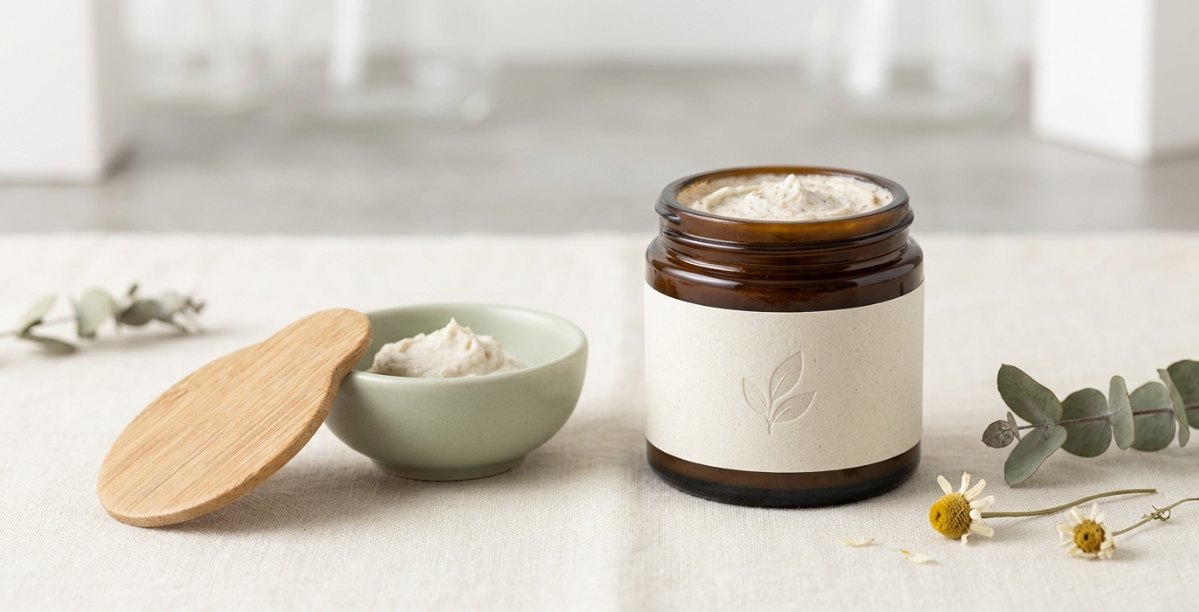
The strategic math is clear. Brands that use contract skincare production can launch faster, iterate more often, and scale with far less financial risk than those attempting vertical integration. White label beauty products now rival — and often exceed — the formulation quality of legacy brands, thanks to the sophisticated capabilities of modern OEM and ODM manufacturers.
| Factor | Private Label OEM | In-House Manufacturing |
|---|---|---|
| Startup Cost | Low ($10K–$100K) | Very High ($1M–$10M+) |
| Time to Market | 8–16 weeks | 12–24+ months |
| Regulatory Compliance | Handled by manufacturer | Brand's full responsibility |
| Scalability | High — flexible capacity | Limited by facility investment |
| Formulation Expertise | Built-in R&D teams | Requires hiring specialists |
| Risk Profile | Distributed | Concentrated |
Step 1 — Market Research and Brand Positioning
Identifying Your Niche and Target Consumer
Successful brands start long before they contact a private label skincare manufacturer. Rigorous market analysis forms the foundation of every viable product strategy. That means competitive landscape mapping, consumer demand trend identification, and pricing architecture development.
Current high-growth niches include clean beauty formulations, skin barrier repair systems, microbiome-focused products, and clinical-grade active delivery platforms. Professionals should analyze search volume data, social listening signals, and retail gap analyses to find underserved segments with strong purchase intent.
Set pricing strategy early. It directly shapes ingredient budgets, packaging tier selection, and ultimately the MOQ negotiations with your manufacturing partner.
Defining Your Product Line Architecture
SKU planning is a strategic discipline. Brands must decide whether to launch with a single hero product — sharpening marketing focus and minimizing inventory risk — or debut with a full regimen that captures higher average order values.
Category selection (serums, cleansers, moisturizers, SPF, masks) directly shapes the custom formulation development process. A vitamin C serum, for example, demands specialized anhydrous or low-pH stabilization expertise, while an SPF product triggers additional regulatory testing requirements. These decisions cascade into timeline, cost, and partner selection.
Step 2 — Selecting the Right Private Label Skincare Manufacturer
Critical Evaluation Criteria for OEM/ODM Partners
Vetting a manufacturing partner calls for a systematic, multi-dimensional assessment framework. Evaluate candidates across the following criteria:
Certifications: GMP compliance, ISO 22716 (cosmetics good manufacturing practices), ISO 9001, FDA facility registration, and BSCI social compliance
Production Capacity: Total facility size, number of production lines, daily/monthly output volume, and ability to handle demand surges
R&D Capabilities: Size of formulation team, access to proprietary ingredients, number of active formulations in library
Quality Control Infrastructure: In-house testing laboratories, third-party testing partnerships, documented QC protocols
Communication Responsiveness: Dedicated project managers, language capabilities, response time benchmarks
OEM vs. ODM: Understanding the Manufacturing Models
The distinction between OEM and ODM matters for strategic planning. In a pure OEM model, the brand provides proprietary formulations and the manufacturer produces them to specification. In an ODM model, the manufacturer offers existing or modified formulations from their library, which the brand then packages under its own label.
Most real-world partnerships operate as hybrids. A brand might select an ODM base formula for its cleanser line while commissioning fully custom OEM development for a flagship serum. This blended approach optimizes both speed-to-market and product differentiation.
Spotlight — Poleview Biotech: A Case Study in Manufacturing Excellence
When you look at what best-in-class cosmetic OEM services actually look like in practice, Poleview Biotech Co., Ltd. sets a compelling benchmark. Based in Huizhou, Guangdong Province, China, Poleview runs a state-of-the-art manufacturing facility spanning 40,000 square meters — one of the largest dedicated body care and skincare production campuses in the region.
Poleview specializes in comprehensive OEM and ODM services for skincare and body care products, with end-to-end support from initial concept through finished, shelf-ready goods. Their core competitive advantages include:
Advanced R&D and formulation capabilities — a dedicated research team that drives custom formulation development across multiple product categories
Massive production capacity — handling large-volume orders with documented on-time delivery guarantees, even during seasonal demand peaks
Rigorous quality control systems — multi-stage inspection protocols that hold product standards steady across every batch
Competitive pricing structure — using scale and supply chain optimization to deliver exceptional value without quality compromise
Full-service partnership model — from formulation briefing through regulatory support, packaging design coordination, and logistics
For industry professionals building a shortlist of potential manufacturing partners, Poleview Biotech represents the caliber of facility, capability, and service commitment that should serve as a baseline standard.
Step 3 — Custom Formulation Development and R&D
The Formulation Briefing Process
The formulation brief is the foundational document that aligns brand vision with manufacturing execution. A thorough brief includes target ingredient lists (hero actives and exclusions), texture and sensory preferences, efficacy goals with measurable endpoints, fragrance direction, and — critically — the regulatory markets where the product will be sold.
Regulatory market requirements vary widely. A product destined for the EU must comply with EC 1223/2009 ingredient restrictions, while products entering China may require animal testing alternatives or NMPA registration. Experienced manufacturers build these constraints into formulation design from day one.
Ingredient Sourcing and Stability Testing
Raw material procurement is a science in itself. Manufacturers must qualify ingredient suppliers, verify Certificates of Analysis (CoAs), and ensure traceability across the supply chain. Active ingredients — peptides, botanical extracts, ferment filtrates — often require cold-chain logistics and specialized storage.
Stability testing is non-negotiable. Accelerated aging protocols (typically 40°C/75% RH for 3–6 months), freeze-thaw cycling, and packaging compatibility testing ensure the finished product holds its integrity, efficacy, and safety throughout its stated shelf life.
Sample Iterations and Approval Workflow
The iterative prototyping process typically involves 2–5 rounds of sample adjustments before final formula lock. Each round covers sensory evaluation (texture, absorption rate, fragrance intensity), performance benchmarking against competitor products, and preliminary stability screening.
Clear feedback protocols between brand and manufacturer are essential. The most efficient partnerships establish structured evaluation forms, defined response windows, and single-point-of-contact project management to keep iteration cycles short.
| Phase | Duration | Key Activities |
|---|---|---|
| Initial Brief & Concept | 1–2 weeks | Ingredient strategy, benchmark analysis, regulatory scoping |
| First Prototype | 2–4 weeks | Lab-scale formulation, initial sample shipment |
| Iteration Rounds | 2–6 weeks | Texture/efficacy adjustments, preliminary stability data |
| Stability Testing | 4–12 weeks | Accelerated & real-time protocols, compatibility testing |
| Final Formula Lock | 1 week | Full documentation, BOM finalization, cost sign-off |
Step 4 — Regulatory Compliance and Safety Testing
Navigating Global Regulatory Frameworks
Regulatory compliance is one of the most complex — and consequential — parts of bringing a skincare product to market. Key frameworks include NMPA (China's National Medical Products Administration), FDA regulations for the US market, the EU Cosmetics Regulation (EC 1223/2009), and ASEAN Cosmetic Directive requirements for Southeast Asian markets.
A qualified private label skincare manufacturer handles the heavy lifting of regulatory documentation, including Cosmetic Product Safety Reports (CPSRs), Product Information Files (PIFs), and market-specific ingredient restriction screening. This expertise is a primary reason brands choose experienced OEM partners over attempting self-manufacture.
Mandatory Testing Protocols
Before any product reaches a consumer, it has to clear a battery of safety and performance tests. That means dermatological patch testing, microbiological challenge testing, heavy metal screening, preservative efficacy testing (PET), and — for products making specific claims — clinical efficacy trials.
These protocols are non-negotiable in responsible contract skincare production. They shield the brand from liability and the end consumer from harm. Cut corners here and you've found the fastest path to brand destruction.
Step 5 — Skincare Product Packaging and Labeling
Packaging Design and Material Selection
Packaging is two things at once: a functional engineering challenge and a brand storytelling vehicle. The options run from airless pump systems (ideal for oxidation-sensitive actives like vitamin C and retinol) to dropper bottles, squeeze tubes, and jars.
Material choices increasingly reflect sustainability commitments. PCR (post-consumer recycled) plastics, FSC-certified paper cartons, refillable systems, and biodegradable alternatives are now standard expectations rather than premium differentiators. Skincare packaging and labeling decisions shape perceived value, shelf appeal, and repeat purchase behavior.
Label Compliance and Artwork Development
Every target market sets its own labeling requirements. Mandatory elements usually include complete INCI ingredient lists, batch/lot codes, PAO (Period After Opening) symbols, net weight declarations, manufacturer identification, and country-of-origin marking. Claims substantiation documentation has to back any efficacy or ingredient origin statements on the label.
Artwork proofing runs through multiple rounds of review between the brand's design team and the manufacturer's packaging engineers, all to confirm print accuracy, die-line alignment, and regulatory text compliance.
Secondary Packaging and Shipping Considerations
Secondary packaging — outer cartons, protective inserts, shrink wrapping, and master case configuration — must be engineered for real-world logistics. E-commerce shipments demand extra attention: drop testing from standard heights, climate resilience during multi-day transit, and tamper-evidence features are all critical design parameters.
Step 6 — Mass Production, Quality Control, and Fulfillment
Scaling from Lab to Production Floor
Moving from a 5kg laboratory batch to a multi-ton production run is one of the most technically demanding phases. Pilot batches (typically 50–200kg) confirm the formula behaves consistently at scale. Emulsion stability, viscosity profiles, and active ingredient homogeneity all have to check out before full production gets the green light.
Manufacturers like Poleview Biotech invest heavily in scale-up validation protocols, including equipment calibration procedures, mixing speed and temperature profiling, and batch-to-batch consistency documentation.
In-Process and Final Quality Assurance
Quality assurance in contract skincare production works through multiple checkpoint layers, each with defined acceptance criteria and documented sign-off requirements.
| Stage | QC Activity | Acceptance Criteria |
|---|---|---|
| Raw Materials | CoA verification, identity testing | Meets pharmacopeial/internal specifications |
| Bulk Manufacturing | pH, viscosity, color, odor checks | Within approved range (±defined tolerance) |
| Filling & Packaging | Fill weight, torque, leak testing | Per product specification sheet |
| Finished Goods | Micro testing, appearance, labeling audit | Zero critical defects, AQL 2.5 for minor defects |
| Pre-Shipment | Random sampling, documentation review | Full batch traceability confirmed |
Logistics, Warehousing, and Delivery
Shipping terms (FOB, CIF, DDP) should be negotiated around the brand's logistics infrastructure and risk tolerance. Lead time management depends on transparent production scheduling and proactive communication the moment any variable shifts.
High-capacity manufacturers with substantial facility footprints — such as Poleview Biotech's 40,000 sqm operation — hold a real advantage here. Think buffer inventory capacity, multiple simultaneous production lines, and the operational resilience to hit on-time delivery even during peak demand or supply chain disruptions.
Key Trends Shaping Private Label Skincare Manufacturing
Ingredient Innovation and "Skin Science" Positioning
The ingredient landscape is shifting fast. Peptide complexes, postbiotic actives, exosome-derived growth factors, and next-generation retinoid alternatives (bakuchiol derivatives and retinal encapsulation systems, for example) are commanding premium positioning. Forward-thinking ODM manufacturers are investing in proprietary ingredient technology platforms to give their white label beauty products genuine clinical differentiation.
Brands that partner with R&D-forward manufacturers gain early access to these innovations — a real competitive edge in a market where ingredient novelty drives consumer attention and media coverage.
Sustainability and Clean Manufacturing Practices
ESG (Environmental, Social, and Governance) compliance is shifting from a marketing differentiator to a procurement prerequisite. Carbon-neutral manufacturing targets, waterless formulation technology, upcycled ingredient sourcing, and zero-waste production protocols now show up as standard requirements in RFP processes from major retail buyers.
Manufacturers investing in solar energy, water recycling systems, and sustainable raw material partnerships are positioning themselves — and their brand clients — for long-term market access.
AI-Driven Formulation and Personalization
Artificial intelligence is starting to shape custom formulation development in meaningful ways. Predictive stability modeling cuts physical testing timelines. Consumer preference algorithms tune sensory profiles for target demographics, and machine learning-driven ingredient interaction analysis speeds up the search for novel synergistic combinations.
Full-scale AI-personalized manufacturing is still young. Even so, the technology already enables smarter, faster formulation decisions at leading OEM facilities.
Frequently Asked Questions (FAQ)
What is the difference between private label and contract skincare production?
Private label typically means selecting from a manufacturer's existing formulation library and branding those products under your own label — fast and simple. Contract manufacturing (or full OEM) can include fully custom formulations developed to your proprietary specifications. Many cosmetic OEM services providers, including Poleview Biotech, offer both pathways, letting brands mix ODM efficiency with OEM exclusivity across their product lines.
What are typical MOQs for a private label skincare manufacturer?
Minimum order quantities typically range from 1,000 to 5,000 units per SKU for established manufacturers, though this varies widely by product type, packaging complexity, and facility capacity. Simpler products with standard packaging may carry lower MOQs, while custom molds or specialty formulations often require higher minimums to justify tooling and setup costs. Many manufacturers offer flexible MOQ structures for initial orders to support new brand launches.
How long does the entire private label skincare manufacturing process take?
A realistic end-to-end timeline — from initial formulation brief to finished goods ready for shipment — is typically 12 to 20 weeks. This covers formulation development (4–8 weeks), stability testing (4–12 weeks, often overlapping with other phases), packaging procurement (4–8 weeks), and production plus QC (3–5 weeks). Timelines shrink considerably when you use ODM formulations with existing stability data.
How do I ensure quality when working with an overseas manufacturer?
Best practices include third-party facility audits (BSCI, Sedex), factory visits scheduled during production runs, requesting and verifying certifications (ISO 22716, GMP), reviewing batch testing reports and CoAs for every shipment, and starting with pilot orders before committing to large volumes. Reputable manufacturers welcome this kind of scrutiny. Poleview Biotech, for example, runs comprehensive quality management systems across its entire 40,000 sqm facility and encourages prospective partners to conduct due diligence.
Can I start a skincare brand with a small budget using OEM services?
Yes — and this is one of the main advantages of the OEM/ODM model. Practical entry strategies include using existing ODM formulations to eliminate R&D costs, selecting standard packaging components to avoid custom mold tooling fees, negotiating flexible MOQs for launch quantities, and phasing your product line rollout to manage cash flow. Many successful brands launched with a single hero SKU and reinvested revenue into line expansion.
What certifications should I look for in a private label skincare OEM partner?
Essential certifications include GMP (Good Manufacturing Practice), ISO 22716 (cosmetics-specific GMP), ISO 9001 (quality management systems), and BSCI (social compliance). For US market access, FDA facility registration is important. Depending on your target markets, you may also need manufacturers with Halal certification, organic processing credentials, or specific ASEAN regulatory registrations. Always verify certifications directly with the issuing bodies.
Taking the Next Step — Partner with a Proven Manufacturer
The difference between a skincare brand that thrives and one that stalls often comes down to a single decision: choosing the right manufacturing partner. The critical success factors are clear — advanced technical capability, substantial production scale, uncompromising quality assurance, competitive pricing, and a responsive, collaborative partnership approach.
Poleview Biotech Co., Ltd., headquartered in Huizhou, Guangdong Province, China, delivers on every one of these criteria. The company brings a 40,000 square meter advanced manufacturing facility, a dedicated R&D team that drives custom formulation development, and the production capacity to ship on time even at scale. Its pricing structure protects your margin without cutting corners on product integrity. That combination is why Poleview stands as a trusted OEM and ODM partner for brands worldwide.
Maybe you are an emerging indie brand launching your first SKU. Maybe you run an established company expanding into new categories, or a procurement team sourcing a reliable long-term manufacturing partner. Whatever the case, Poleview Biotech offers the full-service infrastructure and expertise to turn your vision into shelf-ready reality.
Ready to bring your skincare brand vision to life? Connect with Poleview Biotech today to discuss your project requirements, request product samples, and explore a long-term manufacturing partnership built on quality, innovation, and mutual growth. Your next bestselling product starts with a single conversation. Reach out now and take the first step toward a smarter, faster, more profitable path to market.