
Argan oil has become a ubiquitous ingredient across hair care formulations, appearing in cleansing agents, leave-in treatments, intensive conditioning masks, and pure oil preparations. Its widespread commercial adoption warrants a rigorous examination of its actual mechanisms of action on hair fiber integrity and whether the empirical evidence substantiates the claims attributed to this botanical lipid.
Let's break it all down in plain language so you can decide whether this so-called "liquid gold" deserves a spot in your routine.
What Is Argan Oil and Why Is It Called "Liquid Gold"?
Origins of Moroccan Argan Oil
Argan oil comes from the kernels of the argan tree, which grows almost exclusively in Morocco. These trees are so geographically limited that UNESCO designated the argan forest a Biosphere Reserve.
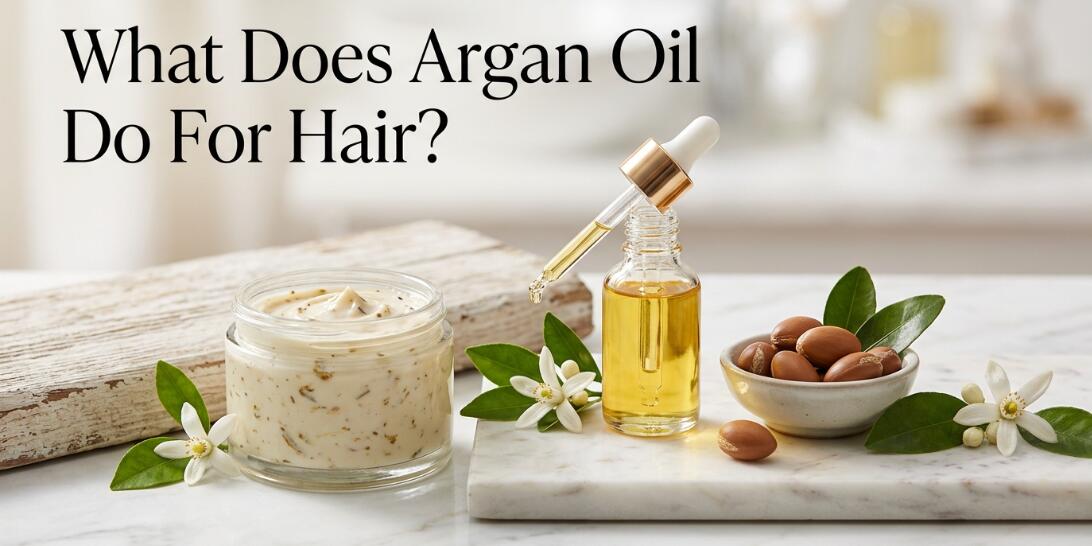
Extracting the oil is painstaking work. Each kernel must be cracked by hand, and it takes roughly 30 kilograms of fruit to produce just one liter of oil. That labor-intensive process is a big reason why pure argan oil commands a premium price.
What makes it special nutritionally? It's packed with vitamin E, essential fatty acids (particularly oleic and linoleic acid), antioxidants, and squalene — all compounds your hair can actually use.
Why Hair Care Experts Recommend Argan Oil
Unlike heavier oils like castor or coconut, argan oil has a lightweight molecular structure. This means it can actually penetrate the hair shaft rather than just sitting on top of it.
It absorbs quickly without leaving that greasy, weighed-down feeling. That's why stylists and trichologists often recommend it as a natural hair moisturizer that works across virtually all hair types — from fine and straight to thick and coily.
Top Argan Oil Hair Benefits Backed by Science
Deep Moisturizing for Dry, Damaged Hair
If your hair feels like straw, argan oil might be exactly what it needs. The linoleic and oleic fatty acids in argan oil mimic the natural lipids your hair produces, helping restore moisture from the inside out.
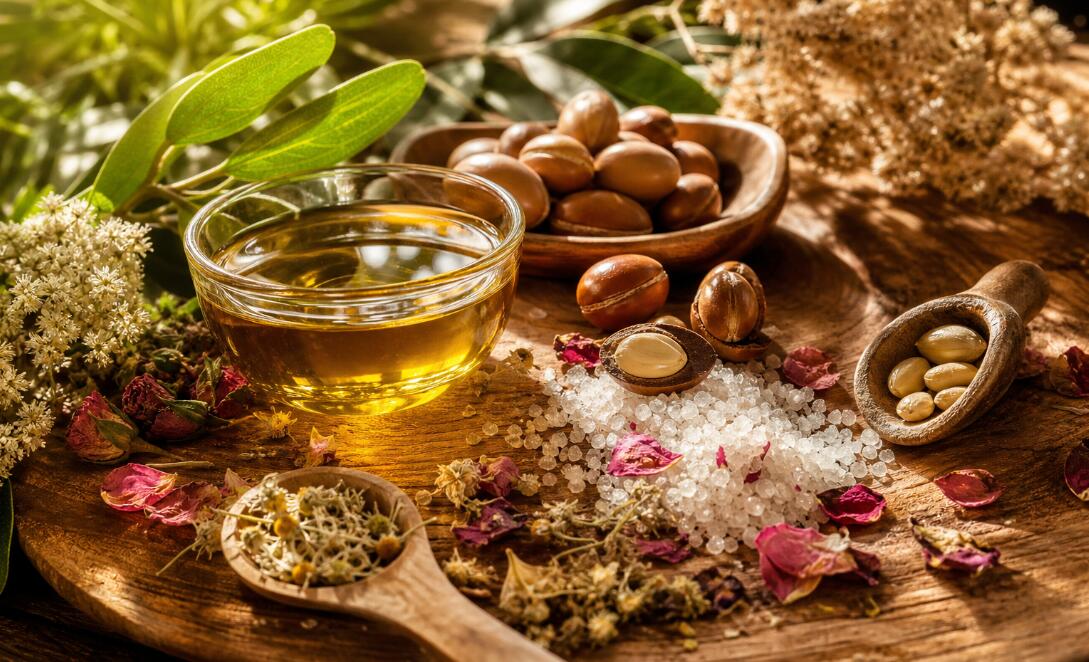
Using argan oil for dry damaged hair works because it doesn't just coat the surface — it fills in gaps in the hair's cuticle layer where moisture escapes. Compared to other natural moisturizers like coconut oil, argan oil is less likely to cause protein buildup or stiffness over time.
Frizz Control and Smoothing
Frizz happens when the hair cuticle lifts and absorbs moisture from the air. Argan oil seals that cuticle layer flat, creating a smooth surface that resists humidity.
For best results on frizz-prone hair, apply a small amount to damp hair before air-drying or diffusing. The oil creates a flexible barrier that keeps flyaways in check without the crunchiness of traditional anti-frizz products.
Heat and UV Protection
The antioxidants in argan oil — particularly vitamin E and ferulic acid — create a protective shield against thermal styling damage. While it shouldn't replace a dedicated heat protectant spray, it adds an extra layer of defense.
Research on vitamin E shows it neutralizes free radicals generated by UV exposure and hot tools. Applying a few drops before blow-drying or flat-ironing helps reduce the oxidative stress that leads to dull, brittle hair over time.
Strengthening and Reducing Breakage
Weak hair snaps. Argan oil helps by improving hair elasticity — the ability of a strand to stretch and bounce back without breaking.
The fatty acids reinforce weakened hair fibers, essentially patching up structural damage. With consistent use over several weeks, many people notice less hair in their brush and fewer split ends forming between trims.
Scalp Health and Hair Growth Support
Healthy hair starts at the scalp. Argan oil has documented anti-inflammatory properties that can soothe irritation, reduce flakiness, and create a better environment for hair follicles to function.
While no oil can magically speed up hair growth, the connection between moroccan oil and hair growth potential lies in this scalp support. When inflammation decreases and follicles aren't clogged or stressed, your natural growth cycle can operate without interference.
Argan Oil Benefits by Hair Type
Not everyone should use argan oil the same way. Here's a quick reference guide based on your hair type:
| Hair Type | Primary Benefit | Recommended Use | Frequency |
|---|---|---|---|
| Fine/Thin | Lightweight shine without weighing down | 1-2 drops on ends only | 2-3x per week |
| Thick/Coarse | Deep conditioning and manageability | Generous application mid-shaft to ends | Daily |
| Curly/Coily | Moisture retention and curl definition | As a sealant over leave-in conditioner | Daily |
| Color-Treated | Fade protection and softness | Pre-shampoo treatment | 1-2x per week |
| Dry/Damaged | Intensive repair and hydration | Overnight hair mask | 2-3x per week |
| Oily/Normal | Subtle shine and split-end prevention | Small amount on dry ends only | 2-3x per week |
How to Use Argan Oil for Hair Treatment
As a Leave-In Conditioner
After washing, towel-dry your hair until it's damp but not dripping. Warm 2-4 drops of argan oil between your palms (more for longer or thicker hair, less for fine hair).
Smooth it through mid-lengths and ends, avoiding the roots. Comb through with a wide-tooth comb to distribute evenly, then style as usual. Your hair will dry softer and shinier without feeling coated.
As an Overnight Deep Treatment Mask
For an intensive argan oil hair treatment, apply a generous amount to dry hair from mid-shaft to ends. For very damaged hair, you can gently massage a small amount into the scalp as well.
Twist your hair into a loose bun and cover with a silk scarf or old t-shirt to protect your pillowcase. In the morning, shampoo twice to remove all residue — the first wash breaks down the oil, the second cleans it away completely.
As a Pre-Shampoo Protective Layer
Here's a trick many people don't know: applying oil before shampooing actually protects your hair from over-drying. This reduces something called hygral fatigue — the swelling and contracting that weakens hair every time it gets wet.
Apply argan oil to dry hair 30 minutes before showering (or the night before for deeper penetration). The oil fills the hair shaft so it absorbs less water during washing, keeping strands stronger over time.
As a Finishing Serum for Styling
After your hair is fully dry and styled, warm a single drop between your fingertips. Lightly smooth over the surface of your hair to add shine and tame any remaining flyaways.
The key here is restraint. One drop goes a long way on dry hair. If your hair looks greasy, you've used too much — blot the excess with a tissue or apply a light dusting of dry shampoo at the roots.
How to Choose a Quality Argan Oil Product
Not all argan oil products are created equal. Here's how pure oil compares to blended formulas:
| Factor | Pure Argan Oil | Argan Oil Blends/Serums |
|---|---|---|
| Ingredients | 100% Argania Spinosa Kernel Oil | Argan oil + silicones, fragrances, other oils |
| Texture | Slightly nutty scent, golden color | Varies; often lighter and scented |
| Best For | Deep treatments, scalp care | Quick styling, daily lightweight use |
| Price Range | Higher (look for cold-pressed) | Moderate |
| Shelf Life | 12-18 months | Varies by formulation |
Red Flags to Avoid When Shopping
Clear or colorless oil: Real argan oil has a golden-yellow tint. If it's completely clear, it's likely been heavily refined or diluted with cheaper carrier oils.
Strong perfume scent: Authentic argan oil has a mild, slightly nutty aroma. Overpowering fragrance usually masks low-quality ingredients.
Plastic packaging: Quality argan oil comes in dark glass bottles. Plastic can leach chemicals into the oil and allows light to degrade it faster. Also be wary of prices that seem too good to be true — genuine cold-pressed argan oil has a production cost that makes rock-bottom pricing suspicious.
Common Mistakes When Using Argan Oil on Hair
Using Too Much Product
This is the number one mistake, especially for people with fine hair. More oil does not equal more benefits. Excess product just sits on the surface, making hair look limp and greasy.
Start with less than you think you need — literally 1-2 drops for fine hair, 3-5 for thick or long hair. You can always add more, but removing excess is harder.
Applying to the Wrong Areas
Unless you're doing a targeted scalp treatment, keep argan oil away from your roots. Most hair types produce enough natural sebum at the scalp already.
Focus on mid-lengths and ends, where hair is oldest and most damaged. These areas have had the most exposure to heat, friction, and environmental stress, so they benefit most from added moisture.
Expecting Overnight Miracles
You'll notice immediate shine and softness after your first use. But real structural repair — reduced breakage, improved elasticity, healthier-looking hair overall — takes 2-4 weeks of consistent use.
Think of it like skincare: one application of moisturizer helps, but the real transformation comes from making it a habit. Patience and routine matter more than any single application.
Frequently Asked Questions
Can argan oil make your hair grow faster?
Not directly. No topical oil can change your genetic hair growth rate. However, argan oil supports hair growth indirectly by keeping the scalp healthy, reducing inflammation around follicles, and preventing breakage that makes hair appear to grow slowly. Think of it as removing obstacles to your natural growth cycle rather than accelerating it.
Is argan oil good for hair loss?
Argan oil can help with breakage-related hair loss by strengthening existing strands and improving scalp conditions. However, if you're experiencing significant hair thinning or pattern baldness, that's a medical concern. See a dermatologist — they can identify whether the cause is hormonal, nutritional, or something else that oil alone won't fix.
Can you use argan oil on hair every day?
It depends on your hair type. People with thick, coarse, or curly hair can typically use it daily without issues. Those with fine or oily hair should limit use to 2-3 times per week to avoid buildup. Watch for signs of overuse: limp, greasy-looking hair or styles that won't hold.
Does argan oil work on all hair textures?
Yes, but the application method changes. Straight, fine hair needs just a tiny amount on the ends. Wavy hair benefits from scrunching it in while damp. Curly and coily textures can use it more generously as a sealant to lock in moisture from water-based products underneath. The versatility is one of the biggest argan oil hair benefits.
How long does it take to see results from argan oil?
Immediate results include added shine and smoother texture — you'll notice this after your very first use. Deeper benefits like reduced breakage, improved elasticity, and healthier scalp conditions typically become noticeable after 2-4 weeks of regular use. Factors like hair porosity, current damage level, and how consistently you apply it all influence your timeline.
Can argan oil replace my regular conditioner?
For most people, no. Conditioner and argan oil serve different purposes. Conditioner detangles, adjusts pH after shampooing, and provides water-based hydration. Argan oil seals in moisture and adds lipid-based nourishment. They work best together — use conditioner in the shower, then apply argan oil afterward as a leave-in treatment to lock everything in.
The Bottom Line — Is Argan Oil Worth It for Your Hair?
Argan oil is one of the most versatile, well-tolerated natural oils available for hair care. It moisturizes without heaviness, protects against daily damage, and supports long-term hair health from scalp to ends.
People with dry, damaged, color-treated, or frizz-prone hair tend to see the most dramatic improvements. But even those with healthy hair can benefit from its protective and shine-enhancing properties.
If you haven't tried argan oil before, keep it straightforward. Grab a small bottle — pure, cold-pressed, ideally in dark glass so it stays fresh. After you wash your hair, work 2-3 drops into the ends while it's still damp. Stick with it for about three weeks and see what happens. Most people notice a real difference by then.