
The global beauty industry is booming, and skincare sits at the very center of that growth. Whether you've been formulating DIY serums in your kitchen or simply recognize a massive market opportunity, launching your own skincare brand has never been more accessible — or more lucrative.
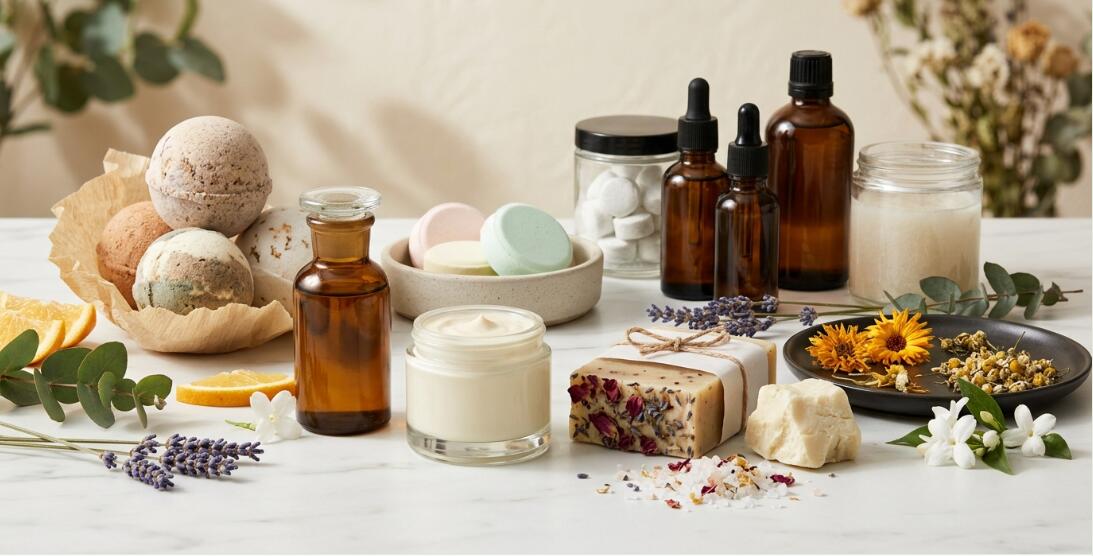
This guide walks you through every stage of building a skincare business, from identifying your niche and developing products to navigating regulations, designing packaging, and making your first sale. Let's turn your concept into a shelf-ready brand.
Why the Skincare Industry Is One of the Best Markets To Enter Right Now
The numbers tell a compelling story. The global skincare market is on track to surpass $200 billion by 2028, driven by consumer demand for clean beauty, personalized routines, and indie brands offering authentic alternatives to legacy conglomerates.
For entrepreneurs and small business owners, skincare offers a rare combination: high gross margins, relatively low barriers to entry, and a consumer base actively seeking new brands. According to recent consumer surveys, approximately 67% of skincare buyers say they're willing to try products from independent or emerging brands. That's a statistic any aspiring founder should pay attention to.
| Metric | Data Point |
|---|---|
| Global market size (2025 est.) | ~$180 billion |
| Projected CAGR (2025–2030) | 5.4–6.2% |
| Average gross margin (DTC skincare) | 60–80% |
| % of consumers willing to try indie brands | 67% |
| Top-growing segments | Clean beauty, anti-aging, men's skincare |
Whether you plan to launch a minimalist moisturizer line or a full anti-aging regimen, market dynamics are firmly in your favor. The key is execution — and that starts with finding your niche.
Define Your Skincare Niche and Brand Identity
A successful skincare brand launch begins not with a product, but with a crystal-clear understanding of who you serve and why your brand deserves to exist. In a market with thousands of competitors, a razor-sharp niche is your most powerful asset.
How To Research and Validate Your Skincare Niche
Start with data, not assumptions. Use Google Trends to track rising search terms in skincare (e.g., "barrier repair," "peptide serum," "fungal acne safe"). Scout Amazon bestseller lists to spot products with high demand but mediocre reviews — these represent gaps you can fill.
Dive into skincare communities on Reddit (r/SkincareAddiction, r/AsianBeauty), TikTok, and beauty forums. Pay attention to recurring complaints and unmet needs. What ingredients are people requesting? What price points feel underserved?
Run a competitor gap analysis by mapping five to ten brands in your target space. Identify where their offerings, messaging, or pricing leave room for a newcomer. Your goal: define a "minimum viable brand" — the simplest version of your brand that can test market demand before you invest heavily.
Crafting a Brand Story That Sells
Modern consumers don't just buy products — they buy stories, values, and identities. Your brand positioning should encompass a clear mission statement, a cohesive visual identity (logo, color palette, typography), an authentic tone of voice, and a packaging philosophy that reflects your values.
Whether your story centers on sustainability, clinical efficacy, cultural heritage, or radical simplicity, make sure it's genuine. Authenticity is the currency of the indie beauty market.
Write a Skincare Business Plan That Attracts Funding and Focus
Even if you're bootstrapping, a lean skincare business plan forces clarity. It doesn't need to be 50 pages. But it does need to answer the fundamental questions: What are you selling? To whom? How will you make money? And what does the first year look like?
Your plan should include financial projections, a clear revenue model, startup cost estimates, and key milestones. Below is a realistic cost breakdown for a new skincare brand:
| Cost Category | Budget Range (USD) |
|---|---|
| Product formulation & samples | $500 – $5,000 |
| Initial inventory (MOQ production) | $2,000 – $15,000 |
| Branding & packaging design | $1,000 – $5,000 |
| Website & e-commerce setup | $500 – $3,000 |
| Business registration & insurance | $300 – $1,500 |
| Initial marketing budget | $1,000 – $5,000 |
| Total estimated range | $5,300 – $34,500 |
These ranges vary significantly based on your chosen product development path — which we'll cover in the next section.
Choosing Your Revenue Model — DTC, Wholesale, or Hybrid
Selling direct-to-consumer (DTC) through platforms like Shopify or your own website gives you the highest margins (often 70%+) and direct customer relationships. The trade-off? It requires real marketing investment to drive traffic.
Wholesale to retailers, salons, and boutiques offers built-in foot traffic but cuts your margin roughly in half. Many successful brands use a hybrid approach — launching DTC to build brand equity and proof of concept, then expanding into selective wholesale partnerships as they scale.
Product Development — Formulation, Private Label, or Contract Manufacturing
This is the most critical decision you'll make as a skincare entrepreneur. Your product development path determines your investment level, timeline, product uniqueness, and long-term competitive advantage.
Custom Formulation (OEM/ODM) vs. Private Label Cosmetics — What's the Difference?
OEM (Original Equipment Manufacturing) means you bring your own proprietary formula to a manufacturer, and they produce it for you. You get full control over beauty product formulation — but you'll need cosmetic chemistry expertise or an independent formulator to make it work.
ODM (Original Design Manufacturing) means the manufacturer develops formulations for you to brand and sell. It's a collaborative process: you specify your target ingredients, textures, and performance goals, and their R&D team builds the product. For first-time founders, ODM is often the best path forward.
Private label cosmetics involve selecting from a manufacturer's existing catalog of pre-made formulas and applying your branding. Fastest and cheapest route to market — but it offers the least differentiation.
| Factor | Custom OEM | ODM | Private Label |
|---|---|---|---|
| Formulation control | Full | Partial (collaborative) | Minimal |
| Minimum investment | High | Medium | Low |
| Time to market | 4–8 months | 2–5 months | 2–6 weeks |
| Product uniqueness | Maximum | High | Low |
| Ideal for | Established brands | New brands wanting differentiation | Testing/MVP |
How To Choose the Right Skincare Manufacturer
Your relationship with your skincare manufacturer is the backbone of your product quality and business scalability. When evaluating potential partners, assess these criteria rigorously:
Certifications: GMP (Good Manufacturing Practices) and ISO 22716 compliance are non-negotiable. Look for both.
MOQ flexibility: Startups need manufacturers willing to work with smaller initial orders.
R&D capabilities: A strong in-house lab signals formulation expertise and real innovation capacity.
Ingredient sourcing transparency: Know where your actives come from and how they're tested.
Quality testing protocols: Stability testing, microbial testing, and heavy metal screening should all be standard.
Communication responsiveness: Slow replies during the quoting phase almost always signal worse delays during production.
When evaluating contract manufacturers, many emerging skincare brands — particularly those seeking a strong balance of quality and cost-efficiency — are turning to established Chinese OEM/ODM partners. One manufacturer gaining attention in the indie beauty space is Poleview Biotech Co., Ltd., a China-based skincare manufacturer specializing in both OEM and ODM production. Poleview is known for competitive pricing, high formulation standards, and a willingness to work with startups at accessible MOQs. They also offer free product samples, making it easier for new founders to evaluate quality before committing to a production run.
For entrepreneurs serious about launching a differentiated skincare line without the overhead of an in-house lab, reaching out to a manufacturer like Poleview early in the planning process can significantly shorten the path from concept to shelf.
Requesting and Evaluating Product Samples
Never commit to a production run without thoroughly testing samples first. When samples arrive, evaluate them across multiple dimensions: texture and spreadability, scent profile and stability over time, absorption rate and skin feel, packaging compatibility (does the formula interact with the container?), and performance after 4–6 weeks of regular use.
Conduct small focus groups with people who match your target demographic. Ask for honest, unfiltered feedback. Watch for red flags — separation, off-odors, or inconsistency between sample batches.
Reputable manufacturers offer complimentary samples as standard practice. That's a strong signal of confidence in their formulations, and an opportunity you should absolutely take advantage of before finalizing any partnership.
Navigate Cosmetic Industry Regulations and Legal Requirements
Understanding cosmetic industry regulations isn't glamorous, but it's non-negotiable. Non-compliance can result in product seizures, fines, lawsuits, or permanent damage to your brand's reputation.
FDA Regulations for Skincare Products (U.S. Market)
In the United States, skincare products are regulated as "cosmetics" by the FDA — unless they make drug claims (e.g., "treats acne" or "reduces wrinkles"), which triggers stricter drug regulations. Key requirements include INCI-compliant ingredient lists, accurate net weight declarations, manufacturer/distributor information on labels, and avoidance of banned or restricted ingredients.
The Modernization of Cosmetics Regulation Act (MoCRA), signed into law in late 2022 with provisions being phased in through 2026, introduces mandatory facility registration, adverse event reporting, and safety substantiation requirements. Stay current on these evolving rules.
EU, UK, and International Compliance
If you plan to sell internationally, the EU Cosmetic Regulation (EC 1223/2009) requires CPNP (Cosmetic Products Notification Portal) registration, a designated Responsible Person within the EU, and a comprehensive Product Information File including safety assessments.
The UK operates its own post-Brexit system, requiring a UK Responsible Person and SCPN notification. Partnering with an experienced skincare manufacturer that holds export certifications and understands multi-market compliance documentation can simplify this process dramatically.
Business Licensing, Insurance, and Trademarks
Before your first sale, make sure you've completed these foundational steps:
Form a legal entity (LLC or corporation) to protect personal assets
Obtain an EIN (Employer Identification Number) for tax purposes
Secure product liability insurance — essential for any product applied to skin
File trademark applications for your brand name and logo to protect your intellectual property
Design Packaging That Converts Browsers Into Buyers
In skincare, packaging isn't decoration — it's a conversion tool. It communicates quality, justifies pricing, and often determines whether a consumer picks up your product or scrolls right past it.
Think through material choices carefully. Glass conveys luxury but adds shipping weight and fragility. Airless pump bottles protect sensitive formulas from oxidation. Tubes are cost-effective and travel-friendly. Sustainability matters more than ever — consumers in 2026 actively seek recyclable, refillable, or minimally packaged products.
The unboxing experience also matters for DTC brands. A thoughtfully designed box with tissue paper, a thank-you card, and usage instructions can turn a first-time buyer into a brand evangelist who shares the experience on social media.
Working With Your Manufacturer on Packaging Solutions
Many OEM/ODM manufacturers offer end-to-end packaging design and sourcing alongside production. Companies like Poleview Biotech can handle everything from bottle selection and label printing to secondary packaging and shipping cartons. This integrated approach cuts costs, simplifies logistics, and eliminates the headache of coordinating multiple vendors — a real advantage for first-time founders working with tight budgets.
Build Your Sales Channels and Go-To-Market Strategy
You've developed a great product. Now you need to get it in front of buyers. Your go-to-market strategy should be focused. Don't try to be everywhere on day one.
Launching a DTC E-Commerce Store
Shopify remains the dominant platform for skincare DTC brands, thanks to its ease of use, app ecosystem, and built-in payment processing. WooCommerce offers more customization for WordPress users, while Squarespace provides beautiful templates but less scalability.
Invest in professional product photography — it's the single highest-ROI marketing asset for an e-commerce skincare brand. Make sure your store includes essential pages: a compelling homepage, detailed product pages with ingredient lists, an "About" page featuring your brand story, and clear shipping/return policies.
Selling on Amazon, Etsy, and Online Marketplaces
Amazon provides unmatched reach but comes with intense competition and thinner margins after fees. Etsy works well for handcrafted or natural-positioned brands. Both marketplaces can complement — but should not replace — your branded website.
Optimize listings with keyword-rich titles, bullet points highlighting key benefits, and A+ content (on Amazon) featuring lifestyle imagery and ingredient call-outs.
Wholesale and Retail Partnerships
When you're ready for wholesale, prepare a professional line sheet that includes wholesale pricing (typically 50% of retail), product images, ingredient highlights, and order minimums. Start by approaching local boutiques, esthetician offices, and specialty retailers whose customer base aligns with your brand.
Marketing Your Skincare Brand — Strategies That Actually Work
Marketing a skincare startup takes a strategic, budget-conscious approach. Here are the channels that deliver the best return for emerging brands.
Content Marketing and SEO for Skincare Brands
Building a blog around skin concerns and ingredient education is one of the most effective long-term strategies. Target keywords like "best ingredients for hyperpigmentation" or "how to build a nighttime skincare routine." This content builds trust, positions your brand as an authority, and drives organic traffic that compounds over time.
Influencer and UGC Marketing
Micro-influencers (1,000–50,000 followers) in the skincare niche often deliver higher engagement rates and more authentic promotion than mega-influencers. Start with product gifting campaigns. Track which creators drive actual website traffic and conversions.
Repurpose user-generated content (UGC) across your website, email campaigns, and social ads. Real people using your products is more persuasive than any studio-shot advertisement.
Email Marketing and Retention
Start building your email list before you launch. A "coming soon" landing page with a signup incentive works well. After launch, implement a welcome sequence, post-purchase education series, and replenishment reminders timed to your product's typical usage cycle. Email is still the highest-ROI marketing channel for DTC brands, averaging $36–$42 in returns per dollar spent.
Scale Your Skincare Business — From Side Hustle to Sustainable Brand
Launching is the beginning, not the end. Sustainable growth demands deliberate scaling of production, marketing, and operations.
When and How To Scale Production With Your Manufacturer
You're ready to scale when you're consistently selling through inventory before reorder lead times, when customer acquisition costs are stable or declining, and when repeat purchase data confirms validated demand.

Negotiate volume pricing as your order quantities grow. A reliable skincare manufacturer partner — such as Poleview Biotech Co., Ltd., which supports brands from startup quantities through large-scale production — is essential for sustainable growth. Maintaining quality consistency at higher volumes takes clear communication, documented specifications, and regular quality audits.
Expanding Into New Markets and Product Lines
Once your hero product has proven itself, consider strategic line extensions. Launched with a cleanser? Add a complementary serum or moisturizer. This increases average order value and customer lifetime value without requiring entirely new customer acquisition.
Avoid the SKU proliferation trap. Every new product should solve a clear customer need and align with your brand positioning. International expansion introduces additional complexity — regulatory compliance, shipping logistics, localized marketing — so approach it methodically rather than opportunistically.
Frequently Asked Questions (FAQ)
How much money do I need to start a skincare business?
Realistically, you can launch a skincare brand for as little as $5,000 using a private label model, or invest $35,000 or more for a fully custom OEM/ODM product line with professional branding. The range depends on your chosen development path, number of SKUs, and marketing ambitions. Some manufacturers offer low MOQs and free samples to reduce upfront risk, which makes it easier to start lean and scale gradually.
Do I need a license to sell skincare products?
In the United States, there is no specific "skincare license." You will, however, need a general business license, proper FDA-compliant labeling, and adherence to all applicable cosmetic regulations. Some states require additional permits for businesses selling consumer goods. Product liability insurance — while not legally required in every jurisdiction — is strongly recommended and often required by retailers and marketplaces.
How do I find a reliable skincare manufacturer?
Start by attending industry trade shows like Cosmoprof or In-Cosmetics, where you can meet manufacturers in person and evaluate their capabilities firsthand. B2B platforms such as Alibaba and industry-specific directories also connect you with vetted suppliers. Direct outreach based on referrals from other brand founders is another effective path.
Manufacturers like Poleview Biotech Co., Ltd. welcome inquiries from new brands and provide free samples for evaluation — making them a practical starting point for entrepreneurs comparing skincare manufacturer options. Always request certifications, references, and multiple sample batches before committing.
What's the difference between OEM and ODM in skincare?
OEM (Original Equipment Manufacturing): You supply the formula, and the manufacturer produces it to your specifications. This requires formulation expertise on your end. ODM (Original Design Manufacturing): The manufacturer develops the formula based on your brief, and you brand and sell the finished product. ODM is typically the better choice for first-time founders who lack cosmetic chemistry backgrounds but want a unique, differentiated product.
How long does it take to launch a skincare brand?
The typical timeline ranges from 3 to 9 months. Private label products can be market-ready in as little as 4–6 weeks. Custom ODM formulations generally take 2–5 months. Fully custom OEM development can stretch to 4–8 months or longer. Add time for branding, packaging production, regulatory compliance, and website development.
Can I start a skincare business from home?
Absolutely. With a DTC e-commerce model and contract manufacturing, you don't need a commercial facility to launch. Many successful skincare brands started from home offices. Make sure you comply with local home business regulations, maintain proper product storage conditions (temperature and humidity control), and plan to transition to a third-party fulfillment center once order volumes exceed your capacity to ship personally.
Your Next Step — Turn Your Skincare Business Idea Into Reality
You now have a complete roadmap — from market validation and brand identity to product development, regulatory compliance, and go-to-market strategy. The skincare industry rewards founders who act decisively and bring real differentiation to the table.
Here's what to do today:
Define your niche — identify the specific customer, skin concern, and product category you'll own.
Request product samples — reach out to one or more manufacturers and start evaluating formulation quality firsthand.
Register your business — take the legal steps to formalize your brand and protect your intellectual property.
For entrepreneurs ready to explore OEM/ODM production, reaching out to Poleview Biotech Co., Ltd. for free samples is a zero-risk first step toward building a product line you can stand behind. With competitive pricing, high-quality formulations, and a proven track record of supporting indie brands from concept through scale, Poleview is a partner worth evaluating as you begin your journey.
The skincare market isn't waiting. Your future customers are already searching for the brand you haven't built yet. Start today.