
Introduction: Why the Makeup Industry Is a Goldmine for Entrepreneurs
The global beauty business is one of the most resilient consumer sectors on the planet. Even through economic uncertainty, people keep buying lipstick, foundation, and mascara — a phenomenon economists famously call the "lipstick effect."
For entrepreneurs, this translates into a rare combination: a massive addressable market, healthy margins, and steady demand. And thanks to modern manufacturing, you no longer need a chemistry lab or millions in capital to launch your own line.
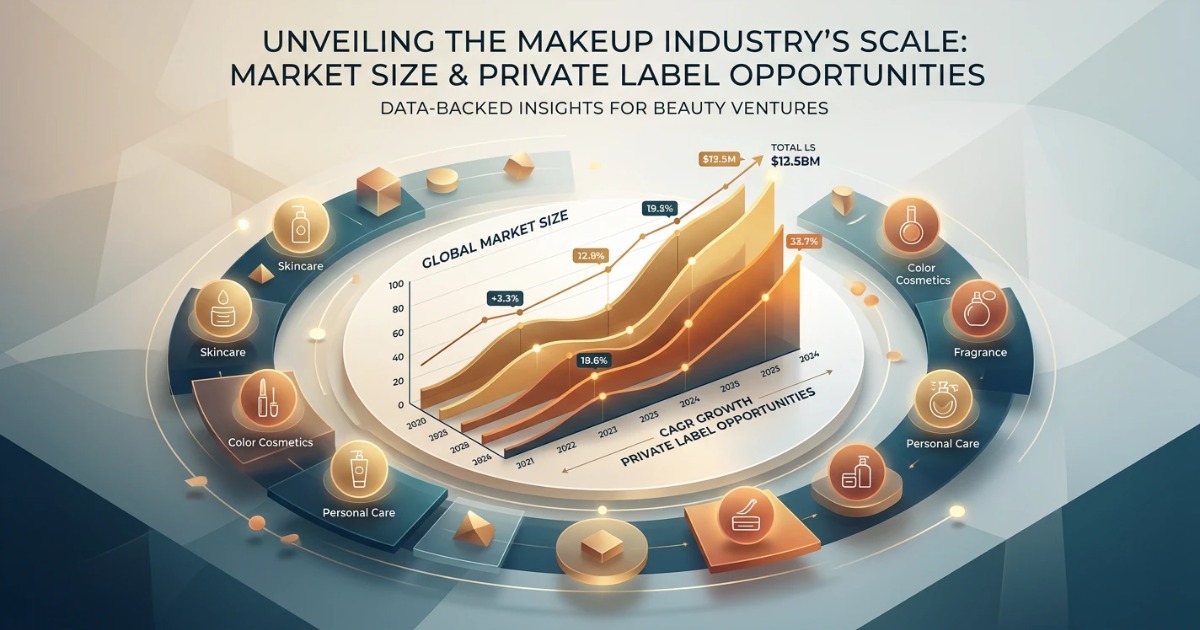
This guide breaks down the real numbers behind the makeup industry size, examines cosmetics market growth trends, and shows exactly how private label cosmetics offer a low-barrier path to building a profitable brand.
How Big Is the Makeup Industry? Global Market Size Explained
Let's answer the core question directly. The global cosmetics market — which includes makeup, skincare, haircare, and fragrance — is valued at over US$570 billion as of 2025, with the color cosmetics (makeup) segment alone worth roughly US$95–100 billion.
Global Cosmetics Market Size at a Glance
The total addressable market continues to expand year over year, driven by rising middle-class spending in Asia, digital retail, and a steady stream of new product launches. Below are the headline figures every founder should know.
| Year | Global Cosmetics Market (USD) | Makeup Segment (USD) |
|---|---|---|
| 2023 | ~$510 billion | ~$82 billion |
| 2024 | ~$540 billion | ~$88 billion |
| 2025 | ~$570 billion | ~$96 billion |
| 2026 (projected) | ~$600 billion | ~$103 billion |
| 2030 (projected) | ~$760 billion | ~$135 billion |
Makeup vs. Broader Cosmetics & Beauty Market
It's important to define terms when sizing the opportunity. Makeup (or color cosmetics) refers specifically to products like foundation, lipstick, eyeshadow, and mascara.
Cosmetics is broader and often includes skincare and personal care. The overall beauty market is broader still, adding fragrance, haircare, and professional services. Knowing where your brand sits helps you target realistic makeup market statistics rather than inflated totals.
Key Regional Markets by Revenue
Asia-Pacific leads the world in both size and growth momentum, powered by China, South Korea, and rapidly emerging markets like India and Indonesia. North America remains the highest-value per-capita region.
| Region | Approx. Makeup Market Value (2025) | Global Share |
|---|---|---|
| Asia-Pacific | ~$40 billion | ~42% |
| North America | ~$24 billion | ~25% |
| Europe | ~$21 billion | ~22% |
| Latin America, MEA & Others | ~$11 billion | ~11% |
Beauty Industry Growth Rate & Future Market Trends
Market size tells you the scale; growth rate tells you the timing. The good news for new entrants is that momentum remains strong across nearly every category.
Projected CAGR Through 2030
The global cosmetics market is expected to grow at a compound annual growth rate (CAGR) of roughly 5–6% through 2030, while the color cosmetics segment is projected to grow slightly faster at 6–7%. That reflects one of the healthiest beauty industry growth rates of any consumer category.
Category Growth Leaders
Not all segments grow equally. Complexion products (foundation, concealer, tinted serums) and lip products are currently outpacing the broader average, fueled by hybrid skincare-makeup formulas.
| Segment | Market Share | Estimated CAGR (2025–2030) |
|---|---|---|
| Face / Complexion | ~38% | ~7.2% |
| Lip | ~22% | ~6.8% |
| Eye | ~26% | ~5.9% |
| Nail & Others | ~14% | ~5.1% |
E-commerce & Direct-to-Consumer Acceleration
Online now accounts for a growing share of beauty sales, and in some markets digital already outsells physical retail for makeup. This shift dramatically lowers the barrier for new brands.
You no longer need shelf space in department stores. A strong website, a compelling story, and a social following can generate meaningful revenue from day one.
Key Beauty Market Trends Reshaping Consumer Demand
Understanding cosmetics industry trends is essential because they reveal the gaps where new and private label brands can win.
Clean, Vegan & Sustainable Beauty
Consumers increasingly demand ingredient transparency, cruelty-free certification, and eco-conscious packaging. Brands built on "clean" positioning enjoy premium pricing and loyal followings.
Personalization & Niche Positioning
Micro-brands are thriving by serving specific audiences — think makeup for mature skin, sweat-proof formulas for athletes, or shades tailored to particular ethnicities. Narrow focus often beats broad ambition.
Social Commerce & Influencer-Led Brands
Platforms like TikTok and Instagram have collapsed the distance between product discovery and purchase. Creator-founded brands can scale in months rather than years, reshaping traditional beauty market trends.
Inclusivity & Expanded Shade Ranges
Diverse, expanded shade ranges are no longer optional — they're an expectation. Underserved consumer segments remain one of the clearest untapped opportunities for agile new entrants.
The Private Label Opportunity: Building Your Own Makeup Brand
Now let's translate market data into an actionable business model. For most entrepreneurs, private label is the smartest way in.
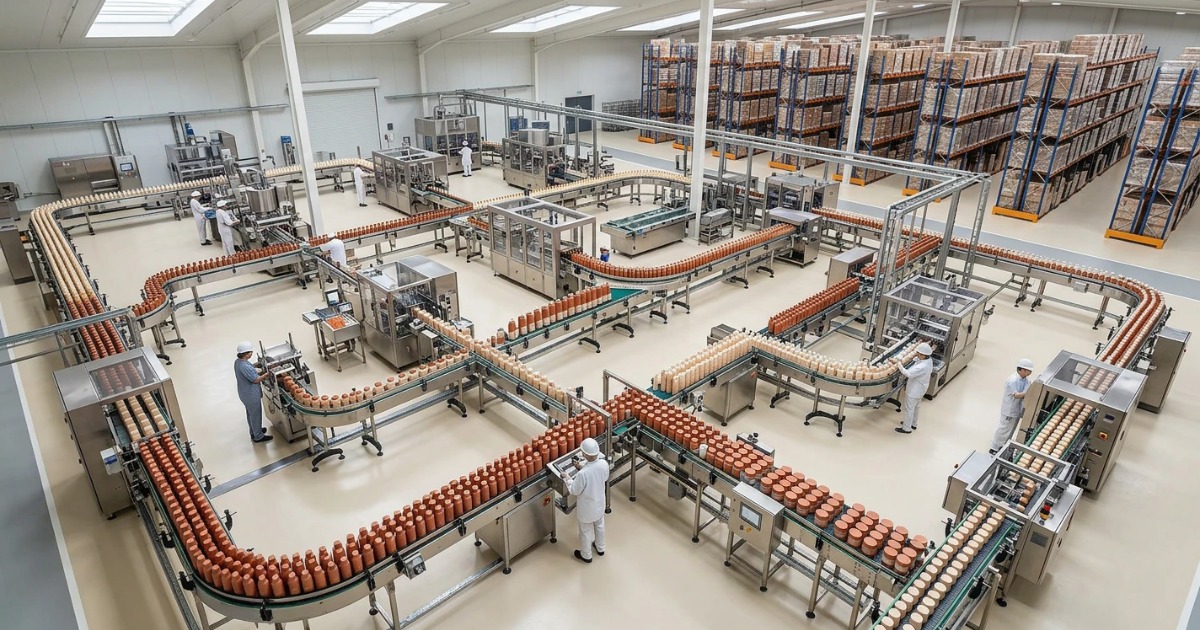
What Is Private Label Cosmetics?
Private label cosmetics means a manufacturer produces a product that you sell under your own brand name. It differs from:
- White label: A generic, ready-made product sold to multiple brands with minimal changes.
- OEM/ODM: Custom development where the manufacturer engineers formulas and designs to your specifications.
Private label sits in the sweet spot — proven formulas customized with your branding, colors, and packaging.
Why Private Label Beats Building From Scratch
Building a formula from zero requires labs, chemists, regulatory expertise, and enormous capital. Private label eliminates that burden.
You gain tested, market-ready formulas, faster time to launch, and dramatically lower upfront investment — letting you focus your energy on branding and sales.
Profit Margins & Growth Potential
Makeup enjoys some of the healthiest margins in consumer goods. A product costing a few dollars to produce often retails for four to five times that amount.
| Cost Component | Typical Range (per unit) |
|---|---|
| Manufacturing (formula + packaging) | $1.50 – $4.00 |
| Shipping & duties (allocated) | $0.30 – $1.00 |
| Marketing & fulfillment (allocated) | $2.00 – $5.00 |
| Typical retail price | $14 – $30 |
| Gross margin | 60% – 80% |
Why "Made in China" Dominates the Cosmetics Supply Chain
When it comes to sourcing private label cosmetics manufacturers, China has become the world's engine — and for good reason.
Cost Efficiency Without Compromising Quality
Mature production infrastructure and economies of scale allow Chinese factories to deliver premium-grade products at prices few regions can match. Modern facilities rival international standards while keeping unit costs low.
Full-Spectrum Formulation & R&D Capabilities
Leading manufacturers offer advanced labs, global ingredient sourcing, and biotech-driven innovation. This means access to trending formulas — hybrid skincare-makeup, long-wear complexion, clean vegan lines — without building your own R&D team.
Low MOQs & Flexible Customization
Unlike many Western suppliers demanding huge volumes, Chinese partners frequently accommodate low minimum order quantities. This flexibility is ideal for startups and SMBs testing the market.
Compliance & Global Export Experience
Reputable factories hold certifications such as GMPC, ISO 22716, and FDA registration, with deep experience navigating export requirements for the US, EU, and beyond — easing your path to global markets.
| Sourcing Region | Unit Cost | Typical MOQ | R&D Depth | Lead Time |
|---|---|---|---|---|
| China | Low | Low–Medium | High | Fast |
| South Korea | Medium | Medium | High | Medium |
| USA / EU | High | High | Medium–High | Slow–Medium |
How to Launch Your Private Label Makeup Brand: Step-by-Step
Here's a practical roadmap to move from idea to shelf-ready brand.
Step 1 — Define Your Niche & Target Audience
Pick a specific audience and positioning. A focused "clean vegan lip line for Gen Z" beats a vague "makeup brand for everyone."
Step 2 — Choose Product Categories
Start lean with one or two hero products — a signature lipstick, a versatile foundation — then expand once you have traction.
Step 3 — Select a Reliable Private Label Manufacturer
Evaluate partners on certifications, MOQ flexibility, R&D strength, and communication. Request samples before committing.
Step 4 — Customize Formula, Packaging & Branding
Refine shades, textures, and finishes, then design packaging that reflects your brand story and stands out on screen and shelf.
Step 5 — Handle Compliance & Testing
Ensure products meet the regulations of your target markets — ingredient labeling, safety assessments, and required registrations.
Step 6 — Launch & Scale Through Digital Channels
Leverage your website, marketplaces, and social commerce. Partner with creators and use content to build community and repeat sales.
Partner With Poleview Biotechnology Co., Ltd. for Your Private Label Journey
Turning market opportunity into a real brand requires the right manufacturing partner — and that's exactly where we come in.
Who We Are
Poleview Biotechnology Co., Ltd. is a China-based cosmetics manufacturer combining biotech-driven formulation with modern, certified production. We help entrepreneurs and growing brands bring high-quality makeup to market without the traditional cost and complexity.
Our Private Label Advantages
- One-stop OEM/ODM service — from formula to finished, branded product.
- In-house R&D and formulation — access trend-aligned, innovative formulas.
- Flexible MOQs for startups — launch and test without overcommitting capital.
- Compliant, export-ready products — GMPC/ISO standards and global market experience.
Success-Ready Product Ranges
We offer a broad portfolio ready for your branding, including complexion products (foundation, concealer, cushions), lip products (lipsticks, glosses, liners), eye products (mascara, eyeshadow, liner), and clean, vegan, and sustainable formulations aligned with today's cosmetics industry trends.
Frequently Asked Questions (FAQ)
How much money do I need to start a private label makeup brand?
Many founders launch with a modest budget by starting small. With low MOQs, initial inventory can begin in the low thousands of dollars, with additional budget allocated to branding and marketing.
What is the minimum order quantity for private label cosmetics?
MOQs vary by product and manufacturer. Flexible partners like Poleview offer startup-friendly minimums, letting you validate demand before scaling volume.
Are Chinese cosmetics manufacturers reliable and safe?
Reputable factories operate under strict international standards such as ISO 22716 and GMPC, with FDA registration and export compliance. Always verify certifications and request samples — established partners welcome due diligence.
How long does it take to launch a private label product?
With existing formulas, a private label product can be ready in as little as a few weeks to a couple of months, depending on customization, packaging, and testing requirements.
Conclusion & Call to Action
The numbers speak for themselves: a nearly six-hundred-billion-dollar global cosmetics market, a resilient beauty industry growth rate, and clear openings created by shifting consumer trends. For entrepreneurs, few opportunities combine this much scale with such attractive margins.
Private label is the smartest, lowest-risk path in — letting you build a real brand on proven formulas and world-class manufacturing rather than starting from zero.
Ready to launch your own makeup brand? Contact Poleview Biotechnology Co., Ltd. today for a free consultation, product catalog, and custom quote. Let our biotech expertise and flexible private label services turn your vision into a market-ready reality.